As the Great Exhibition of 1851 unfolded in London, artists responded to this monumental event by creating various works that captured its grandeur and cultural significance. One notable piece was David Roberts‘s panoramic view, “Inauguration of the Great Exhibition” (1852). This artwork depicted Prince Albert addressing a massive audience, illustrating the importance of the occasion. The exhibition showcased over 100,000 products from around the world, prompting artists to explore themes of industrial progress and British superiority in their portrayals.
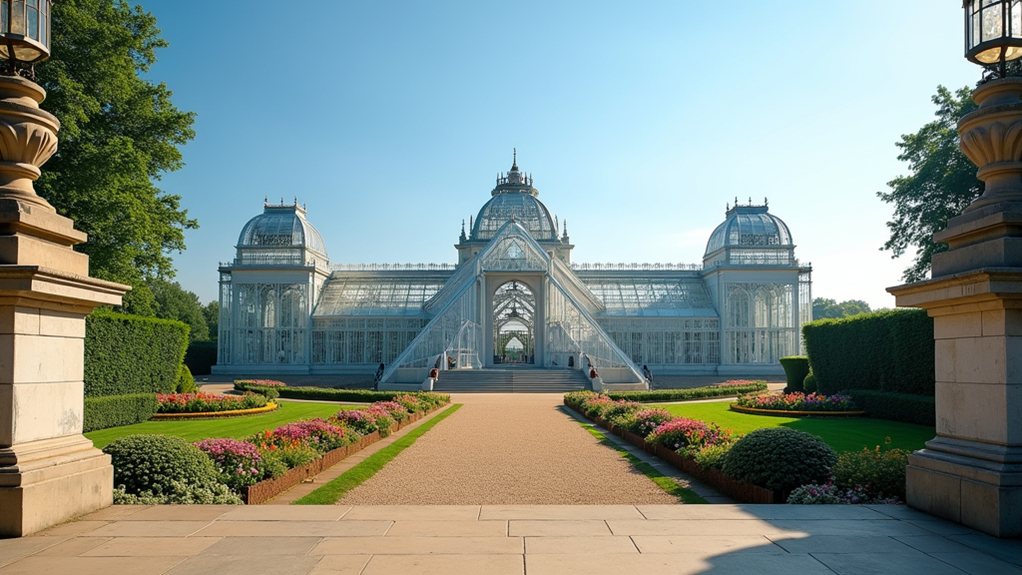
Artists produced a range of lithographs and prints that reflected the public’s fascination with modern design and the intricate displays at the Crystal Palace. These works not only celebrated the achievements of the time but also served as a visual narrative of industrial innovation. Through their contributions, artists played an essential role in shaping how the public perceived the Great Exhibition and its significance in Victorian society.
Artists created lithographs and prints that captured the public’s awe of modern design and industrial innovation at the Crystal Palace.
Many artists participated in this cultural phenomenon, and their artworks often highlighted the advancements made during the early 20th century. The presence of literary figures such as Charles Dickens and Charlotte Brontë at the exhibition emphasized its cultural importance and further attracted attention.
The combination of art and literature during this period created a rich tapestry of ideas that resonated with audiences, reinforcing the notion of progress.
Interestingly, Lake Como, known for its beautiful landscapes, became a point of inspiration for some artists who sought to capture the essence of nature in their works. This blend of industrial and natural themes reflected the complexities of contemporary life and showcased the contrast between progress and tradition.
Rights Reserved to the artists meant that their works were protected, allowing them to gain recognition for their contributions.