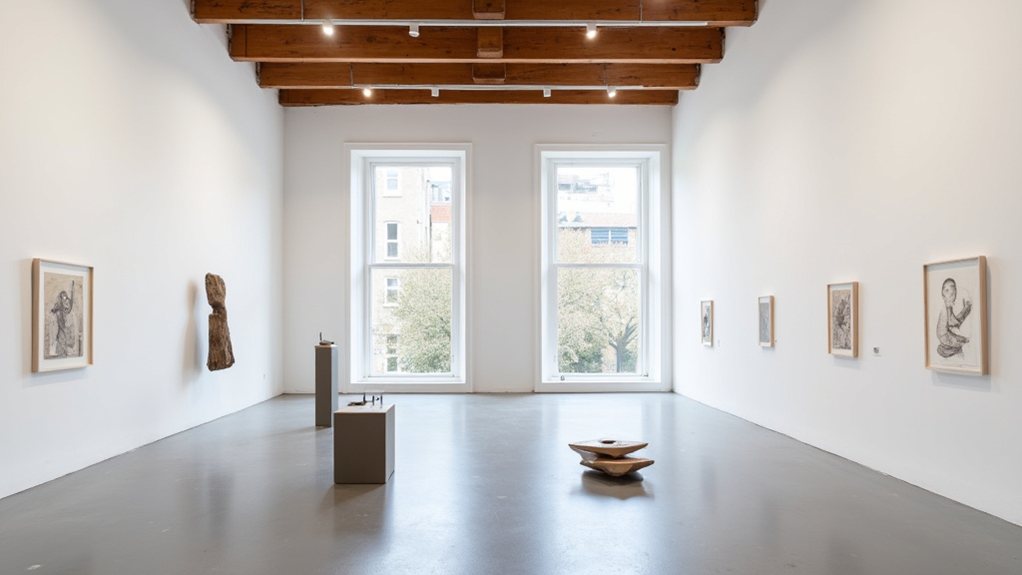
While many art exhibitions prioritize visual experiences, a groundbreaking show at London’s Henry Moore Institute challenges this tradition by placing blind and partially sighted artists at its center. The exhibition marks the UK’s first major sculpture show where visually impaired artists constitute the majority of participating creators, representing a significant shift in the art world’s approach to accessibility and creative expression.
Led by a team including Dr. Aaron McPeake, an artist and Associate Lecturer at Chelsea College of Arts who is himself visually impaired, the exhibition is the culmination of a three-year collaborative research project. Working alongside Professor Ken Wilder and Dr. Clare O’Dowd, McPeake has helped develop an exhibition that reframes blindness as a difference rather than a deficit in artistic practice.
The exhibition features sixteen international artists, including both blind and sighted practitioners. Seven new commissions were created specifically for this event, complementing historical and contemporary works. Artists such as Lucia Beijlsmit, Lenka Clayton, and Emilie Louise Gossiaux contribute pieces designed for multi-sensory engagement.
Visitors can expect sculptures that incorporate touch, sound, smell, and movement, challenging the conventional “do not touch” gallery experience. Every sculpture is accessible for physical interaction, with dark grey carpeted areas marking which artworks are within arm’s reach for tactile exploration. The exhibition’s design emphasizes accessibility, with step-free entrances, Braille and large print texts, and gallery assistants trained as sighted guides with disability awareness. The exhibition, titled Beyond the Visual, represents the pioneering approach to inclusive art experiences that embrace non-visual senses.
Particularly innovative is the collaborative approach to audio descriptions, developed through an inclusive process involving partially blind writer Joseph Rizzo Naudi working directly with artists and curators. This method guarantees descriptions that capture both factual and experiential qualities of the artwork.
The project, supported by the Arts and Humanities Research Council’s inaugural Exhibition Fund, draws from decades of disability activism and critical blindness studies. It introduces the concept of “blindness gain,” demonstrating how blind creators harness unique perceptual qualities to expand artistic possibilities. Running from November 2025 to April 2026, the exhibition aims to serve as a model for other institutions seeking to create more inclusive art experiences.