
Transport for London reveals an ambitious £2.9 billion transformation of the capital’s transit system, with the Piccadilly Line upgrade serving as the centerpiece of its 2026 plans.
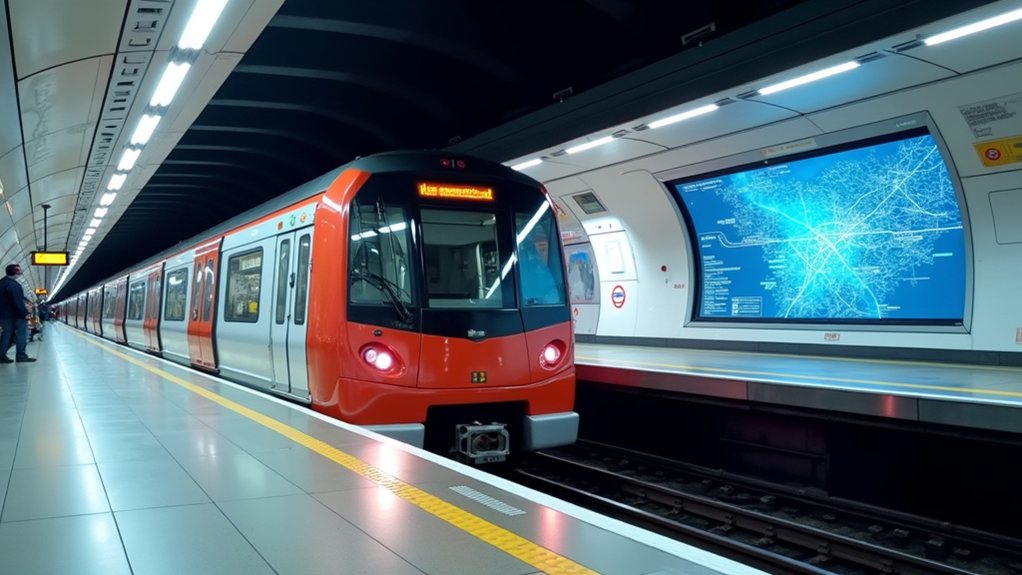
The extensive modernization program will introduce 94 state-of-the-art trains to replace the aging fleet from 1975, with the first new train already undergoing testing after its arrival in October 2024. Passengers can expect these trains to enter service between July and December 2026, bringing significant improvements to reliability, safety, inclusivity, and sustainability.
London’s £2.9bn transit upgrade brings 94 modern trains to replace the 1975 fleet, promising enhanced reliability and sustainability from 2026.
The new Piccadilly Line trains will feature several notable enhancements designed to improve the passenger experience. For the first time in London’s deep Tube network, travelers will enjoy air-conditioning, addressing a long-standing complaint during hot summer months.
The trains will also have walk-through carriages for better passenger flow, wider double doorways to speed up boarding and alighting, enhanced digital display screens, and on-train CCTV cameras for improved security.
TfL’s plans extend beyond new trains, with an extensive upgrade to the Piccadilly Line’s signaling system enabling automated train operation. This upgrade will increase service frequency from 24 to 27 trains per hour in central London, with trains arriving every 135 seconds at peak times.
This translates to a capacity increase of up to 23% during the busiest periods when the full fleet is operational.
Accessibility improvements form another key component of TfL’s 2026 vision, with enhanced step-free access from platforms to trains and targeted upgrades at stations including Leyton and Northolt. The plans aim to expand the network of over 200 step-free access stations across the Tube network. The Four Lines Modernisation project will replace Victorian-era signalling on key lines, ensuring improved scheduling and quicker disruption recovery.
The program includes eco-friendly depot upgrades at Cockfosters and Northfields with green roofs and solar panels to accommodate the new trains while emphasizing sustainability. TfL’s commitment to environmental sustainability also extends to biodiversity initiatives along transport corridors, creating healthier urban environments.
Complementing the Tube upgrades, TfL will expand its Superloop bus network in 2026, enhancing reliability and frequency across London.
Technology upgrades will also play a significant role, with 5G connectivity being rolled out across the Tube network. Additional infrastructure projects include the Cycleway 4 extension creating a segregated route from Greenwich to Woolwich, and the continuation of regeneration efforts in Nine Elms, Vauxhall Cross, and Wandsworth town centre.