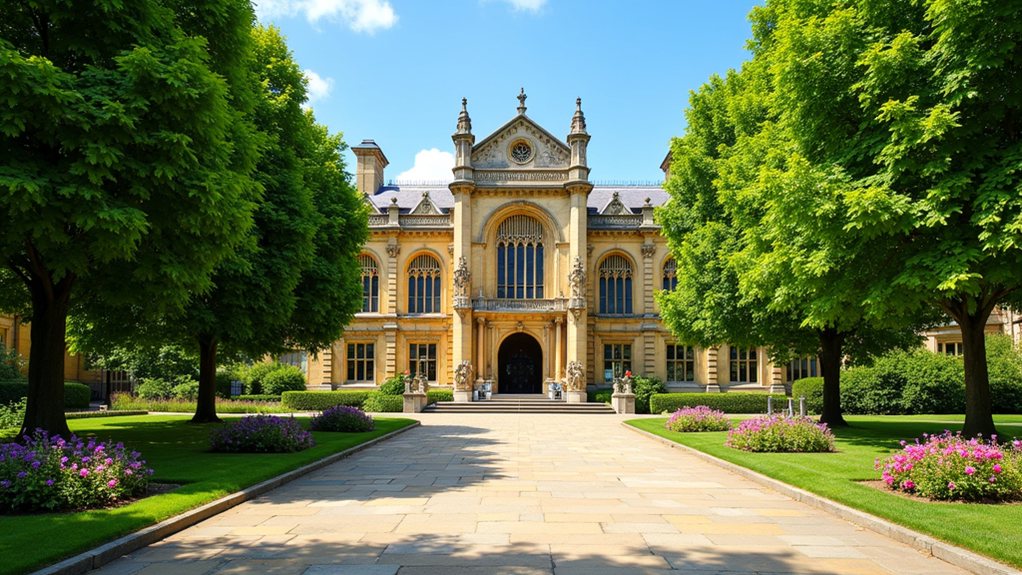

The Natural History Museum Oxford showcases notable exhibits such as the Oxford Dodo with complete remains, Jurassic fossils including Megalosaurus, and a large cast of the Tyrannosaurus rex known as “Stan.” Recent permanent displays focus on biodiversity and ecosystems with taxidermy and digital media. Tickets are typically required, with advance booking recommended. The museum offers educational content suitable for families and non-specialists, enhancing visitor understanding of natural history. Additional details on visiting and exhibit highlights follow.
Although the Natural History Museum Oxford covers a wide range of scientific topics, its top exhibits focus on key themes such as extinct species, local fossils, and biodiversity. One of the most notable exhibits features the Oxford Dodo, which holds the most complete remains of the extinct dodo, including both soft tissue and bones. These specimens date back to the 17th century, linked to early Ashmolean collections, and provide rare physical evidence for a bird species primarily known through paintings and travelers’ accounts.
The display explores themes of extinction, human impact, and early scientific collecting, connecting historical naturalists with modern conservation ideas. The dodo remains also demonstrate advances in scientific methods, with potential studies in DNA and isotopic analysis on historic specimens.
Exploring extinction, human influence, and scientific progress through historic dodo remains and modern conservation connections
Local Jurassic fossils, especially those of Oxfordshire dinosaurs, form another central part of the museum’s collection. These include remains of Megalosaurus, the first dinosaur described scientifically in 1824. Exhibits explain the significance of Oxfordshire quarries and 19th-century geologists in shaping early dinosaur science and stratigraphy, showcasing the rich geological history of the region.
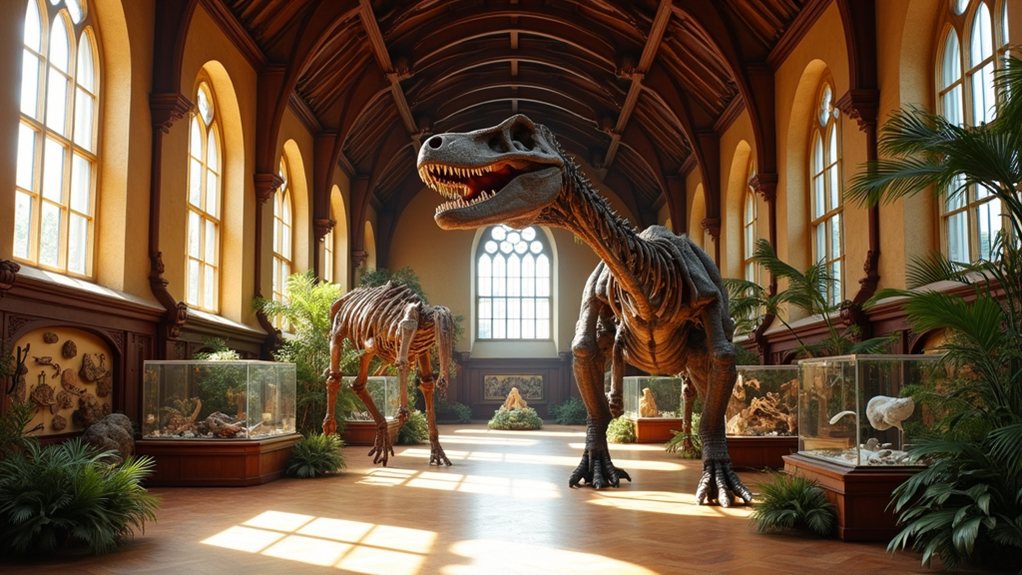
Large skeletal and cast materials are displayed prominently in the main court, providing a visual anchor for the museum’s dinosaur and Mesozoic content. These displays also tie into 19th-century debates on Earth’s history and connect with regional geology trails promoted by the museum. Recently, the museum has undertaken an extensive overhaul of its central court, introducing sixteen new permanent displays to enrich the visitor experience and understanding of the natural world through the collective title Life, as we know it.
A significant attraction is the cast of “Stan,” a Tyrannosaurus rex, positioned in the central aisle behind the historic Iguanodon cast. This exhibit highlights the anatomy of a late Cretaceous apex predator, including its massive skull and distinct limb structures. The new displays also incorporate ethically sourced taxidermy, enhancing the connection between past and present biodiversity.
The pairing of T. rex and Iguanodon casts offers a comparative view of carnivorous and herbivorous dinosaurs, supporting educational narratives on evolution and biodiversity. The surrounding interpretation links these dinosaur displays to broader themes of extinction and life’s diversity.
The permanent exhibition “Life, As It Is Understood” presents 16 to 30 exhibits focused on biodiversity, evolution, and ecosystems. It combines hundreds of zoological, geological, and entomological specimens with graphics and digital media. These new displays feature stylised dioramas depicting six different ecosystems and include ethically acquired taxidermy and delicate glass artworks, enhancing both visual appeal and educational depth.
The displays aim to explain the diversity of life and Earth processes in a way accessible to non-specialists and families. This visually led storytelling approach uses layered information to provide clear, detailed explanations, making it suitable for a wide audience interested in natural history.
Frequently Asked Questions
Are There Guided Tours Available at the Natural History Museum Oxford?
Yes, guided tours are available at the Oxford University Museum of Natural History.
These tours are led by university students and academic specialists, focusing on various themes related to the museum’s collections. They last about 90 minutes and include broader Oxford walking experiences.
Tours are wheelchair accessible, accommodate service animals, and allow free attendance for caregivers.
Booking can be done through platforms like TripAdvisor, Viator, and GetYourGuide for convenience.
Is the Museum Wheelchair Accessible?
The museum is wheelchair accessible, offering a level entrance on the south side of the building.
All exhibit galleries and public spaces accommodate wheelchair users. A passenger lift connects the Lower Ground, Ground, and First Floors, with tactile buttons and a hearing loop.
There are designated disabled parking spaces nearby, available on a first-come, first-served basis.
Wheelchair-accessible toilets and seating with armrests are provided.
Assistance animals are welcome, with prior contact recommended for non-dog animals.
Are Food and Drinks Allowed Inside the Museum?
Food and drinks are not allowed inside the museum galleries to protect exhibits and maintain cleanliness.
Bottled water is permitted throughout the museum for hydration. Visitors may bring outside food but must consume it only in designated eating areas, such as the indoor café or the museum’s front lawn.
Eating inside exhibit halls is prohibited, and large bags or open containers may face restrictions to guarantee preservation and security.
Can I Take Photographs Inside the Museum?
Photography for personal use is generally allowed in public galleries, but visitors must follow onsite signs and staff guidance.
Flash, tripods, and large equipment are usually not permitted without prior permission.
Commercial photography requires advance booking and formal approval.
Museum staff can restrict photography to protect safety, conservation, or visitor flow.
For image use beyond personal study, licensing and formal applications are necessary.
Special photography access requires contacting the museum’s Events/Filming team.
What Are the Parking Options Near the Museum?
Parking directly at the museum is limited to a few Blue Badge spaces on Parks Road, with early arrival advised.
Visitors are encouraged to use public transport or Park & Ride sites at Thornhill, Redbridge, Pear Tree, Oxford Parkway, or Seacourt.
Nearby on-street pay-and-display bays are on Mansfield, Keble, and Blackhall Roads.
Westgate and Museum Road car parks offer larger options.
Pre-booked spaces via commercial platforms provide additional nearby parking, including accessible spots.