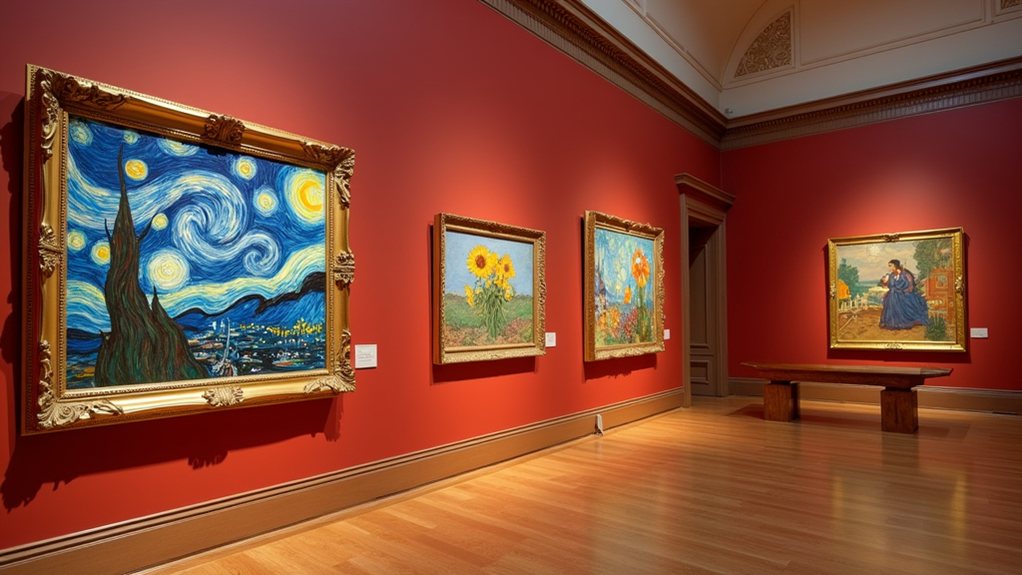
The Museum of Natural History on Parks Road, Oxford, features top exhibits such as the Oxford Dodo and the first scientifically described dinosaur, Megalosaurus bucklandii. Visitors can explore hands-on mineral and fossil collections in a Neo-Gothic building designed with natural-inspired architecture. General admission is free, though donations are welcome. The museum offers clear, family-friendly labels and an online database with over 460,000 records for research. Further details on access and exhibits reveal a thorough visitor experience.
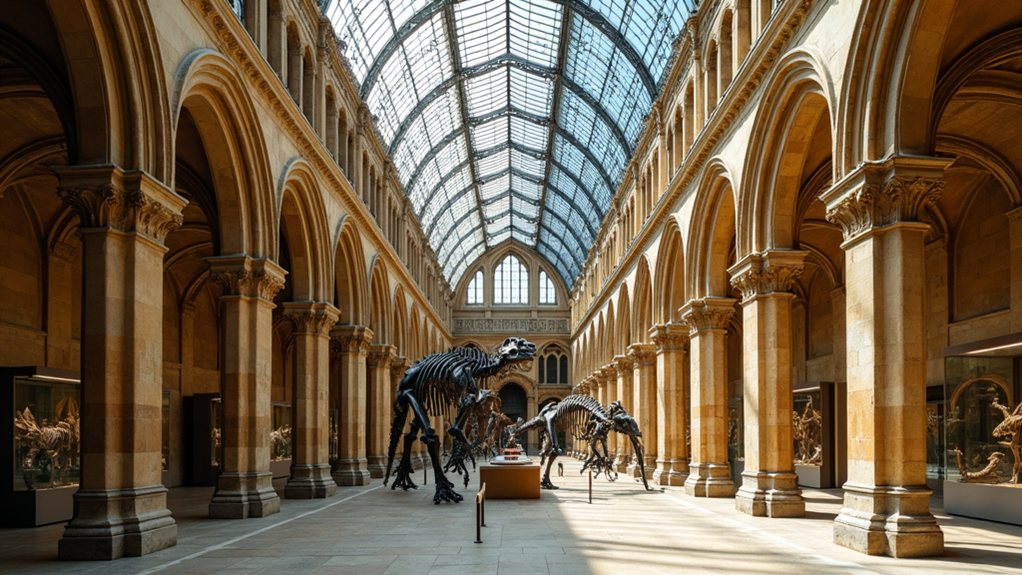
Although primarily a center for scientific research and university teaching, the Museum of Natural History in Oxford also offers a rich visitor experience through its extensive collections and striking architecture. Located on Parks Road in the University Science Area at coordinates 51.7586°N 1.2557°W, the museum is housed in a Neo-Gothic building completed in 1860. The structure features decorative stonework and ironwork inspired by natural forms, with a central glass-roofed court supported by cast-iron pillars. This court is divided into three aisles and enclosed by cloistered arcades on two levels, creating an open and visually impressive space. The columns on the ground and first floors are made from different British stones, selected to showcase the country’s geology. The museum building was designed by Thomas Newenham Deane and Benjamin Woodward, reflecting the influence of John Ruskin’s ideas on architecture and nature (architectural design). Visitors enter the museum through an entrance that also provides access to the nearby Pitt Rivers Museum, allowing for a combined visit that enhances the overall museum experience by encouraging interdisciplinary exploration. In addition to its impressive architecture, the museum also offers a wealth of educational resources for visitors interested in learning more about natural history.
Oxford’s Museum of Natural History combines scientific research with stunning Neo-Gothic architecture and captivating natural collections.
The museum holds the University of Oxford’s natural history collections, which include major transfers from the Ashmolean Museum and Christ Church Museum. These collections are divided into Earth, Life, and Archive categories. The Life collections, primarily zoological, contain over five million animal specimens, representing the largest collection area. This extensive Life Collections section is continually growing and is actively used for scientific research and public engagement.
The collections are actively used not only for display but also for scientific research, university teaching, and public engagement. An online database offers access to over 460,000 records, enabling remote research and reference.
Among the museum’s star exhibits are the Oxford Dodo, which includes the only known soft-tissue remains and skeletal material of this extinct bird, and the world’s first scientifically described dinosaur, Megalosaurus bucklandii, originating from Oxfordshire. Dinosaur displays, including large skeletons and local fossils, are a frequent highlight for visitors.
The museum also features significant mineral, rock, and fossil collections, some of which are available for hands-on interaction. Since 2022, the museum has been renewing its permanent galleries under the “Life, As It Is Understood” project. The main court now focuses on Biodiversity, Evolution, and Ecosystems, with 18 double-sided glass cases showcasing about 30 new exhibits arranged for multi-directional visitor flow.
The Ecosystems section includes stylized diorama-style displays with maps and layered information suited for various knowledge levels. This renewal began in 2018 and is ongoing.
Admission to the museum is generally free, though donations are encouraged, and visitors should check the official website for any ticketing updates. The museum is praised for its clear labels and accessible explanations, making it suitable for families and non-specialists.
The central court, with its dinosaur skeletons and high glass roof, is often noted as a visual highlight. Additionally, hands-on exhibits enhance the visitor experience, especially for younger audiences.
Frequently Asked Questions
Are Pets Allowed Inside the Museum?
Pets are not allowed inside the museum, except for guide dogs and assistance animals, which must be kept on a lead.
This rule aims to protect taxidermy specimens from insect infestations carried by animals. Visitors with pets should arrange off-site care, as no facilities exist for animals on-site.
Assistance animals can accompany visitors during tours and events, but no special indoor pet areas are provided, so planning for their needs is necessary.
Is There Free Wi-Fi Available On-Site?
Free Wi-Fi is available on-site throughout the museum’s main galleries and public areas.
Visitors can connect to the “OUMNH Free Wi-Fi” network, which uses a captive portal requiring acceptance of terms before access. The service is free, filtered for safety, and suitable for general browsing and light use.
No password or special setup is needed, but speed may vary during busy times. The network is accessible during opening hours, 10:00 to 17:00 daily.
Can I Bring Food or Drinks Into the Museum?
Visitors may bring their own food and drinks into the museum but must consume them only in designated areas, specifically the indoor Museum Café or the front lawn picnic area.
Eating or drinking is not allowed inside the main galleries, lecture theatres, or exhibition spaces to protect exhibits. Bottled water is permitted within galleries.
Waste disposal is the visitor’s responsibility, using bins provided on site.
The Café offers light refreshments and closes at 4:30 pm daily.
Are Guided Tours Available for Children?
Guided tours specifically for children are not prominently offered at the museum.
However, children are allowed to join standard public tours designed for general audiences when age-appropriate.
The museum provides self-guided family trails and themed activities that support child-focused exploration.
Families can also attend regular family-friendly events and workshops, some of which include guided elements suitable for children.
Checking the museum’s schedule in advance is advisable to find child-appropriate activities.
Is Parking Available Near the Museum?
Parking near the museum is limited, with only a few designated Blue Badge bays on-site, located on the museum forecourt and Keble Road.
General visitor parking is unavailable on-site. Pay-and-display options exist on nearby streets like Mansfield Road and Keble Road.
Museum Road Car Park is a short walk away, with tariff and cashless payment options.
Visitors are advised to contemplate Park & Ride services or pre-book private parking to secure spaces close to the museum.