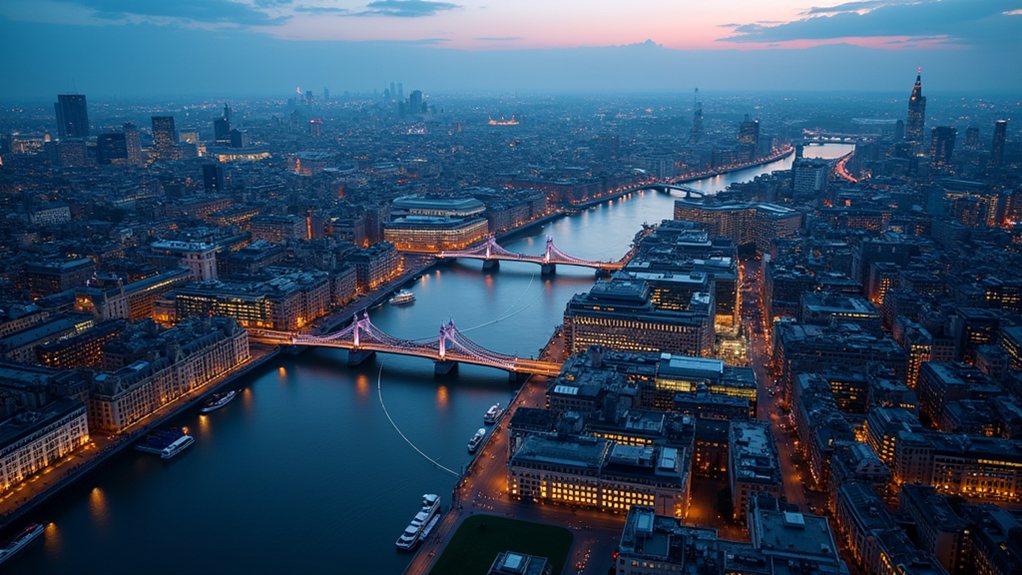
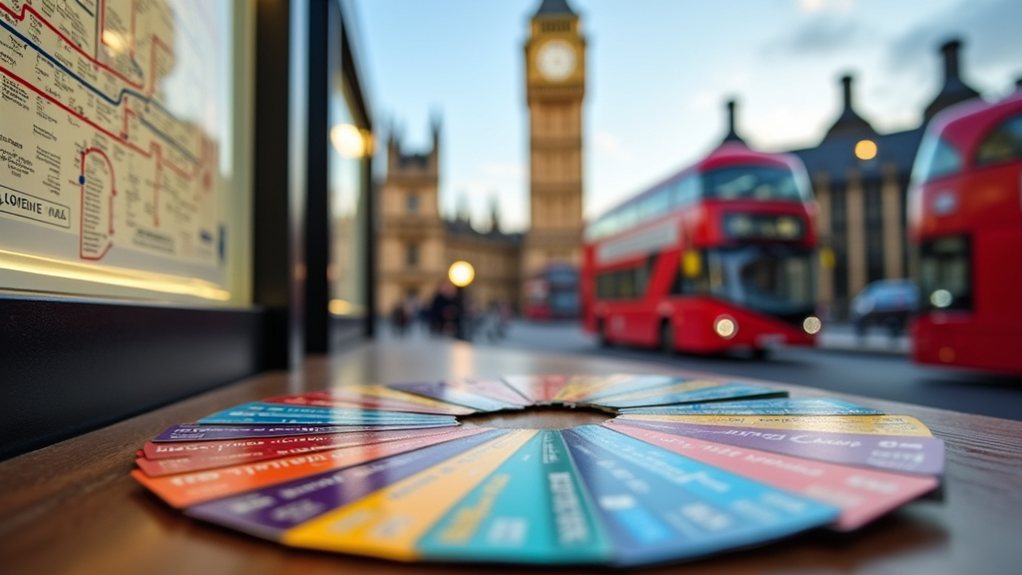
London’s Travel Zones 1 to 6 divide the city into concentric areas based on distance from central London. Zone 1 covers the central core, including major landmarks and transport hubs. Zone 2 surrounds Zone 1, featuring mixed residential and commercial areas, while Zone 3 marks the outer suburbs with more spacious housing. Zones 4 to 6 extend further outward, offering suburban living with better affordability and access to green spaces. Understanding these zones helps with fare calculation and travel planning. Exploring the zones further reveals how they impact daily commutes and pricing.
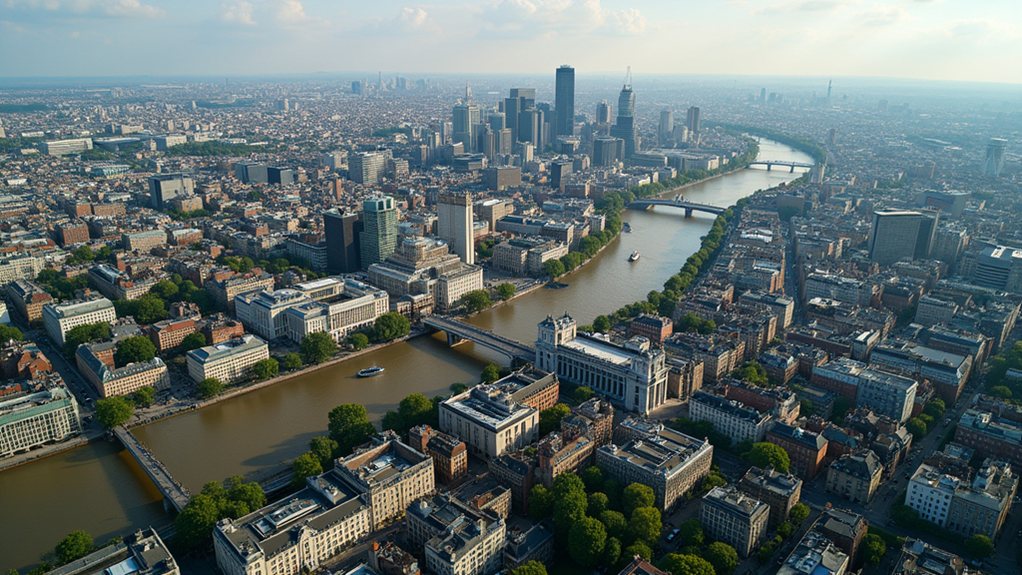
Although London’s public transport system covers a vast area, fares are calculated using a series of concentric travel zones numbered 1 through 9. These zones form the basis for fare calculation on the Tube, London Overground, DLR, and National Rail services managed by Transport for London (TfL). Zones 1 to 6 cover most of Greater London and are the primary zones used by commuters and tourists, while Zones 7 to 9 extend into outlying areas beyond the main urban core. The zones are defined by stations rather than continuous geographic lines, and their boundaries are irregular rather than perfectly circular.
Zone 1 represents the central core of London, covering roughly five miles wide and three miles deep. It includes the central business district and key landmarks such as Big Ben, Oxford Street, the West End, Kensington, and the City of London. Major transport hubs like Holborn, Paddington, Angel, Waterloo, London Bridge, and Vauxhall lie within Zone 1. This zone is central to tourism, commerce, government, and cultural activities. The London Cycle Hire scheme nearly covers Zone 1 entirely, highlighting its accessibility. Very little of Zone 1 is located south of the Thames, reflecting its mostly northern and central positioning in the city center. The extensive Tube coverage with all Underground lines passing through Zone 1 makes it the most accessible for commuters and tourists alike. Additionally, service updates are crucial for ensuring a smooth journey through this busy zone.
Zone 1 is London’s vibrant heart, home to iconic landmarks, major transport hubs, and the bustling city core.
The London Cycle Hire scheme and the congestion charge area mostly coincide with this zone, highlighting its importance for both transport and traffic management.
Surrounding Zone 1 is Zone 2, which extends approximately three miles outward and includes boroughs such as Hammersmith & Fulham, Kensington & Chelsea, Westminster, Camden, Islington, Hackney, and Tower Hamlets. Zone 2 contains a mix of residential areas, commercial centers, entertainment venues, student housing, and local cafes. Some DLR stations south of the River Thames serve as boundary stations between Zones 2 and 3. Zone 2 is known for its vibrant neighborhoods and slightly lower fares compared to Zone 1, making it ideal for student housing.
Zone 2 neighborhoods are vibrant and provide a shift between central London and the outer suburbs.
Zone 3 forms the outer suburbs and is mostly residential, with more spacious housing and local amenities. Areas like Wimbledon fall within Zone 3, meaning travelcards covering Zones 1 to 3 are necessary for trips into central London. This zone marks a change from urban life to more suburban environments, featuring established communities and commercial centers well connected to the city.
Zones 4 and 5 extend beyond, characterized by typical suburban housing and increasing distance from central London amenities but often offering better affordability. These zones cover various boroughs and include a mix of residential and commercial areas, supporting commuters who balance city access with suburban living. Zone 4 is notably irregular in shape, with some areas extending close to the Greater London boundary, demonstrating the irregular zone boundaries. Zones 4 and 5 also provide access to many large parks and green spaces, which are a key appeal for residents looking for quieter surroundings.
Frequently Asked Questions
Can I Use Contactless Payment Cards Across All Travel Zones?
Contactless payment cards can be used across all London travel zones, including Zones 1 to 6 and beyond, such as Zones 7 to 9 on National Rail services.
Users must touch in and out for each trip to guarantee accurate fare calculation and capping. The system offers daily and weekly fare caps based on zones traveled.
Coverage is expanding to more stations outside London, but some areas still lack full contactless acceptance as of 2025.
Are Children Charged the Same Fares as Adults in These Zones?
Children are not charged the same fares as adults across London travel zones. Those under 11 travel free on TfL services without needing tickets.
Children aged 11-15 pay discounted fares, about half adult prices, but must have an 11-15 Zip Oyster photocard.
Teenagers aged 16-17 also receive discounts with a 16+ Oyster photocard.
Without these photocards, children and teens must pay adult fares or use paper travelcards for discounts.
How Do Travel Zones Affect Oyster Card Daily Fare Caps?
Travel zones directly determine the Oyster card daily fare caps, with the cap increasing as the number of zones traveled expands.
For example, traveling only within Zone 1 sets a lower daily cap than traveling through Zones 1 to 6. The system automatically adjusts the cap if a journey extends into higher zones, charging the difference and setting a new cap accordingly.
Users must touch in and out for accurate fare and cap calculations.
Is There a Difference Between Zones for Buses Versus Trains?
Yes, there is a difference between zones for buses and trains in London.
Train fares depend on the number of zones crossed, affecting pricing and fare caps, while bus fares remain flat regardless of zones.
Buses do not use the zonal system and charge a single fare for any journey.
This means zone knowledge is essential for train travel cost calculations but unnecessary for buses, which offer simpler, fixed-price fares across all areas.
Can Travel Zone Boundaries Change During Special Events or Holidays?
Travel zone boundaries do not change during special events or holidays.
Transport for London maintains fixed geographic zones for fare calculations, focusing instead on adjusting service frequency or routes to manage demand.
Temporary fare products may be offered, but zone lines remain stable.
Passengers should plan based on regular zone maps, as no temporary reclassification occurs, ensuring consistent fare rules regardless of event timing or holiday periods.