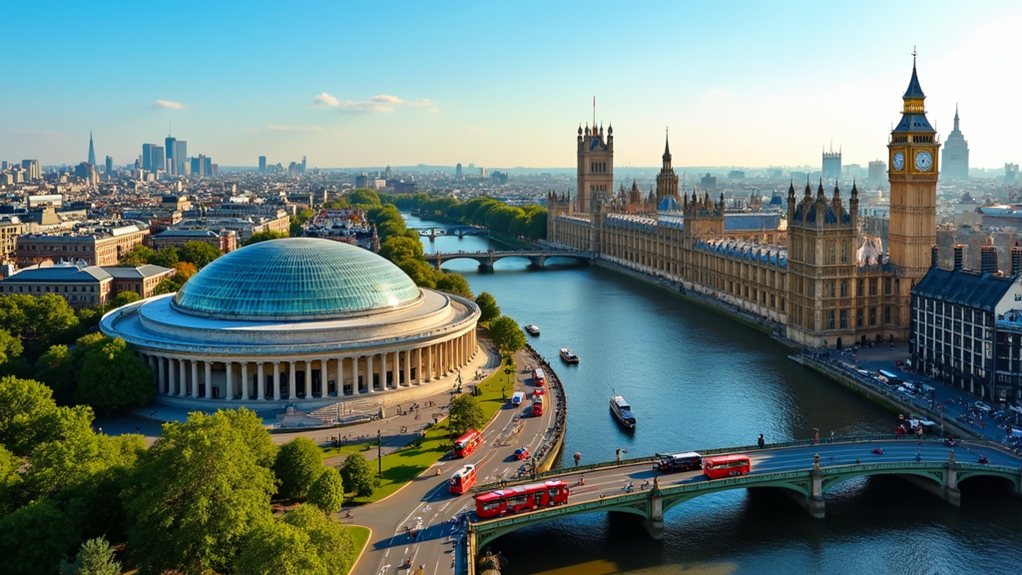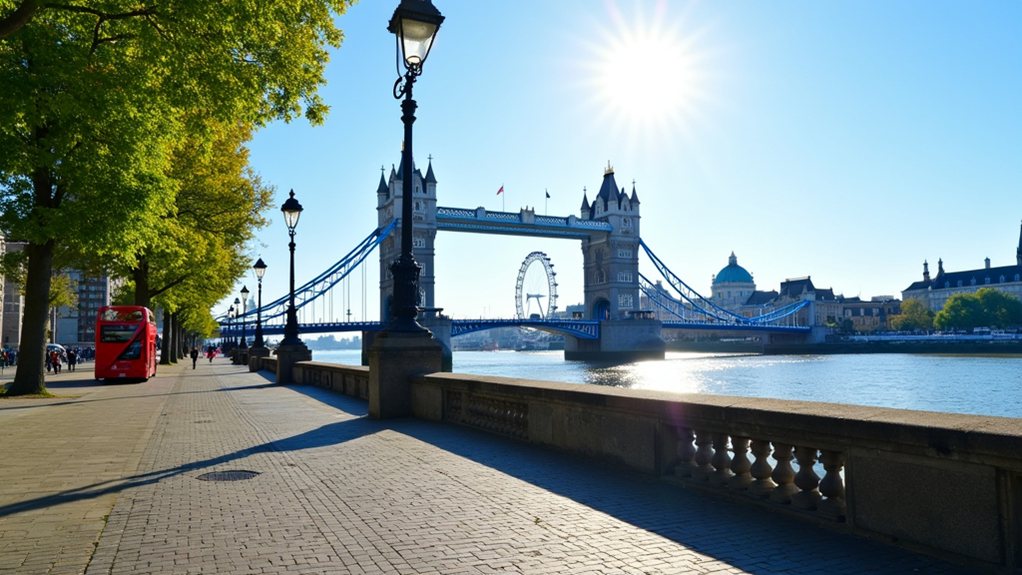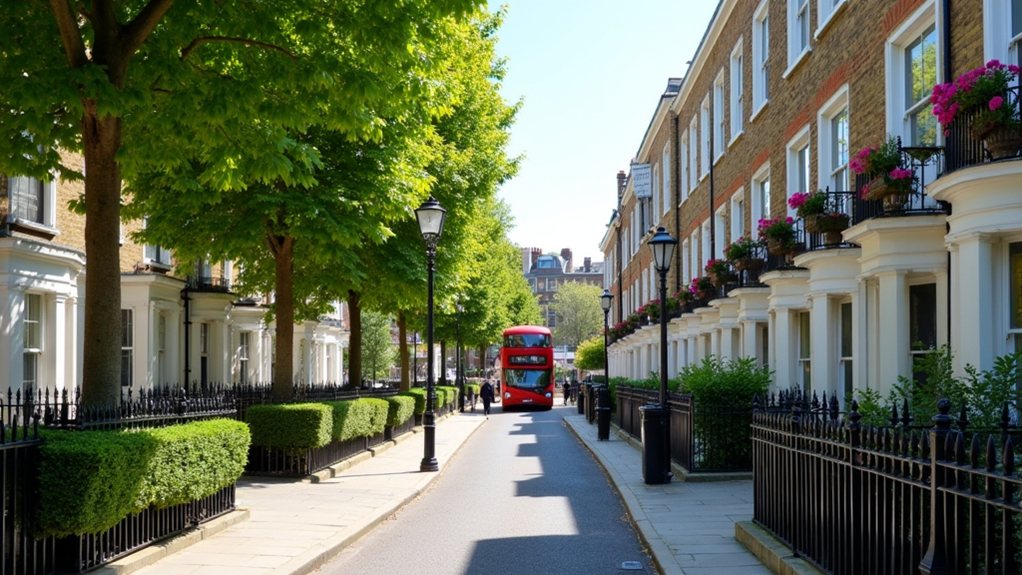
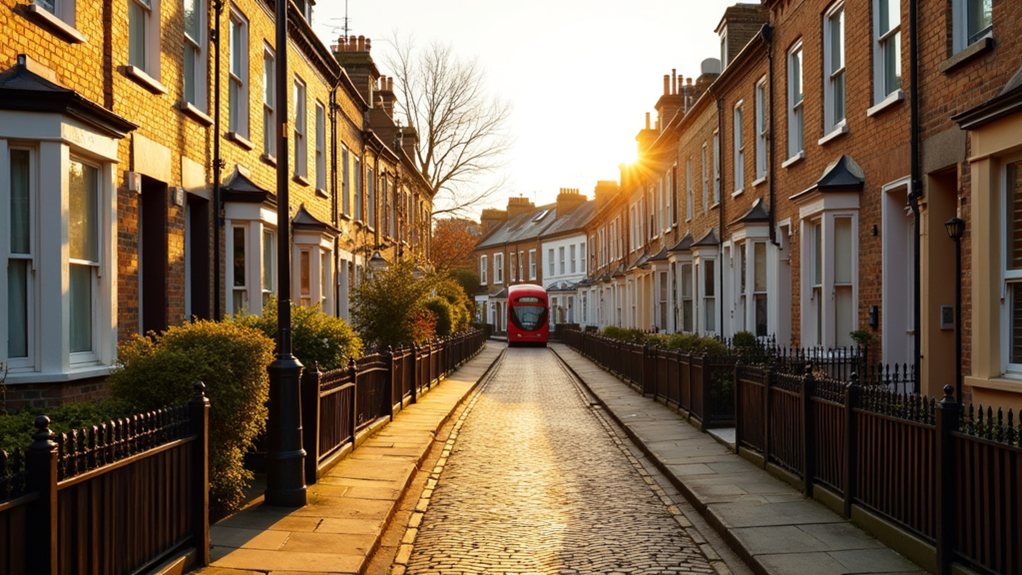
London’s safest neighbourhoods for tourists include South Kensington and Knightsbridge, known for low crime rates, elegant architecture, and proximity to Hyde Park. Bloomsbury offers a central location with well-lit streets and cultural landmarks. Notting Hill provides a quiet, community feel with good access to transport. Richmond upon Thames stands out in outer London for its low crime and green spaces. These areas combine safety with convenience and attractions, offering visitors secure environments to explore. Further details clarify what makes these places ideal.
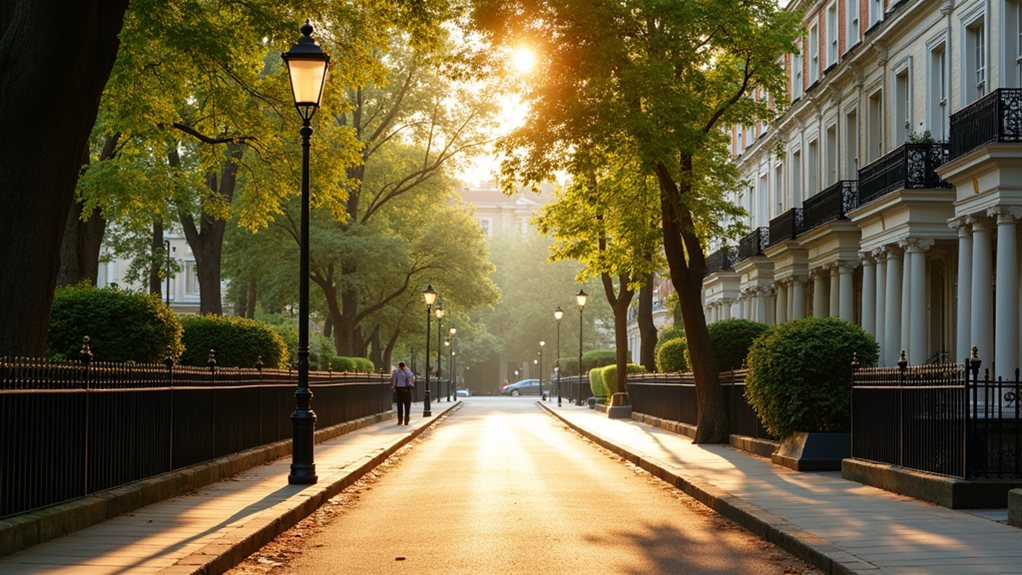
Safety is a key concern for visitors and residents alike when exploring London, a city known for its diverse neighborhoods and vibrant culture. Tourists often favor areas like South Kensington, which is affluent and primarily residential, featuring elegant Victorian architecture and proximity to Hyde Park. This neighborhood has a low crime rate and is family-friendly, making it a secure choice for visitors. Additionally, South Kensington is home to several world-class museums, which provide educational experiences for families.
Visitors prioritize safety, often choosing South Kensington for its elegance, family-friendly vibe, and proximity to Hyde Park.
Similarly, Knightsbridge offers a calm, upscale atmosphere with luxury shopping at Harrods and well-patrolled streets. Its location near Hyde Park and Kensington Gardens adds to its appeal as a safe destination.
Bloomsbury is another central area known for its low crime levels and well-lit streets. It hosts important landmarks such as the University of London and the British Museum, alongside many dining options. Visitors often choose hotels like The Bloomsbury Hotel and Radisson Blu Hotel to stay in this cultural hub. It is important to note that crime rates can fluctuate, so tourists should always remain aware of their surroundings even in these areas with low crime.
Notting Hill offers a quiet, community feel with well-maintained streets and fewer incidents of pickpocketing. Its colorful markets and proximity to Paddington Station make it convenient and safe for tourists.
Hampstead stands out as one of the safest parts of Central London, with a crime rate of around 77 per 1,000 residents. It is affluent, with an old-money atmosphere and access to the large green space of Hampstead Heath, though visitors are advised to avoid walking alone in parks at night.
Outer London boroughs also provide safe options, often with lower crime rates than central areas. Richmond upon Thames is noted for having the lowest crime rate in London, at about 60 crimes per 1,000 residents. It features a leafy riverside, a village-like atmosphere, and strong community ties. Richmond upon Thames is also recognized for being one of the greenest boroughs in London, enhancing its appeal to visitors and residents alike.
Sutton, Harrow, Merton, and Bexley also rank highly for safety, each offering quiet residential streets, good green spaces, and reliable transport links.
Tourists should remain cautious in busy hubs like Covent Garden, Leicester Square, and Piccadilly Circus, where pickpocketing risks are higher due to large crowds. Areas such as South Bank and Bermondsey are generally safe but require vigilance with personal belongings.
Frequently Asked Questions
What Are the Best Times to Visit London for Safety?
The safest times to visit London are during colder months, from November to February, when crime rates generally decline due to fewer tourists and less outdoor activity.
Daytime hours, between 9 AM and 6 PM, offer increased safety because of higher foot traffic and visible police presence.
Avoid late-night outings after 10 PM in nightlife areas, and consider weekdays over weekends to reduce exposure to crowd-related petty crimes.
How Reliable Is Public Transportation in Safe London Areas?
Public transportation in safe London areas shows moderate reliability, with bus punctuality ranging between 74% and 86%, depending on the borough.
Traffic congestion affects service speed, especially in central locations, causing occasional delays. Night buses recover punctuality faster than day routes.
Rail services perform better, achieving about 86% punctuality.
Ongoing improvements focus on reducing wait times and enhancing infrastructure, though some outer boroughs still face consistency challenges in bus service reliability.
Are There Specific Safety Tips for Tourists in London?
Tourists in London should secure valuables using money belts, keep bags zipped, and avoid poorly lit areas at night.
They must carry contactless cards and know emergency number 999. Using licensed taxis and official rideshares is safer after dark.
Staying vigilant in crowded spots helps prevent theft. Downloading the Transport for London app supports real-time updates.
Blending with locals and buying travel insurance further enhance safety during visits.
What Emergency Numbers Should Tourists Know in London?
Tourists in London should know that dialing 999 or 112 connects them to emergency services, including police, ambulance, fire, and coastguard.
Both numbers are free from mobiles or landlines. For non-urgent police matters, 101 is the correct contact.
Medical advice can be sought by calling 111. These numbers guarantee quick access to help, and callers may be asked for location details to dispatch assistance promptly.
How Can Tourists Protect Their Belongings in London?
Tourists in London can protect their belongings by using anti-theft bags with lockable zippers and RFID-blocking compartments, carrying only essential items, and storing extras in hotel safes.
Keeping bags close, preferably cross-body or under clothing, reduces theft risks. Avoid displaying valuables openly and remain vigilant in crowded places.
Regularly checking belongings and using contactless payments further minimizes loss.
In case of theft, reporting promptly to authorities and embassies is vital for assistance.