Frustration continues to mount as Bristol’s long-awaited arena project faces yet another round of setbacks, with current opening projections now pushed to late 2027 at the earliest. The ambitious 20,000-capacity venue, designed to rival London’s O2 Arena, has experienced a troubled journey since proposals were first announced in 2003.
The project’s history reveals a pattern of delays and site changes. After the Temple Island scheme was canceled in 2018, attention shifted to converting the historic Brabazon Hangars. Planning permission was granted in 2020, with construction initially scheduled to begin in 2022. However, multiple factors have repeatedly pushed back the timeline. Developers have experienced server traffic issues during peak planning coordination periods, further complicating project management efforts.
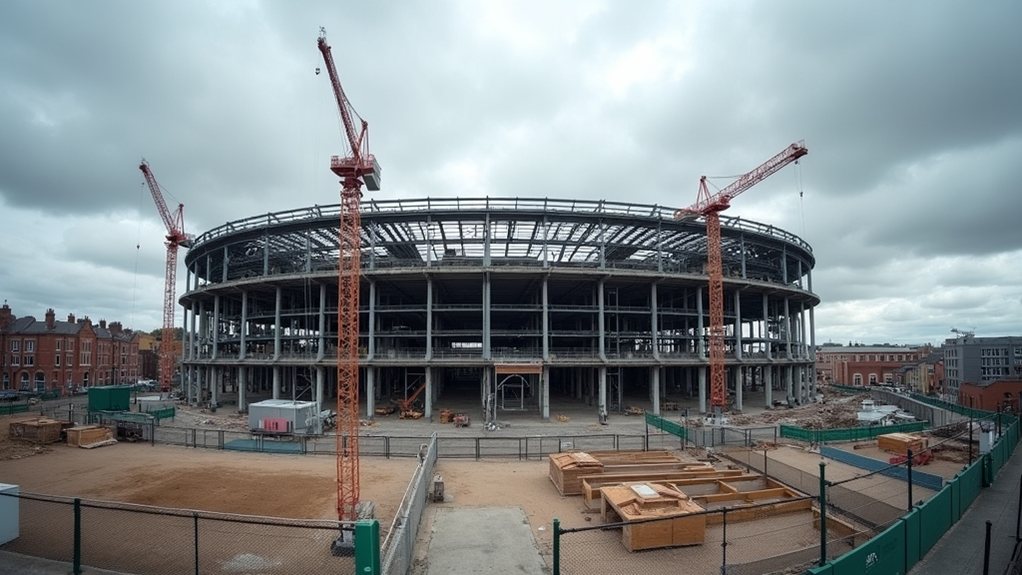
YTL Corporation, the lead developer, has maintained public commitment to delivering the arena. CEO Andrew Billingham has regularly updated stakeholders on progress, highlighting the completion of major demolition work by October 2025. The central hangar has been stripped back to its original 1940s steel frame, with the Esavian sliding doors removed and seven major structural roof trusses prepared for removal.
Several factors have contributed to the delays. The COVID-19 pandemic caused significant early schedule disruptions. Additionally, the complex heritage aspects of transforming the historic hangars have required more extensive preparatory work than a standard new build would demand. The venue is designed with a 19,000-person capacity, making it the fourth-largest indoor arena in the UK once completed. Procurement challenges and budget negotiations with contractors have further complicated progress. The unique significance of the site as the birthplace of Concorde adds both cultural value and complexity to the renovation process.
Current projections suggest a construction timeline of approximately 2.5 years once building work begins in late 2025. This places the earliest possible opening in late 2027, with 2028 considered a more realistic target by many observers.
For Bristol residents, who have watched neighboring cities like Cardiff and Birmingham successfully develop major arena venues, the continued delays represent a significant frustration. The city remains without a large-capacity entertainment venue, despite two decades of planning efforts.
As demolition work concludes and the project evolves into the construction phase, Bristol awaits concrete evidence that this long-promised cultural landmark will finally materialize after years of setbacks and revised timelines.