Occasionally, London commuters find themselves enduring the frustrating experience of waiting over 30 minutes for a train, a situation far exceeding the typical excess waiting times tracked by Transport for London (TfL).
While excess waiting times normally measure additional minutes beyond the scheduled service, extreme delays of half an hour or more occur with surprising frequency on certain lines, particularly during service disruptions.
The Circle and Hammersmith & City lines consistently demonstrate the highest excess waiting times in TfL’s performance metrics, making them most prone to extended delays. These lines’ vulnerability stems from sharing tracks with other services, creating a domino effect when any disruption occurs. When one train experiences problems, the impact cascades throughout the interconnected network, leaving passengers stranded for extended periods.
Infrastructure failures represent a major cause of these lengthy waits, which TfL works to address with its infrastructure companies. Additionally, fare zones play a role in determining the types of services available, impacting how disruptions are managed across different areas of the network.
The sharp rise in passenger numbers, with the network operating at capacity, further compounds these issues. When the system carries record numbers of travelers, even minor disruptions can trigger major delays as the network struggles to recover normal service patterns.
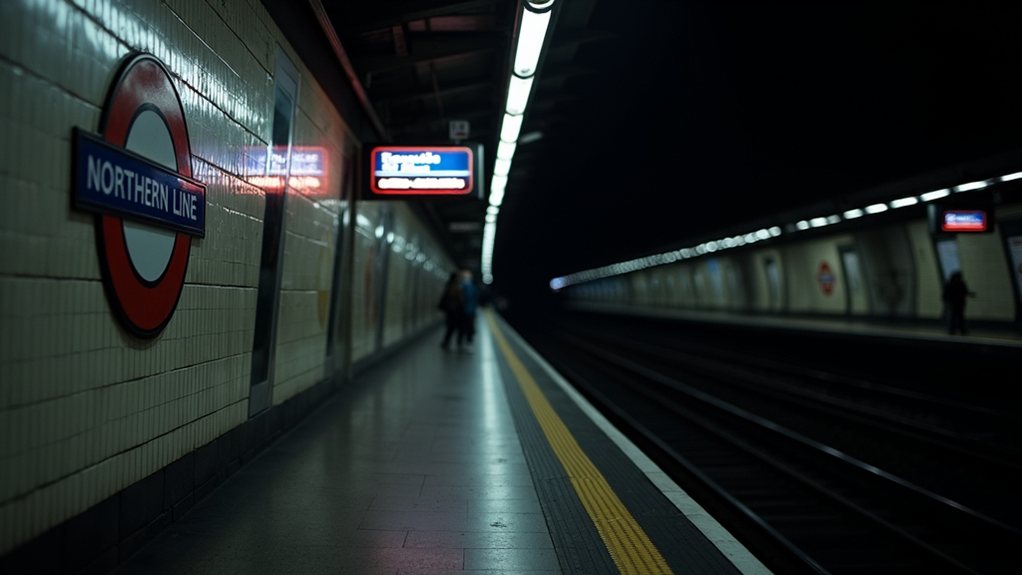
Fleet issues also contribute considerably to extended waits, especially on the Central, Jubilee, and Northern lines. Experience with wait times often varies significantly between central station users and those from outer stations, creating disparate expectations of service reliability.
When trains become unavailable due to mechanical problems, service cancellations follow, extending waiting times dramatically. Train operator shortages further exacerbate the situation, leading to reduced service frequency and longer gaps between trains. TfL data shows that defective trains are the primary factor causing service disruptions that lead to extended waiting times.
While most commuters consider five minutes a long wait under normal circumstances, according to YouGov polling data, the perception varies by line.
On the Victoria line, where trains normally arrive every 100 seconds during peak hours, even a two-minute wait feels lengthy to regular passengers.
For Londoners collectively spending 1.9 million hours monthly waiting for delayed trains, these extended waits represent not just inconvenience but considerable lost productivity and frustration, particularly on lines already known for reliability challenges.