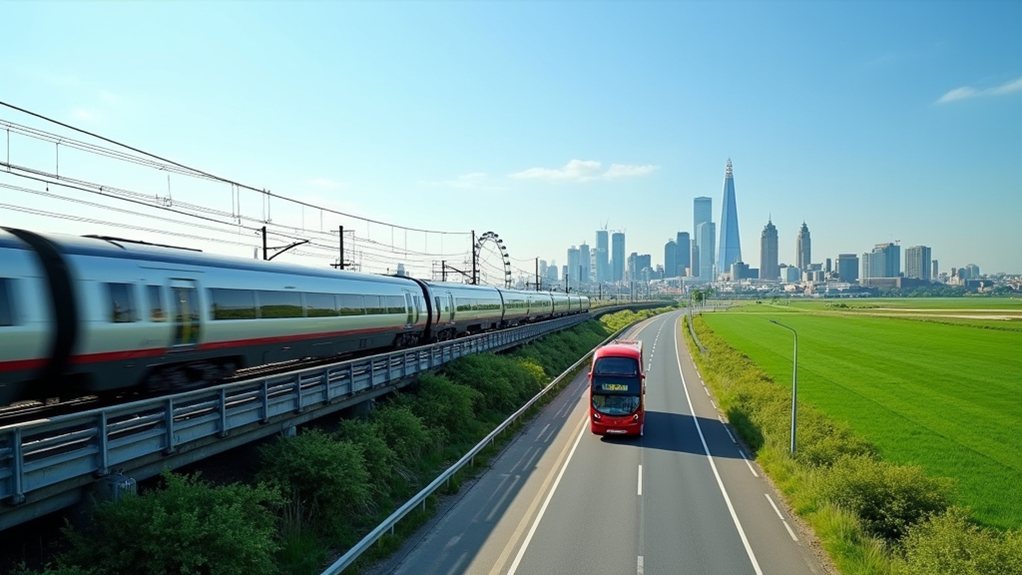
London’s fare zones are nine concentric areas that set travel costs on the Tube, Overground, DLR, and rail services. Fares depend on the number of zones crossed, with boundary stations assigned to two zones to offer cheaper options. Payment methods like Oyster cards and contactless automatically calculate fares and daily caps. Buses and trams have a flat fare that ignores zones. Understanding these basics helps plan trips efficiently, with further details revealing more about maximizing savings and travel options.
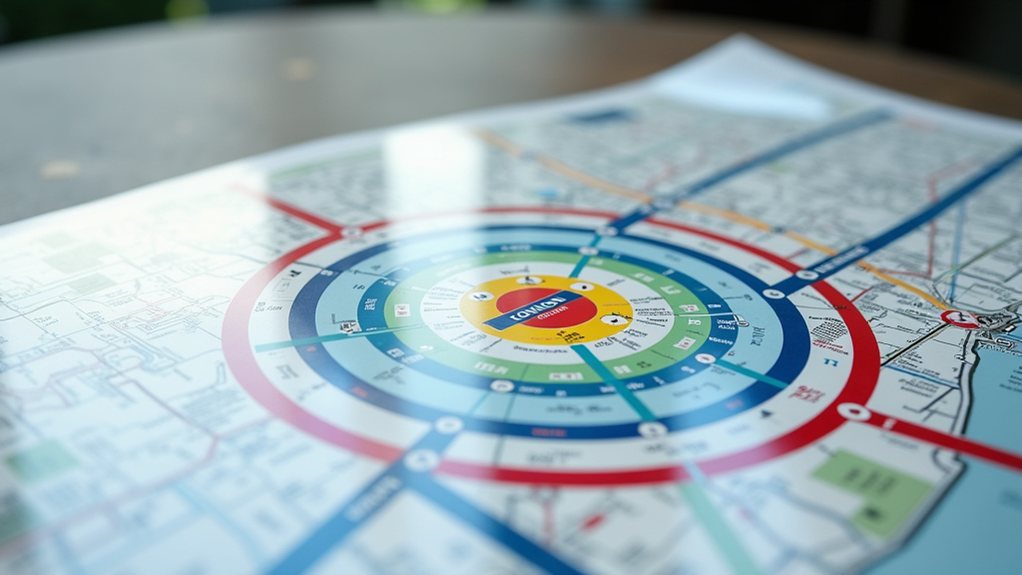
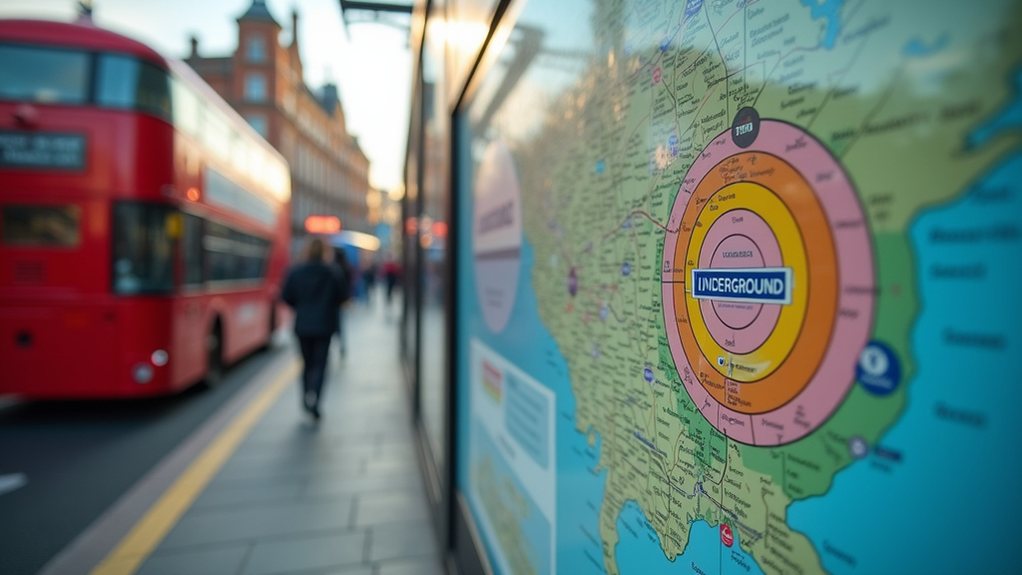
London’s public transport system uses a series of nine concentric fare zones to determine ticket prices and manage travel across the city. The nine zones start with Zone 1, which covers central London, including major hubs like Waterloo and King’s Cross. Zones 2 through 9 radiate outward, covering inner suburbs and neighboring areas. Most stations lie within Zones 1 to 6, with Zones 7 to 9 covering a few outer locations such as Watford and Amersham. This zone system applies to the Tube, London Overground, Docklands Light Railway (DLR), most National Rail services within London, and the Elizabeth line. Transport for London (TfL) uses these zones to measure journey distance and set fares accordingly. The zone system helps in calculating fares automatically when using contactless or Oyster card payments, which are widely accepted across all transport modes. Additionally, the zones help optimise time and financial resources by allowing travellers to make informed decisions based on fare zone boundaries. The Oyster Card is particularly advantageous for frequent travelers, as it provides significant savings compared to single paper tickets.
London’s nine fare zones shape ticket prices across Tube, Overground, DLR, National Rail, and Elizabeth line services.
Fares generally increase with the number of zones crossed between the start and end points of a journey. On TfL services, what matters for pay-as-you-go fares is the zones of origin and destination, not the specific route taken. Single fares, daily caps, and Travelcard prices are all grouped based on the zones covered—for example, zones 1–2, 1–4, or 1–6. Understanding fare structures is essential for budget management while commuting, with peak and off-peak hours affecting fare pricing.
Peak and off-peak pricing also interact with zones, with higher costs usually applying during peak hours for trips crossing multiple zones. Buses and trams operate differently, charging a flat fare across all zones without using the zone system.
Some stations fall within two zones simultaneously, known as boundary stations, which helps smooth fare calculations for travelers near zone borders. These stations, such as Earl’s Court (Zones 1/2), allow passengers to pay the cheaper fare if their journey remains within the inner zone. On TfL maps, boundary stations are marked with boxed labels to indicate their dual zone status.
Fares on Oyster cards and contactless payments calculate automatically using the zones touched in and out. Travelcards are sold for specific zone combinations and are valid on multiple services within those zones. Daily and weekly caps vary depending on which zones a passenger travels through, offering cost control based on distance.
Frequently Asked Questions
Can I Use Contactless Payment Across All London Zones?
Contactless payment is accepted across all London Zones 1–9 on buses, Tube, tram, DLR, London Overground, and Elizabeth line services, as well as most National Rail within these zones.
Users must touch in and out on rail services for correct fares. Some journeys beyond Zone 9 are also supported on select National Rail routes, but not all stations accept contactless.
Daily and weekly caps apply when using the same card or device consistently.
Are London Zones the Same for Buses and Trains?
London zones differ for buses and trains.
Trains use fare zones 1–9 to set prices based on travel through zones, with fares rising as more zones are crossed.
Buses do not use this zonal system; their fares are flat regardless of distance or zones traveled.
Bus and tram caps are separate and not tied to zones.
Consequently, while zones influence train fares, bus fares remain constant across all London areas.
How Do London Zones Affect Travel Times?
London zones impact travel times by generally increasing journey duration as distance from central London grows.
Outer zones (4–6) involve longer travel due to more stops and greater track length. Access and egress times, especially for bus-only trips, add further delays.
Congestion in central zones raises surface travel times, while peak-hour crowding on rail and Underground lines slows boarding.
Consequently, travel times vary by zone, mode, and time of day, often lengthening commutes from outer to inner zones.
Can Tourists Get Discounts on Fares Within London Zones?
Tourists can access discounts on fares within London zones by using a Visitor Oyster card, which offers up to 50% savings compared to cash tickets and includes daily capping.
Children under 11 travel free, while ages 11–15 may receive a Young Visitor discount of around 50% off adult fares.
Senior Railcard holders gain one-third off off-peak fares.
The Visitor Oyster card also provides extra discounts on attractions and river services, enhancing overall savings.
Are There Any Plans to Change London Zone Boundaries Soon?
There are no current plans to change London fare zone boundaries.
Transport for London (TfL) and the Mayor have not proposed any boundary adjustments for Zones 1 through 6.
Recent and upcoming initiatives focus on road user charging schemes like the Ultra Low Emission Zone expansion and Congestion Charge adjustments, which do not affect public transport fare zones.
Official consultations continue to address charges and discounts, not spatial changes to fare zones.