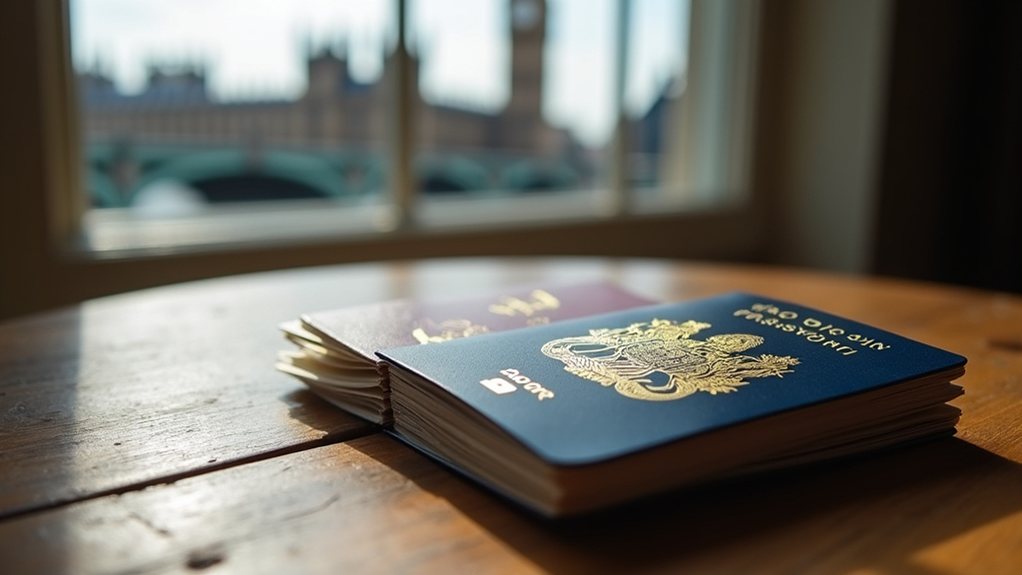

Starting February 25, 2026, British dual nationals will need to present a valid British or Irish passport to enter the UK, as non-British passports will no longer be accepted. This change is significant and may surprise dual nationals worldwide who are accustomed to using various passports for travel. Under the new rules, dual nationals must have a passport that proves their British citizenship to gain entry, aligning with the UK’s enhanced border security measures.
Starting February 25, 2026, British dual nationals must present a valid British or Irish passport for UK entry.
Travelers who use a non-UK passport will face additional requirements. They must provide a Certificate of Entitlement, which costs £589 and needs to be renewed every time they obtain a new passport. This adds a financial burden and complicates the travel process for those who may not have anticipated these changes.
In addition, the introduction of the Electronic Travel Authorisation (ETA) system requires individuals to demonstrate their British citizenship. Without the correct documentation, dual nationals cannot apply for an ETA while traveling with a foreign passport.
Airlines are also impacted by this regulation. If they allow dual nationals to board flights with only third-country passports, they could face fines. This situation poses a risk for travelers who are not prepared for the new requirements. The potential for travel disruptions is high, as dual nationals may find themselves turned away at boarding gates or immigration checks if they fail to meet the new standards.
The UK government’s modification of the immigration system reflects a broader trend aimed at bolstering border security while streamlining entry processes. These changes are designed to enhance the overall efficiency of travel into the UK.
Dual nationals worldwide should take note of these regulations, as they will need to adjust their travel plans accordingly. Understanding these new rules will be essential for ensuring smooth entry into the UK in the future.