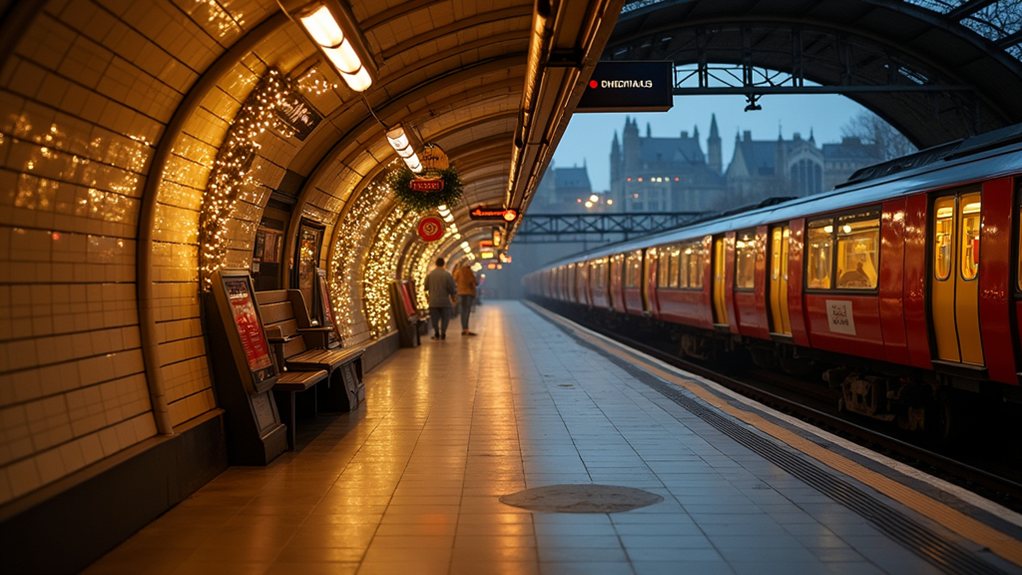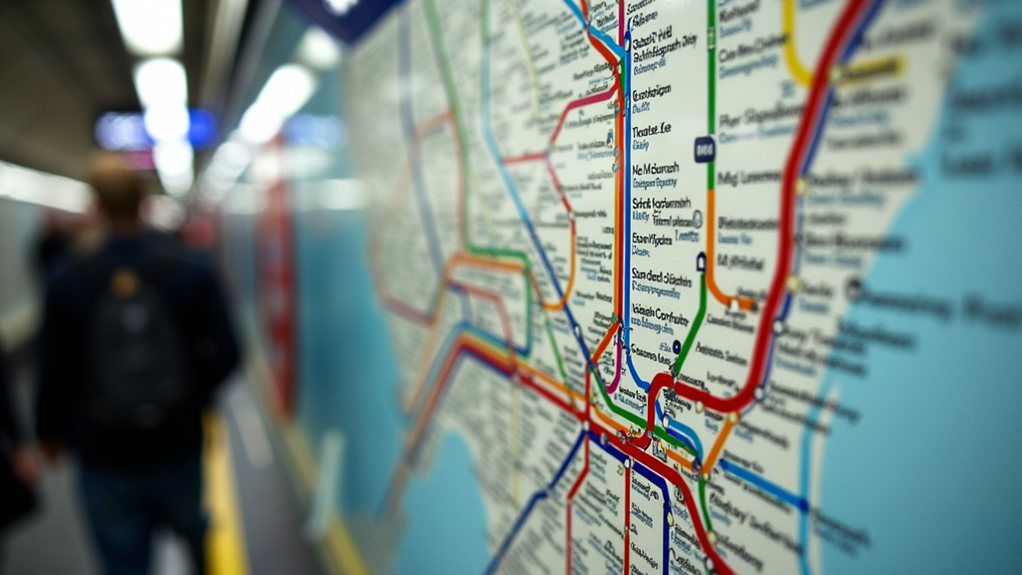
While millions of passengers navigate London’s Underground system daily, few realize that many of the stations they frequent once bore entirely different names. The London Underground‘s nomenclature has evolved considerably over its long history, reflecting geographical shifts, administrative changes, and cultural developments throughout the capital.
Farringdon station exemplifies this evolution, originally called Farringdon Street before its relocation in 1865. The station underwent further name changes in the early 1920s before finally settling on its current designation in 1936.
Similarly, Arsenal station was formerly known as Gillespie Road, while Embankment station changed names five times throughout its history, demonstrating the fluid nature of the Underground’s naming conventions.
Many current station names faced serious competition when first established. Brent Cross could have been Woodstock, while Burnt Oak had at least three alternative proposals. Marylebone might have been known as Lisson Grove, which some argue would have provided better geographical accuracy. Cockfosters narrowly avoided becoming Trent Park, a decision that prevented potential humor associations that transport officials likely wished to avoid.
The naming of Underground lines follows equally interesting patterns. The Bakerloo line, named in July 1906, was initially described as an “undignified gutter title” by Railway Magazine before achieving widespread acceptance. Baker Street station on the Bakerloo Line is historically significant as one of the first stations built in the original Underground development plan in 1863.
The Underground is an essential part of London’s transportation network, carrying 5 million passengers daily across its extensive system of 11 lines and 272 stations.
The Jubilee line, named in honor of Queen Elizabeth II’s Silver Jubilee, was originally planned as the Fleet Line until a timely renaming in 1977.
London’s station names often reveal fascinating etymological origins. Perivale translates to “Valley of the Pear Trees,” Holborn derives from “Stream in a Hollow,” and Paddington comes from “Padda’s Farm.” These names connect modern travelers to the city’s ancient past, even as they hurry through stations adorned with the iconic roundel symbol first introduced in 1908.
The standardization of naming conventions came in 1933 when the London Passenger Transport Board took control, bringing consistency to what had previously been a somewhat chaotic system determined by competing railway companies. Hampstead station was initially going to be called Heath Street, with Heath Street even appearing on early Underground maps before receiving its permanent name.