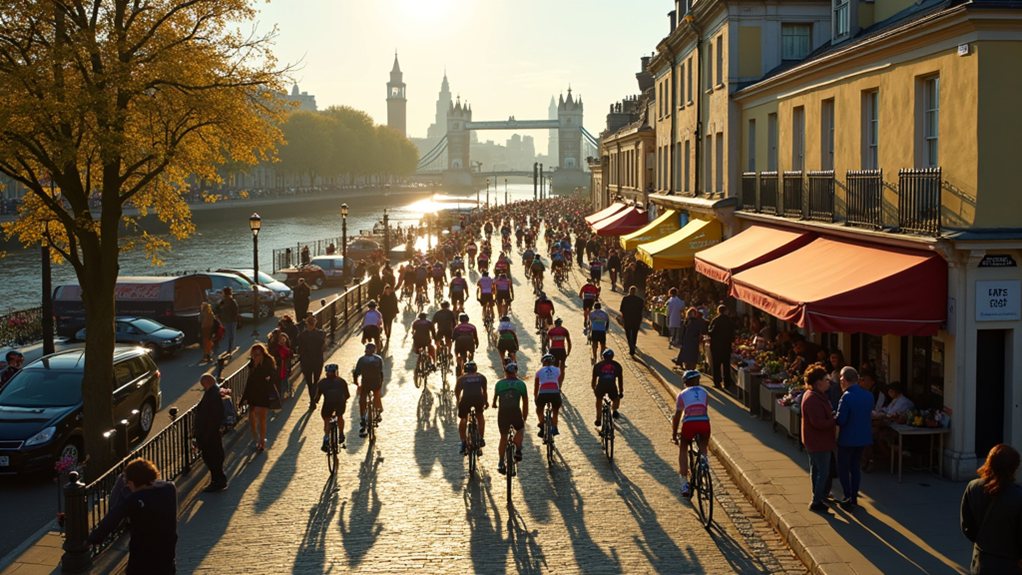
London’s streets transformed into a vibrant sea of cycling enthusiasts when the Tour de France, one of the world’s most-watched annual sporting events, came to the capital. The 2014 event saw approximately 600,000 people lining London streets and filling fan parks on a regular workday, demonstrating the race’s immense popularity.
Remarkably, one in four residents of the Yorkshire and Humber region attended the race in person when it passed through their area, contributing to the 3.5 million spectators who watched the Tour at roadside during the UK stages.
The economic benefits of hosting the Tour proved substantial for London and other regions. The 2014 Tour generated approximately £130 million for host economies, with Yorkshire receiving £102 million and London alone accounting for £19.5 million. This aligns with London’s previous experience hosting the 2007 Grand Départ, which produced approximately £22.3 million in economic benefits for the city. Large cycling events typically contribute between £20-30 million in economic value per event to London, similar to the impact of Borough Market Experience on local businesses.
International tourism played an essential role in these economic gains. The 2014 event attracted 113,000 visitors from outside the UK, generating £33 million for the economy.
The accommodation sector received £24.3 million in direct benefit, as hotels and lodging services experienced substantial demand during the event. Unlike many other sporting events, the Tour offers free admission for all spectators, allowing for broader accessibility and increased economic impact across various sectors. Visitor spending on accommodations, dining, and merchandise represented a significant portion of the total economic impact.
Beyond immediate economic benefits, the Tour created lasting social impacts. The event helped support London’s objective to encourage more people to cycle safely and frequently, cementing the cycling participation legacy from the London 2012 Olympic Games. Similar to how Lloyds Bank Tours of Britain increased local economies by over 30 million in 2024, the Tour de France provided both economic stimulus and cultural significance. The event was overwhelmingly well-received with 79% of attendees at stage three in London expressing positive sentiments about hosting the Tour.
Transport for London invested £6 million from its cycling budget on Tour preparations, contributing to the typical £7.5-8.6 million host cities spend on event infrastructure.
The Tour de France’s presence in London showcased the city’s continental appeal while delivering tangible economic benefits, increased tourism, and renewed interest in cycling as both sport and daily transportation for Londoners.