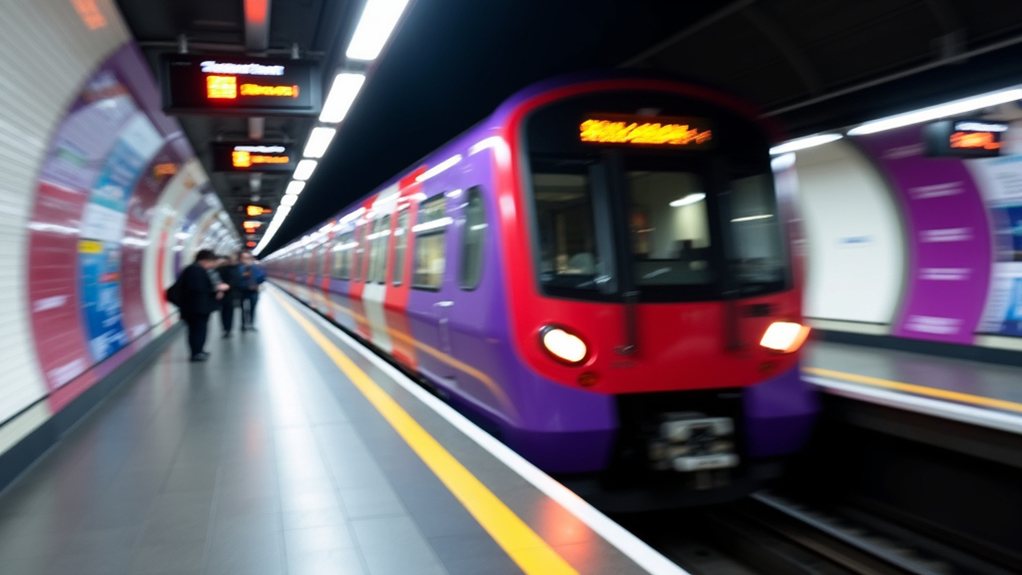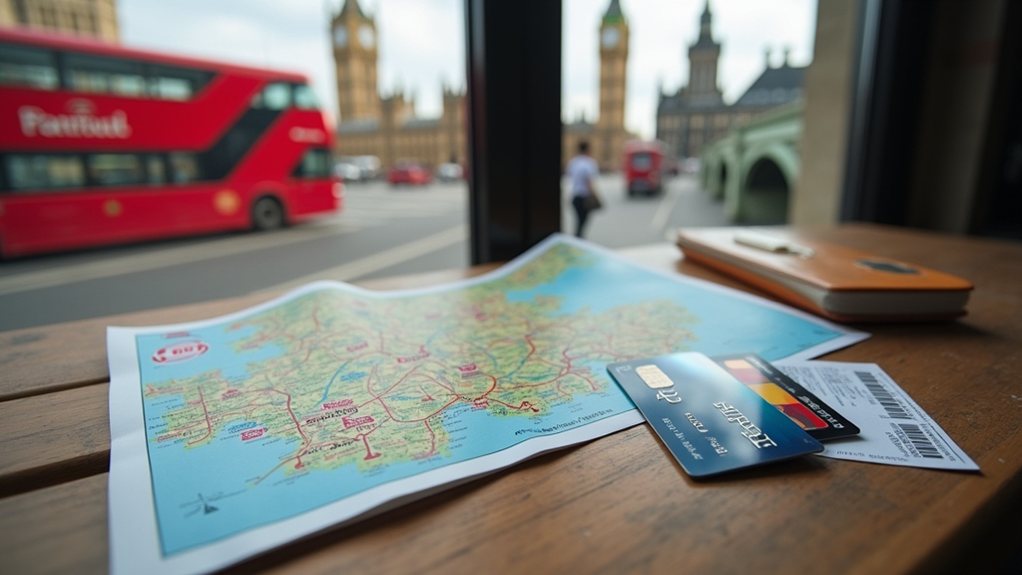
Thameslink trains serve routes from Bedford and Luton in the north to Brighton in the south, stopping at central London stations such as St Pancras, City Thameslink, and London Bridge. Tickets follow National Rail pricing rules, with options for off-peak travel, contactless payment, and railcard discounts. Travelers should check real-time updates and note that not all trains stop at every station. Accessibility features include step-free access on key routes. Further details explain how to navigate these services efficiently.
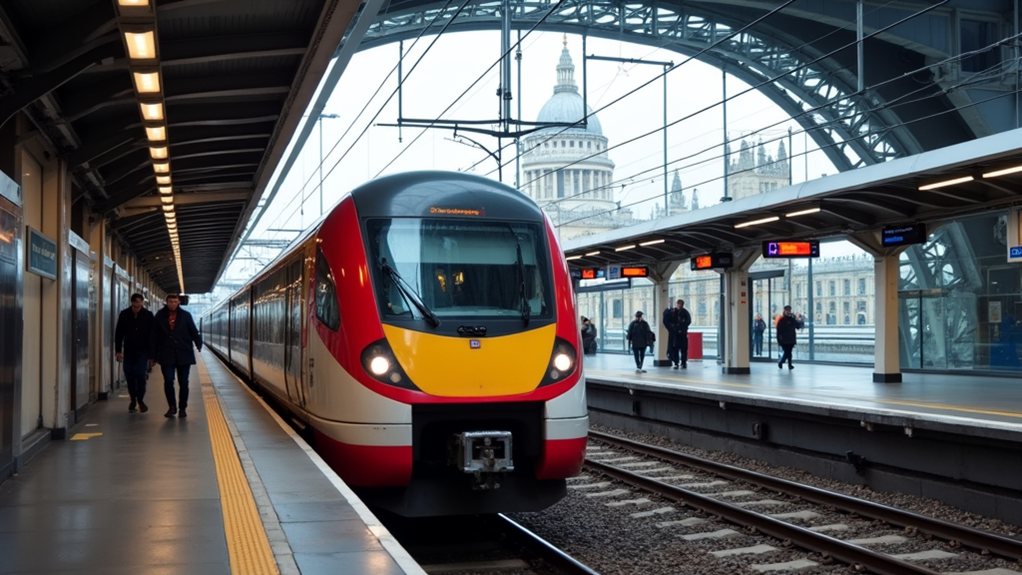
Although Thameslink operates across a broad area of southeast England, its services to London are central to the network’s function. The core route connects Bedford in the north to Brighton in the south, passing through key London stations such as London St Pancras, City Thameslink, and London Bridge. Thameslink also serves major London terminals including London Blackfriars and offers routes that extend beyond London to cities like Cambridge, Luton, Sutton, and Croydon. The network uses multiple coloured routes that cover various destinations across London and the southeast, creating a thorough rail system that supports both local and longer-distance travel.
Thameslink’s core route links Bedford to Brighton, serving key London stations and extending to major southeast cities.
Within London, Thameslink trains run through important stations that serve as hubs for passengers to change to other services. London St Pancras International stands out as a major interchange, connecting Thameslink with international Eurostar trains and other domestic routes. City Thameslink is situated in the financial district, providing access to central London, while London Blackfriars links north and south London routes and connects with the London Underground. London Bridge serves as an important southern terminal with connections to several other rail operators.
Some routes also pass through the Wimbledon loop, running both clockwise and anticlockwise to serve stations like Mitcham, Sutton, and Wimbledon itself.
Ticketing on Thameslink follows standard National Rail fare structures, offering single, return, and season tickets. Off-peak and peak travel options are available, with pricing varying by travel times and destinations within London. Passengers can use contactless payments and Oyster cards on sections overlapping with London transport zones. Through tickets are available for journeys that combine Thameslink with bus or Underground travel. Discounts apply when using advance purchase tickets or railcards.
Travelers are advised to check real-time service updates and live maps before traveling, as not all trains stop at every station on the routes. Using major interchange stations like St Pancras, Blackfriars, or London Bridge facilitates smooth transfers. Off-peak travel is recommended to avoid crowding, especially through central London. Moreover, the travel experience from Luton to London can be further simplified by utilizing convenient train services.
Thameslink trains and key stations provide step-free access, accommodating passengers with wheelchairs and mobility devices.
Frequently Asked Questions
Are Thameslink Trains Wheelchair Accessible?
Thameslink trains are wheelchair accessible, featuring designated spaces in standard class and centrally located accessible carriages with toilets.
Boarding ramps assist step-free access at many stations. The Class 700 trains comply with disability legislation, offering wide corridors and level boarding.
Priority seating is reserved for disabled passengers. Passengers can book assistance in advance, and staff support wheelchair users with boarding and connections.
Mobility aids must meet size and weight limits to guarantee safe travel.
Can I Bring a Bicycle on Thameslink Trains?
Non-folding bicycles are allowed on most Thameslink trains outside weekday peak hours, specifically not between 07:00-10:00 inbound and 16:00-19:00 outbound through Central London.
No seat reservations are needed, but bike spaces are limited and on a first-come, first-served basis.
Folding bikes face no restrictions.
Passengers should keep bikes clear of aisles and doors.
Staff may restrict bike carriage when space is insufficient for safety.
What Are the Peak and Off-Peak Travel Times?
Peak travel times on weekdays are from 06:30 to 09:30 in the morning and 16:00 to 19:00 in the evening.
Off-peak periods begin after 09:30 until the afternoon peak, and again after 19:00 until service ends.
On weekends and bank holidays, all travel is considered off-peak.
Tickets differ in price and validity based on these times, with off-peak tickets offering lower fares and more flexible travel options.
Are There Onboard Facilities Like Restrooms and Wi-Fi?
Thameslink trains generally provide onboard restrooms, primarily on Class 700 trains, enhancing comfort on longer journeys.
Free Wi-Fi is available on most trains, identifiable by a blue sticker on doors; passengers must connect to the ‘thameslink_wifi’ network. Power sockets are also installed for charging devices.
However, no baby changing or catering services exist onboard. Station facilities like accessible toilets are separate and not found on trains, so passengers should plan accordingly.
How Do I Get a Refund for a Delayed Train?
To get a refund for a delayed train, passengers should use the Thameslink Delay Repay online portal within 28 days of travel.
Claims require a valid ticket and a delay of 15 minutes or more. Refunds vary by delay length and ticket type.
Passengers must keep tickets and any date stamps. Automatic emails are sent within 48 hours after delays, and refunds typically process within 10 to 28 days.
Claims for tickets bought elsewhere go through that provider.