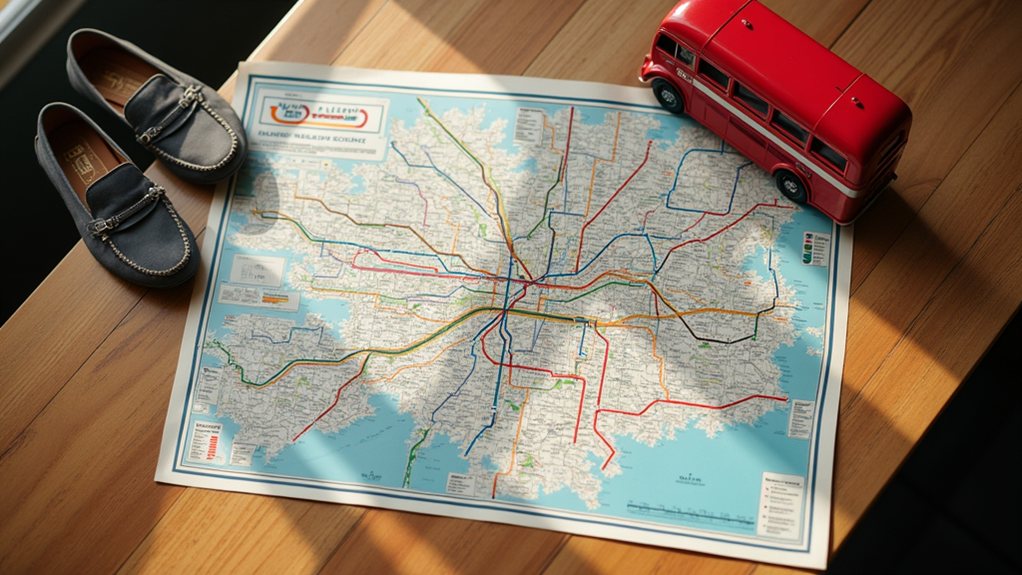
The London Tube map features 11 lines and 272 stations, covering central and surrounding areas. First-time visitors should note the color-coded lines for easy guidance and the division into nine travel zones, which affect fare pricing. Services run from early morning until midnight, with Night Tube on some lines during weekends. Travelers can use Oyster Cards or contactless payments for convenience and savings. Understanding fare zones and peak times helps plan trips efficiently. Further details explain managing fares, timings, and connections.
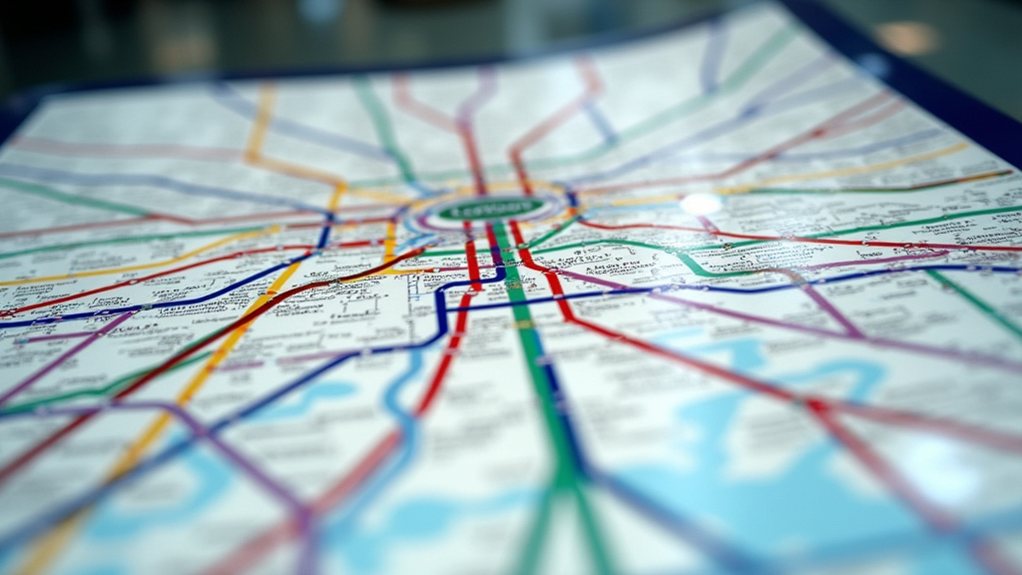
The London Underground, commonly known as the Tube, is a rapid transit system serving London and its surrounding areas. It consists of 11 lines, including the Bakerloo, Central, Circle, District, Hammersmith & City, Jubilee, Metropolitan, Northern, Piccadilly, Victoria, and Waterloo & City lines.
The network includes 272 stations, covering central London and extending to its outskirts within nine travel zones. It handles up to five million passenger journeys daily, with over 1.1 billion passenger journeys recorded in 2023/24. Operating hours generally run from 5 a.m. to midnight, with Night Tube services available on selected lines during Friday and Saturday nights. Children under 11 travel free on the Tube when accompanied by an adult, making it a family-friendly transport option. Additionally, Oyster Cards and contactless payments can provide even greater savings for frequent travelers.
Serving 272 stations across nine zones, the Tube handles five million daily journeys with extended Night Tube service weekends.
For first-time visitors, understanding the fare system is important. Fares depend on travel zones, the time of day, and the payment method used. Peak fares apply from Monday to Friday between 6:30 a.m. to 9:30 a.m. and 4 p.m. to 7 p.m., while off-peak fares are charged at other times. However, it is important to note that tube and rail fares will increase by 4.6% in March 2025, which may affect travel costs.
The most cost-efficient and convenient payment methods are Oyster cards or contactless payments, which also offer standard off-peak fares for Night Tube trips. Ticket vending machines, available at most stations, provide options for travel cards and prepaid tickets.
Service frequency and capacity are continuously improving, with several line upgrades planned. The Central line is expected to increase peak service to 33-36 trains per hour by 2030. The Piccadilly line aims for a 60% capacity increase by 2026, and the Waterloo & City line plans a 50% capacity rise by 2032 after station upgrades.
The Bakerloo line is also targeted for a 25% capacity increase by 2033. These improvements include signalling upgrades and the introduction of automatic train operation systems to enhance reliability and efficiency. Additionally, the reopening of Kentish Town station has been delayed until December 2024 due to complex repairs, affecting current travel options on the Northern line.
Accessibility is a focus, with step-free access being added to more stations, including Leyton, scheduled for completion by 2027. Major station redevelopments, such as at Elephant & Castle, aim to improve passenger flow and station capacity.
Infrastructure upgrades at key interchanges like Waterloo include redesigned concourses and enhanced cycle connections. New rolling stock, including air-cooled walk-through trains on the Central line and Siemens trains on the Piccadilly line, are being introduced to improve comfort and capacity.
These modern trains, combined with signalling upgrades, contribute to shorter journey times and increased punctuality across the network.
Frequently Asked Questions
What Are the Best Times to Avoid Crowds on the London Tube?
The best times to avoid crowds on the London Tube are weekdays between 9:00 AM and 4:30 PM, and after 6:45 PM until late evening.
Early morning travel before 7:30 AM and just after peak hours, between 9:30 AM and 10:00 AM, is also less crowded.
On weekends, traveling before 1:00 PM and after 6:30 PM reduces crowding.
Avoiding major interchange stations during peak hours further helps minimize congestion.
Can I Use Contactless Payment Cards on the London Tube?
Contactless payment cards can be used on the London Tube by tapping them on yellow card readers at entry and exit points.
Each traveler must use their own card or device, as one card cannot pay for multiple people.
The system calculates fares based on zones and peak times, with daily and weekly caps to limit costs.
To avoid extra charges, the same card must be used for both tap in and tap out during a journey.
Are There Elevators or Escalators at All Tube Stations?
Not all London Underground stations have elevators or escalators. Around 93 stations, about 34% of the network, offer step-free access with elevators or ramps.
Many older stations lack full accessibility due to structural or financial challenges. Newer stations and lines, like the Elizabeth line, are fully accessible.
Travelers should check Transport for London’s journey planner before traveling to confirm which stations have elevators or escalators to guarantee smooth transit.
How Do I Report Lost Items on the London Tube?
To report a lost item on the London Tube, one must complete the online Lost Property enquiry form on the Transport for London (TfL) website.
Detailed descriptions of the item, including brand, color, and unique features, plus the date, time, and location of loss, are required.
After submission, TfL processes the enquiry within 15 working days. If a match is found, the owner receives email instructions for verification and collection by appointment.
Is the London Tube Safe to Travel at Night?
The London Tube is generally safe to travel at night due to extensive policing, staffed stations, and CCTV coverage.
However, recorded crimes, including theft and violence, have slightly increased, especially in areas like Westminster and Lambeth.
Passengers should remain cautious, avoid isolated carriages, and report suspicious behavior.
Night workers report some safety concerns, so using well-lit, busy stations and staying aware of surroundings enhances security during night travel.