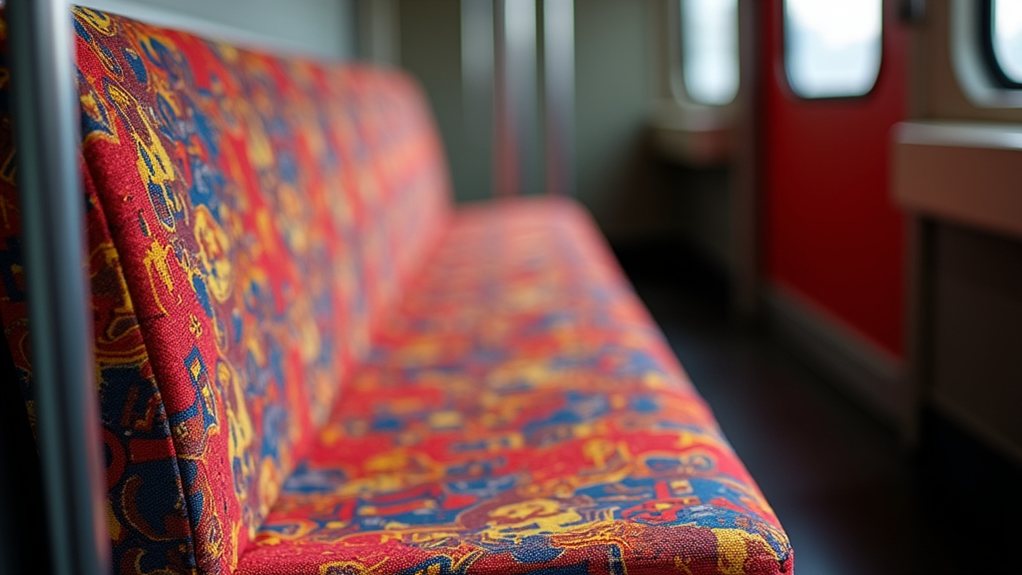

While millions of passengers ride London’s iconic underground system daily, few pay attention to the vibrant fabric beneath them. This thick, velvety material called moquette has been a staple of London transport since 1923. The word comes from Old French for carpet, and it’s specifically designed for public transport upholstery, combining 85% wool with 15% nylon to create a durable, insulating fabric.
London Transport first introduced moquette with the Lozenge design by Firth Furnishings Ltd., reflecting the popular art deco style of the 1920s. The fabric quickly spread to buses, trams, and trolleybuses throughout the 1930s because it was both affordable and readily available.
Lozenge design brought art deco flair to London’s transit system in the 1920s, quickly becoming the upholstery of choice across the city’s transportation network.
When London Transport formed in the 1930s, visionaries Frank Pick and Christian Barman transformed this practical fabric into design icons by commissioning talented artists. Notable designers including Marianne Straub, Douglas Scott, and Enid Marx created patterns that would become part of London’s visual identity. The 1938 tube trains featured red and green moquettes that became instantly recognizable.
Each line now boasts its own distinctive pattern. The Overground uses earthy browns and oranges reminiscent of 1970s design, while the Victoria Line features the blue Barman pattern with London landmarks. The unique moquette designs on the Victoria Line demonstrate why this durable fabric material became the industry standard for public transportation seating throughout London. The Elizabeth Line’s purple pinstripe creates a sensation of speed, and the District Line incorporates orange tones to match its brighter interiors. During periods of high traffic, some design websites featuring these iconic patterns may experience temporary unavailability.
Practical innovations have also been woven into these fabrics. Since 2010, modified blue Barman moquette highlights priority seating, and in 2019, the Jubilee Line introduced a striking priority pattern. In the 1990s, designers began incorporating line colors into the moquettes, including a custom bright yellow version for Circle Line trains sponsored by Yellow Pages. Modern collaborations have expanded moquette’s reach, with TfL’s Fabric of London campaign launching in February 2025 to showcase digital moquette patterns on LED screens throughout the network.
Today, these patterns have become cultural icons available as merchandise. The Transport for London shop sells socks, scarves, and ties featuring moquette designs that often sell out quickly.
Design enthusiasts can even purchase the fabric by the meter for upcycling projects, reflecting how these bold patterns have woven themselves into London’s cultural fabric for over a century.