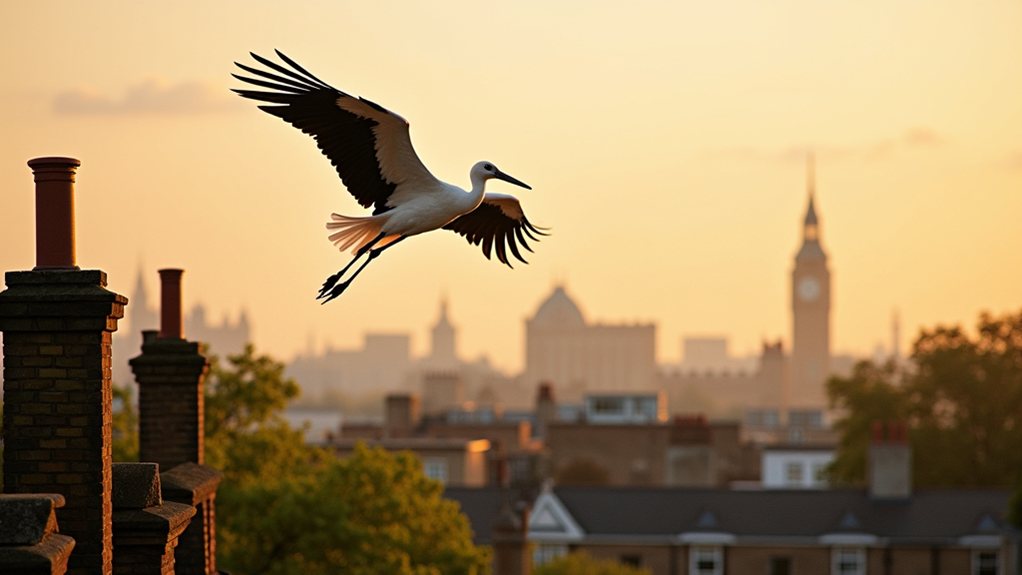
In an exciting conservation effort, the rewilding of white storks in London is set to begin in October 2026, marking a significant step in restoring a bird species that has not bred in the UK since 1416. This initiative is part of the “Rewilding East London” project, which aims to reintroduce these majestic birds to the area. The white storks will be housed in a purpose-built aviary located in Eastbrookend Country Park, Dagenham, where they can breed and acclimatize to their new environment.
The reintroduction of white storks is essential not only for the species itself but also for the health of the local ecosystem. These birds play an important role in controlling populations of small mammals and insects, contributing to the overall biodiversity of the area. Their nesting habits also provide homes for various other bird species, further enriching the local wildlife.
The reintroduction of white storks will enhance biodiversity and support local ecosystems through their vital roles in nature.
The success of white stork nesting has already been demonstrated, as seen in 2020 at Knepp estate, where the first successful nesting occurred after centuries of absence, resulting in over 68 chicks fledging in just four breeding seasons.
In addition to ecological benefits, the rewilding project emphasizes community engagement and awareness around conservation efforts. Local residents, particularly youth, will have the opportunity to participate in educational programs designed to foster a connection with wildlife. This initiative aims to inspire individuals to monitor and care for their environment, ensuring that they understand the importance of biodiversity and conservation.
As London prepares for the return of white storks, this project serves as a beacon of hope for other conservation efforts. It highlights the potential for successful reintroductions and showcases how communities can come together to support ecosystem recovery.
The rewilding of white storks is not just about bringing back a bird; it is about building a more vibrant and diverse natural world in London.