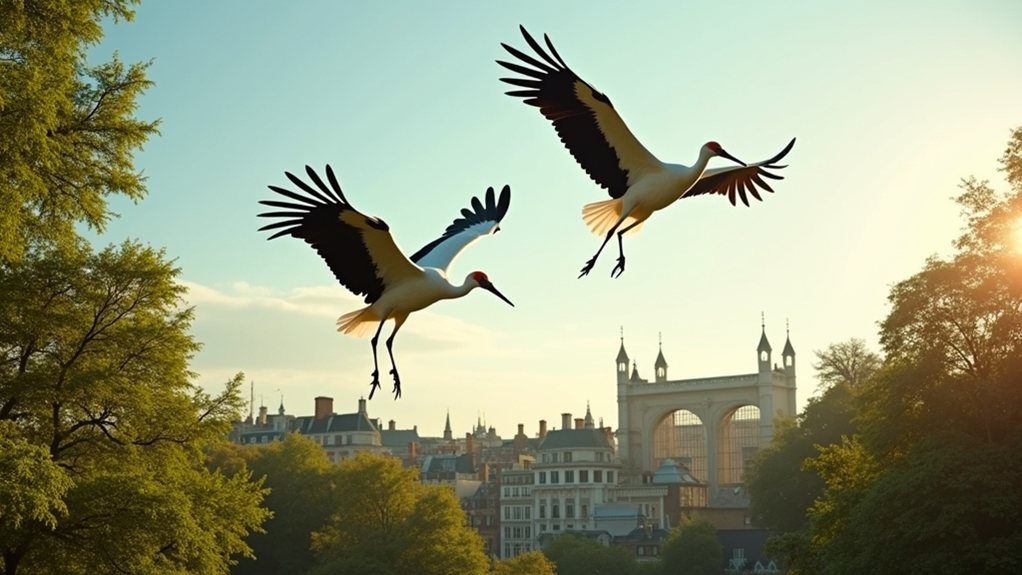
In October 2026, white storks will return to London, marking their first breeding in the city after a 600-year absence, as they were last seen nesting in Britain in 1416. This remarkable event is part of a broader rewilding initiative aimed at enhancing urban biodiversity. The project highlights the importance of reintroduction efforts, as these birds play significant ecological roles within their habitats.
To facilitate this return, a purpose-built aviary will be established at Eastbrookend Country Park in Dagenham. This site is becoming increasingly important for public access to the white storks, allowing city dwellers to observe these majestic birds in their natural behavior. As the storks nest and breed in London, they will contribute to the rich biodiversity of the urban environment.
The reintroduction project is supported by £500,000 from the Mayor of London’s Green Roots Fund, which aims to promote sustainable practices in the city. This funding underscores the commitment to restoring natural ecosystems within urban areas. The successful nesting of wild storks at Knepp Estate in 2020 has provided a model for this initiative, where over 68 chicks have fledged in the initial four breeding seasons.
White storks are known for their ecological significance. They help control small mammal and insect populations, which can lead to a healthier ecosystem. Their nesting activities also create habitats for other bird species, further boosting urban biodiversity.
As these storks return to London, they will not only enrich the local environment but also serve as a symbol of successful conservation efforts. The rewilding of white storks in London represents a hopeful step towards restoring a more balanced relationship between urban areas and wildlife.