Primrose Hill in London offers several walking routes starting near Chalk Farm station, including circular paths through Primrose Hill and Regent’s Park, ranging from 4 to 7 kilometers. The hill’s summit provides panoramic views of Central London, accessible by a short climb. Walkers can enjoy the scenic Regent’s Canal towpath filled with colorful boats and local flora. The area features Georgian and Victorian architecture, cafés, and gardens. Additional highlights enrich this urban-natural blend for visitors seeking exploration beyond the main viewpoints.
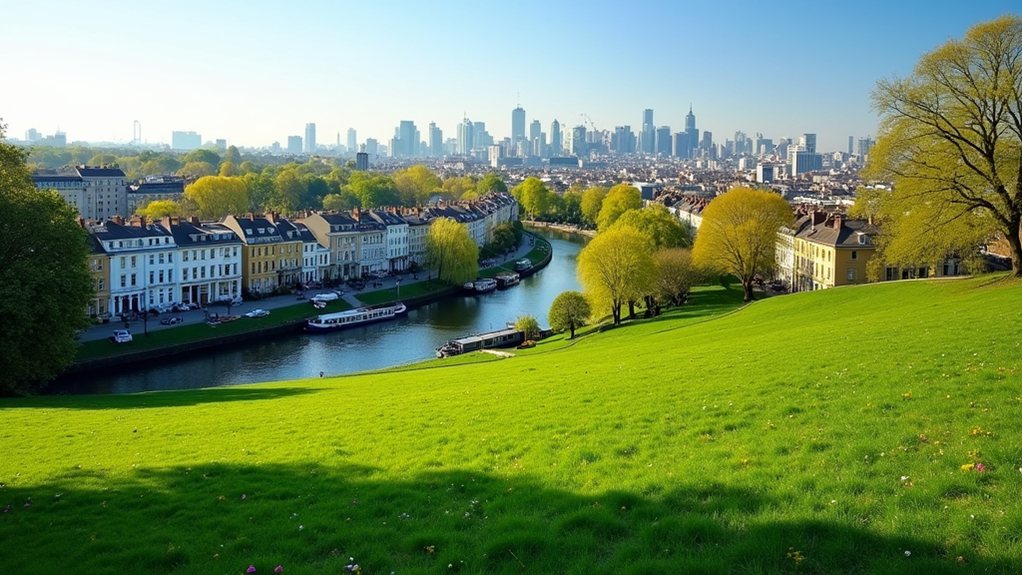
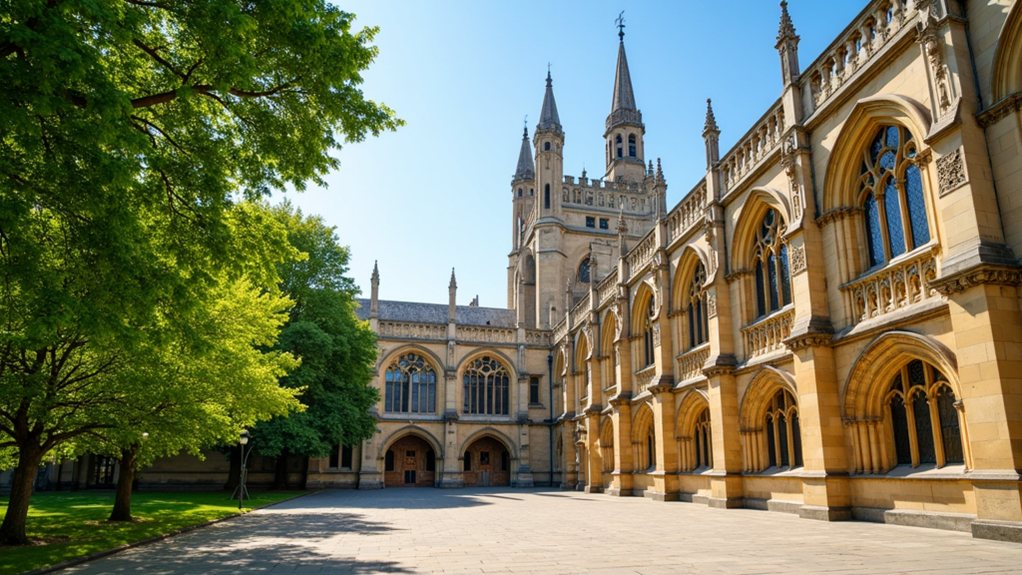
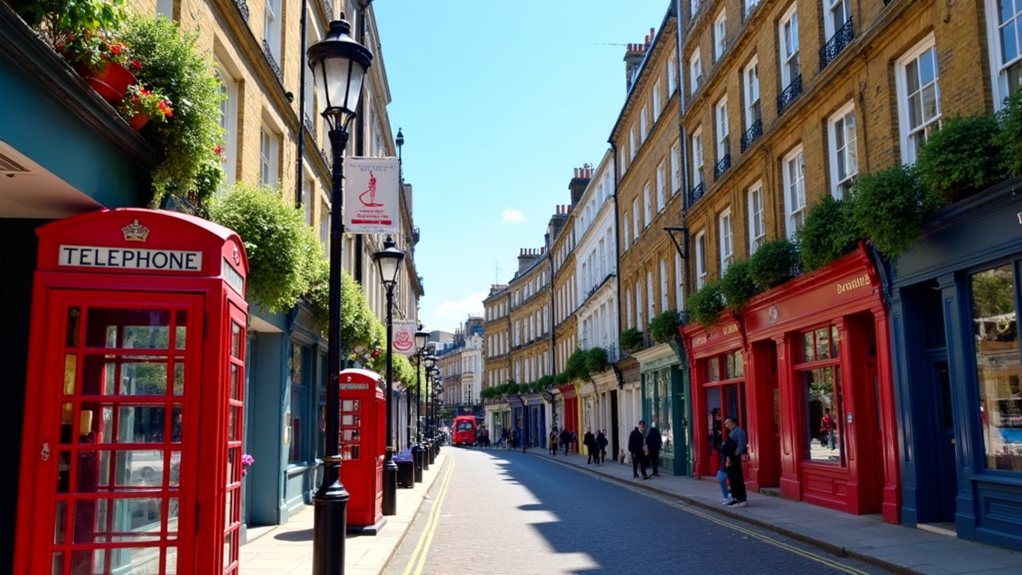
Although Primrose Hill is a relatively small area in London, it offers a variety of walking routes that combine natural beauty, urban views, and architectural interest. Many walks begin at Chalk Farm tube station, which provides convenient access via the Northern Line and local buses. A common route passes through Adelaide Road, Regent’s Park Road, and Gloucester Avenue, before reaching the towpath along Regent’s Canal. This path features colorful houses and moored boats, presenting a peaceful contrast to the urban setting. Walkers can select circular routes linking Primrose Hill and Regent’s Park, with distances ranging from 4 to 7 kilometers, suitable for all skill levels. The area is also known for its charming independent shops and Victorian terraces, especially visible along Regents Park Road and Chalcot Square, which add a unique local character to the walks. The towpath along Regent’s Canal is also part of National Cycle Route 1, making it popular with cyclists. A popular circular walk starting at Regents Park Station covers about 4.2 miles and typically takes around two hours to complete. Additionally, Oxford’s historic charm is mirrored in Primrose Hill’s architectural diversity, making it a captivating place to explore.
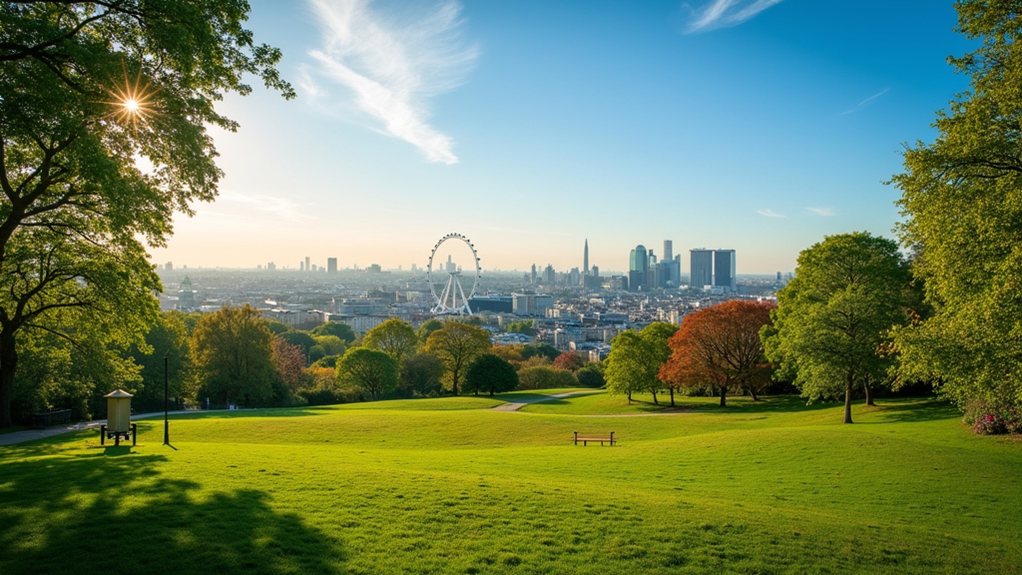
Primrose Hill’s summit is a key highlight, offering one of six protected viewpoints in London. From this grassy, open top, visitors can see panoramic views that include the London Eye, Central London’s skyline, and the City’s financial district. The proximity of these landmarks creates a compact and accessible cityscape. Although the views are available year-round, spring and summer provide clearer visibility and better lighting conditions. The hill’s elevation involves a short climb but remains manageable due to the otherwise flat surrounding terrain, making it ideal for leisurely outings from spring through autumn.
Primrose Hill’s summit offers stunning panoramic city views, with optimal clarity during spring and summer months.
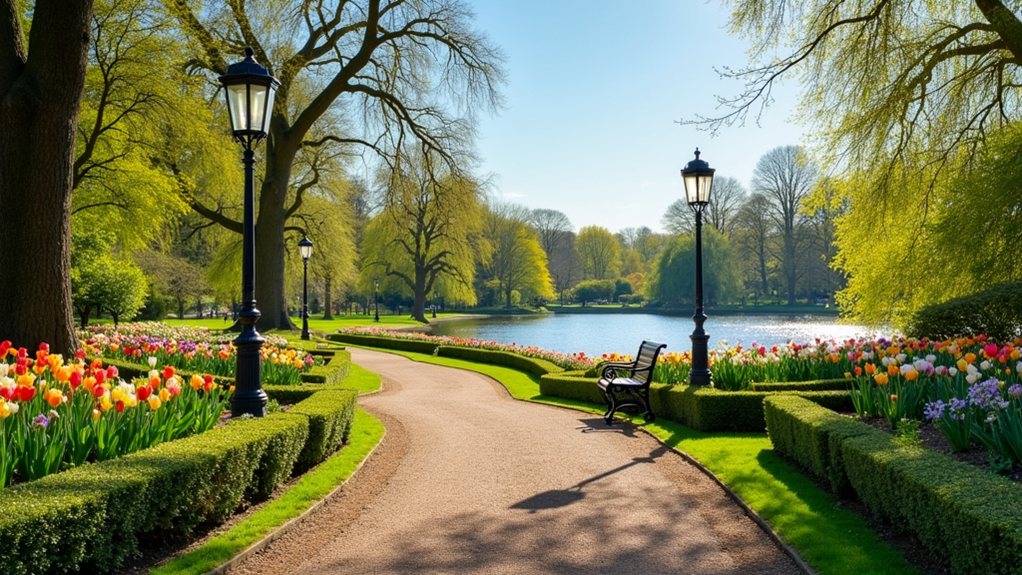
The combined walks with Regent’s Park enhance the experience by incorporating additional points of interest, such as Park Square Gardens, London Zoo, the Boating Lake, and Queen Mary’s Gardens. These routes feature expansive lawns, ornamental flower gardens, and outdoor cafés, particularly appealing during warmer months. The natural diversity of Regent’s Park complements the urban panoramas visible from Primrose Hill. For those interested in exploring even more hidden gems in the area, the book “London’s Hidden Walks” is a great resource to discover under-the-radar spots nearby.
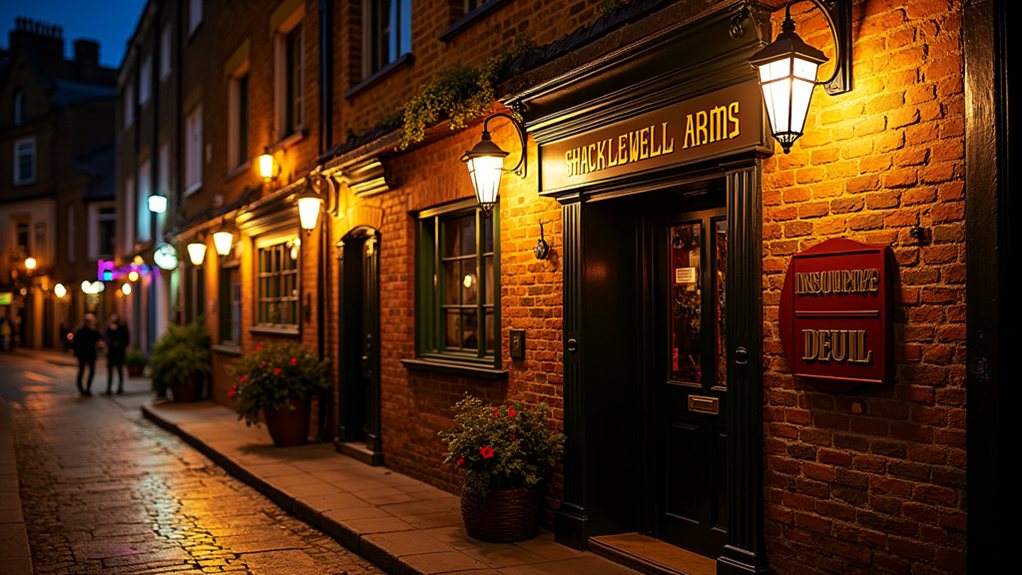
Architectural highlights can be observed along Chalcot Square and Crescent, noted for Georgian and Victorian houses, some in bright colors. Streets like Princess Road offer local cafés, pubs, and shops, reflecting a vibrant community atmosphere. Heritage sites, including St Mark’s Church with its distinctive facades, add historical context to the walks.
Additionally, the Regent’s Canal towpath provides a flat, accessible route with scenic views of narrowboats and tree-lined banks, connecting various parts of the neighborhood. Overall, Primrose Hill’s walks combine diverse elements, making them suitable for residents and visitors seeking a balanced urban and natural experience.
Frequently Asked Questions
What Is the History of Primrose Hill?
Primrose Hill’s history dates back to Roman times as part of Middlesex forest, later appropriated by Henry VIII for hunting.
It transformed from dense woodland to open fields after King Henry III’s reign. The name, linked to primrose flowers, has been used since the 15th century.
Key developments include railway construction beneath the hill, villa and terraced housing expansions, and its designation as public parkland in 1842.
The site also holds significant historical and cultural events.
Are There Family-Friendly Activities Nearby?
Yes, family-friendly activities nearby include four playgrounds with equipment like swings, slides, and a zip-line.
Regent’s Park offers sports facilities such as tennis courts and football pitches.
The ZSL London Zoo provides animal exhibits and educational programs.
Families can enjoy picnics on Primrose Hill’s grassy areas with skyline views, stroll along Regent’s Canal, or attend outdoor theatre performances in summer.
Nearby cafés and markets offer child-friendly refreshments and shopping options.
What Public Transport Serves Primrose Hill?
Primrose Hill is served by the Northern line at Chalk Farm and Belsize Park stations, and the Jubilee line at Swiss Cottage station, all offering frequent trains.
Bus routes 274, 31, C11, 88, N28, and N31 connect Primrose Hill to central and surrounding areas, with night services on weekends.
Nearby rail services include Thameslink and Chiltern Railways accessible from Camden Town.
Taxi ranks and Santander Cycle docking stations provide additional transport options.
Where Can I Find Parking Near Primrose Hill?
Parking near Primrose Hill is available through off-street options like JustPark, offering over 600 pre-bookable spaces in nearby areas such as Gloucester Crescent and Upper Park Road.
Marriott Regents Park and Finchley Road car parks are also accessible.
On-street parking is found around Regent’s Park with pay-and-display bays, charging £2.80 per hour Monday to Saturday.
Pre-booking is recommended due to limited spaces.
Some locations provide CCTV, EV charging, and 24-hour access for convenience.
Are Pets Allowed in Primrose Hill Park?
Pets, specifically dogs, are allowed in Primrose Hill Park, generally off-lead but must be kept under control at all times.
Certain sensitive areas, like gardens and near the boating lake, require dogs to be leashed or prohibit them altogether.
Dog owners must prevent disturbance to wildlife and clean up after their pets.
Commercial dog walking needs a special license.
Visitors should observe posted signs for lead requirements and restricted zones to guarantee compliance.