Piccadilly Circus is a central London junction connecting Piccadilly, Regent Street, and Shaftesbury Avenue. It features the iconic Shaftesbury Memorial Fountain and large digital billboards on the northern side. Beneath it lies a busy Underground station serving multiple Tube lines. Visitors can explore nearby shopping on Regent Street and entertainment in Soho and Leicester Square. The area is popular for its historic buildings, street performers, and easy transport links. Further details outline how to navigate and enjoy this vibrant location.
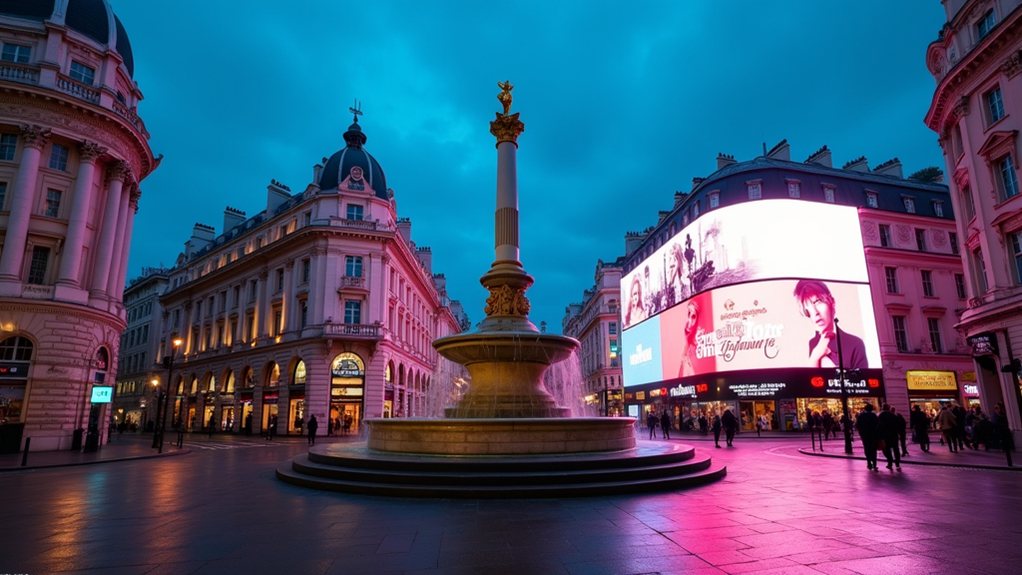
Although Piccadilly Circus is best known as a busy road junction and public space in London’s West End, it also serves as a key connection point linking several major streets, including Piccadilly, Regent Street, Shaftesbury Avenue, and Coventry Street. This historic junction was built in 1819 with the purpose of connecting Regent Street to Piccadilly. It additionally links the Haymarket and Glasshouse Street, making it a central hub within the City of Westminster. The area’s proximity to popular neighborhoods enhances its appeal for visitors.
Its location places it near prominent shopping and entertainment districts such as Soho and Leicester Square, making it a focal point for both tourists and locals. Beneath Piccadilly Circus lies its Underground station, which provides essential transport access across London. This station serves multiple Tube lines, allowing easy travel to and from the area. Piccadilly Circus is also renowned for its large billboards, which light up the northern side of the square.
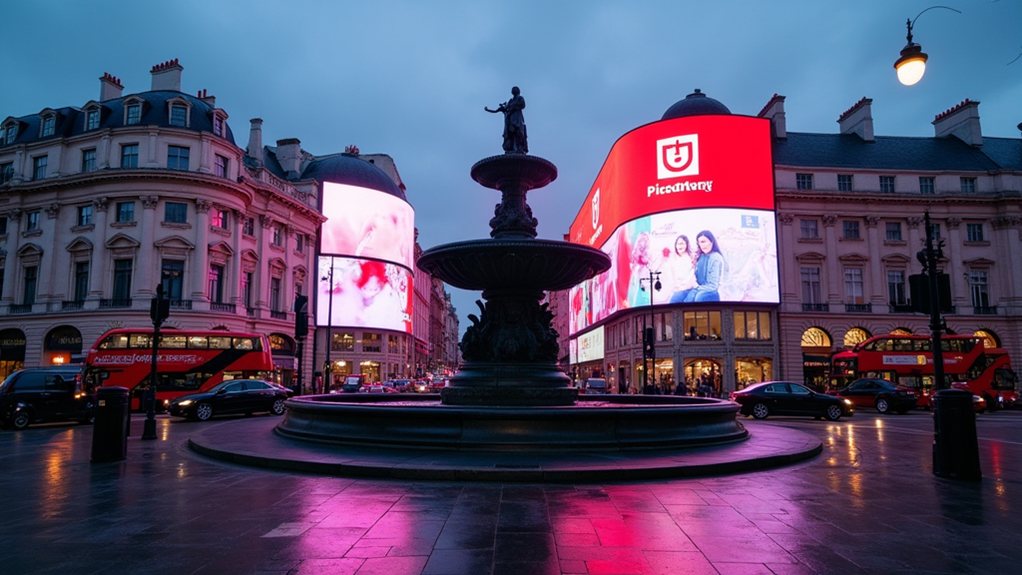
The junction is often crowded with both vehicular traffic and pedestrians, maintaining a lively atmosphere throughout the day and night. It is a popular meeting place due to its centrality and the variety of nearby attractions. One notable landmark at Piccadilly Circus is the Shaftesbury Memorial Fountain, topped by the statue of Anteros, often mistaken for Eros. The area is also a hotspot for street performers and urban life, enhancing the visitor experience.
Piccadilly Circus buzzes with activity day and night, anchored by the iconic Shaftesbury Memorial Fountain and its famous statue.
Located on the southeast side, this fountain is a recognized social meeting spot and popular photo location. Nearby, there are several other statues, including the Equestrian Statue of Charles I, Horses of Helios, and statues of King George IV, King William III, William Shakespeare, and George Washington. Historic buildings such as the London Pavilion and the Victorian-era Criterion Theatre surround the junction, contributing to the area’s cultural significance.
The northern side of Piccadilly Circus is famous for its large digital billboards. These screens display dynamic advertisements and have been a feature for over 100 years, illuminating the area especially after dusk.
Regent Street begins at Piccadilly Circus and is known for its elegant shopping, including the nearby Royal Arcade and Fortnum & Mason, a luxury department store. The area’s combination of historic charm and retail options makes it a notable destination for visitors.
Frequently Asked Questions
What Is the History Behind the Name “Piccadilly Circus”?
The name “Piccadilly Circus” originates from two sources.
“Piccadilly” comes from Robert Baker, a 17th-century tailor known for making stiff collars called piccadills. His home, Piccadilly Hall, lent its name to the area.
“Circus” is Latin for “circle,” referring to the circular junction created in 1819 to connect Regent Street and Piccadilly.
Although the circle was altered in 1886, the name “Piccadilly Circus” remained, marking its historical and urban importance.
Are There Any Famous Events Held at Piccadilly Circus?
Piccadilly Circus hosts many famous events, including film premieres like *Dr. No* and *A Hard Day’s Night*.
It is a key location for London’s New Year’s Eve celebrations and seasonal light shows. The area frequently features outdoor art exhibitions and cultural festivals, supported by nearby theaters.
Historically, it served as an air raid shelter during World War II and remains a site for public gatherings, commemorations, and royal occasion celebrations.
How Busy Does Piccadilly Circus Get During Holidays?
Piccadilly Circus becomes extremely busy during holidays, with pedestrian traffic increasing several times compared to regular days.
Festive events and seasonal light displays attract tens of thousands of visitors, causing dense crowds that often spill into nearby streets.
The underground station experiences significant passenger surges, making transit challenging.
Visitors should expect congestion and plan accordingly, especially during Christmas and New Year, when crowd management and navigation can be difficult due to high footfall.
What Are the Best Times to Visit to Avoid Crowds?
The best times to visit Piccadilly Circus to avoid crowds are mid-mornings and early afternoons on weekdays, specifically between 09:00 and 16:30.
Early mornings before 07:30 and late evenings after 18:45 also see fewer commuters.
On weekends, visiting before noon or after 17:30 is recommended.
Avoid weekday rush hours from 17:30 to 18:45, when crowds peak due to commuters and theatergoers.
Checking for events can help anticipate fluctuations.
Is Piccadilly Circus Safe for Solo Travelers at Night?
Piccadilly Circus is moderately safe for solo travelers at night, but caution is necessary.
High crime levels, including pickpocketing and drink-related incidents, are common. Travelers should avoid displaying valuables, use licensed taxis or official rideshare points, and stay in well-lit, crowded areas.
Remaining vigilant near tube stations and busy streets helps reduce risks. Law enforcement presence and CCTV coverage contribute to safety, but personal awareness is essential.