The Millennium Bridge is a pedestrian-only suspension bridge spanning the River Thames, linking St Paul’s Cathedral on the north bank to Tate Modern on the south. It opened in 2000 and offers clear views of London’s skyline. Visitors should note the bridge can hold around 5,000 people and is accessible from nearby Tube stations within London’s Travel Zones. It provides a direct, safe walking route between major landmarks. Further details clarify its design, history, and visitor tips.
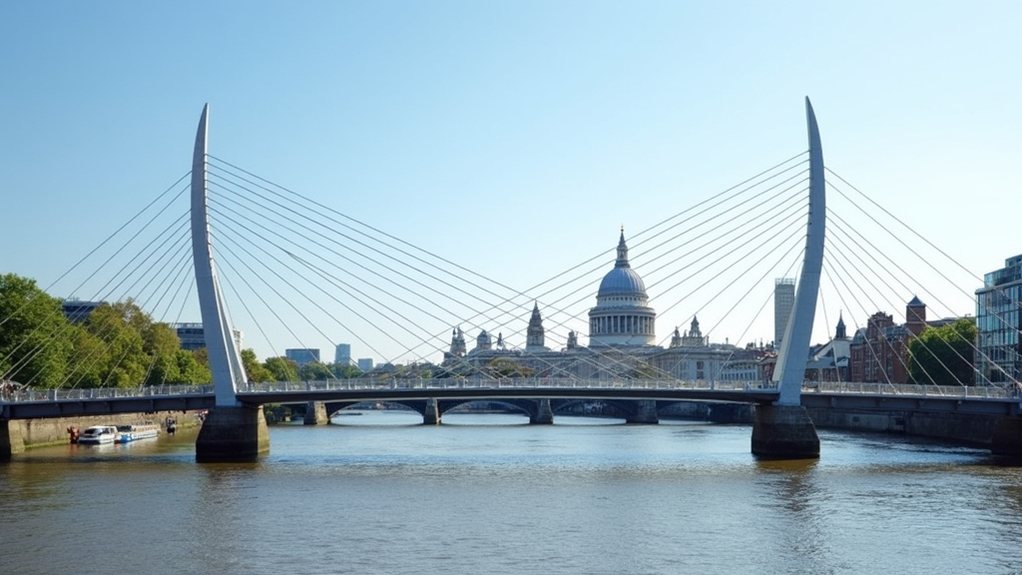
The Millennium Bridge is a pedestrian-only suspension bridge spanning the River Thames in London, connecting the area near St Paul’s Cathedral on the north bank to the Tate Modern on the south bank. Opened in June 2000 to mark the new millennium, it was the first new pedestrian bridge over the Thames in London for more than a century.
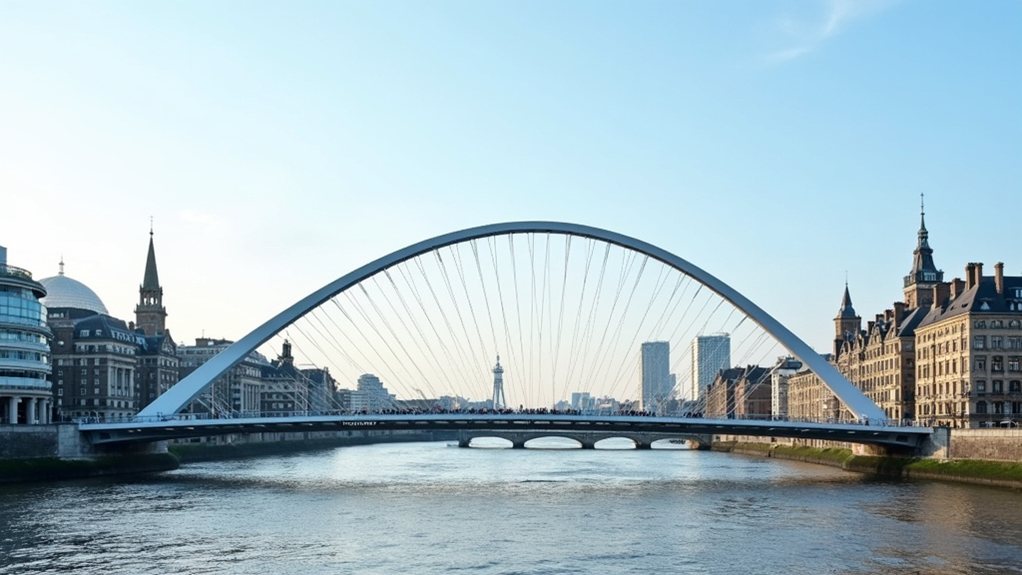
A sleek pedestrian bridge linking St Paul’s Cathedral to Tate Modern, opened in 2000 to celebrate the new millennium.
Its design emerged from a 1996 competition and was created by Foster & Partners, Arup Group, and sculptor Sir Anthony Caro. The bridge is known for its minimalist and futuristic appearance, often described as a “blade of light,” using a shallow stressed cable suspension system. It is supported by two piers and consists of three main sections that extend 325 meters (1,066 feet) in length and 4 meters (13 feet) wide. The bridge is situated between Southwark Bridge and Blackfriars Railway Bridge, providing a convenient crossing point along the Thames for pedestrians and is located within London’s Travel Zones, which helps travelers understand fare implications and travel routes. Located near popular landmarks, it links St Paul’s Cathedral and Tate Modern, making it a favored route for both tourists and locals.
Construction began in late 1998, with significant work starting in April 1999. The structure mainly uses steel and aluminium, and the deck can support a tension force of up to 2,000 tonnes, allowing it to carry about 5,000 people at once. The project cost approximately £18.2 million, slightly over the initial budget, and was funded by the Millennium Commission with National Lottery money, avoiding direct taxpayer contributions. The bridge has become an iconic feature of London’s landscape, recognized by both locals and visitors alike.
The design and construction involved leading engineers and architects from around the world. When it opened, the bridge experienced unexpected lateral swaying caused by the synchronized footsteps of pedestrians, a phenomenon called synchronous lateral excitation. This resulted in a nickname, “The Wobbly Bridge,” and led to its closure for safety reasons.
Engineers installed multiple dampers and braces to control horizontal and vertical movement, completing repairs in May 2001 at a cost of about £5 million. The bridge reopened in February 2002 and has since remained stable.
Situated between Southwark Bridge and Blackfriars Railway Bridge, the Millennium Bridge offers pedestrians views of several London landmarks and encourages walking along the Thames embankments. It is strictly for foot traffic, with no vehicles or trains allowed, making it the first pedestrian-only bridge over the Thames in over a century.
Frequently Asked Questions
Is the Millennium Bridge Accessible for Wheelchair Users?
The Millennium Bridge is accessible for wheelchair users, featuring gentle ramps with wheelchair-friendly slopes and elevators at both ends.
A two-stage ramp system aids descent on the south bank, and lifts are available for those unable to use ramps.
The bridge allows free wheelchair access without restrictions on simultaneous crossings.
Mobility scooters are also accommodated, and the car-free environment guarantees a safe, relaxing crossing.
Advance planning is advised during peak times due to limited nearby attraction spaces.
Are Dogs Allowed on the Millennium Bridge?
Dogs are allowed on the Millennium Bridge, including guide and assistance dogs, which have clear access rights.
There are no formal restrictions or leash requirements documented for ordinary dogs. Visitors should guarantee dogs are well-behaved due to high pedestrian traffic and narrow pathways.
No specific dog facilities are available on or near the bridge. Dog owners should maintain control and cleanliness to respect other pedestrians and public expectations during bridge use.
What Are the Nearest Public Restrooms to the Bridge?
The nearest public restrooms to the Millennium Bridge are at Tate Modern on the south side, offering free access during museum hours.
On the north side, Paternoster Square toilets near St. Paul’s Cathedral charge 50p, free with a RADAR key, open 8am-8pm weekdays and 9am-5pm weekends.
Tower Hill toilets, opposite the Tower of London, have similar hours and fees. Both provide baby changing and accessible facilities.
Several nearby businesses also participate in the Community Toilet Scheme, allowing free use during open hours.
Can You Rent Bikes on or Near the Millennium Bridge?
Bikes can be rented near Millennium Bridge through Santander Cycles, which has docking stations nearby offering standard and e-bikes at varying rates.
Private rental shops like “On Your Bike” and Unlimited Biking are within walking distance, providing various bikes and accessories.
Guided tours, such as those by Fat Tire Tours, start close by and include bike rental and helmets.
Accessible cycle hire options are available slightly farther away, ensuring options for different needs.
Is Photography Permitted During Nighttime on the Bridge?
Photography is permitted on the Millennium Bridge at night, with no official restrictions against it.
Tripods are generally allowed, but users should be prepared to remove them if asked by authorities to prevent obstruction or safety issues.
Photographers must avoid blocking pedestrian traffic and remain courteous to others.
Due to vibrations from foot traffic, using sturdy tripods during off-peak hours is advisable for long exposures, while higher ISO settings can help reduce blur without a tripod.