
London, known for its bustling streets and historic landmarks, is also home to a surprising variety of wildlife that thrives within its urban landscape. The city’s urban environment supports an array of unique species, such as yellow-tailed scorpions, which are found in the docklands. These scorpions have adapted well to the urban setting, demonstrating how wildlife can flourish in unexpected places.
Additionally, Aesculapian snakes, likely having escaped from research facilities in Regent’s Park, have made their homes in various parts of the city.
Aesculapian snakes, believed to have escaped from research facilities, now thrive in various corners of London.
The diverse habitats within London, including gardens, allotments, and railway lines, create microclimates that allow various species to thrive. The milder winters in urban areas compared to rural regions help these animals survive and reproduce. For instance, Peregrine falcons have adapted remarkably well to city life, with about 40 breeding pairs documented in central London. This makes London home to the second-largest urban population of these birds globally, showcasing how urban wildlife can exist alongside human development.
The Thames River, once declared biologically dead in 1957, has undergone a remarkable transformation. Thanks to improved waste systems and revitalized waterways, the river now supports a resurgence of marine life, including otters and harbor seals. This serves as a reminder of how urban areas can restore natural habitats and biodiversity over time.
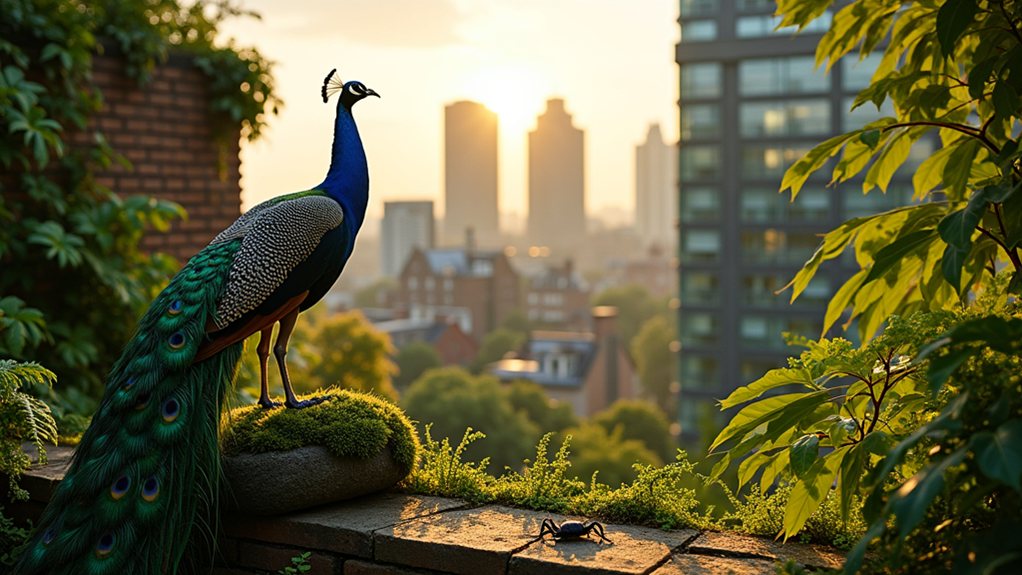
Moreover, urban wildlife in London reflects the city’s cultural history. For example, peacocks in Kyoto Garden symbolize the city’s aristocratic past, dating back to the 14th century. The presence of these birds not only adds to the city’s biodiversity but also connects residents and visitors to the historical significance of the area.