How did the rich tapestry of London’s Christmas culinary traditions evolve from medieval feasts to today’s family gatherings? The journey begins with elaborate medieval banquets where wild boar served as the centerpiece, its roasted head filled with aromatic spices. These early celebrations demonstrated wealth and status, particularly at royal events like Henry III’s 1252 York feast which fed 1,000 guests and required 600 donated oxen.
When Henry VIII introduced turkey in 1523, it represented a luxury few could afford. Tudor Christmas feasts featured marathon banquets with elaborate dishes including the famous Christmas pie, which contained layers of birds nested within each other inside a pastry coffin. The boar’s head tradition continued with ceremonial processions accompanied by trumpets and songs as it arrived on gold or silver platters.
The Georgian era saw Christmas dining evolve with plum pudding gaining prominence after George I requested it in 1714. Originally derived from medieval pottage, this dish gradually contained more fruit and sugar while reducing meat content. Wealthy families hosted ostentatious dinner parties featuring beef and venison, with turkey becoming increasingly popular among the affluent.
Victorian times transformed Christmas into a family-centered celebration with standardized traditions. Eliza Acton officially named the “Christmas Pudding” in her 1845 bestseller, and the dish became formalized as a sphere of flour, fruits, suet, and sugar topped with holly. For families unable to afford turkey, goose remained popular, often purchased through “Goose Clubs” that allowed working-class families to save throughout the year. The scale of Victorian Christmas dinners became more modest compared to previous eras, reflecting social statements and bonds that emphasized the importance of family gatherings. Queen Victoria herself promoted these family-centric celebrations with tea-and-bun parties for staff at Osborne House.
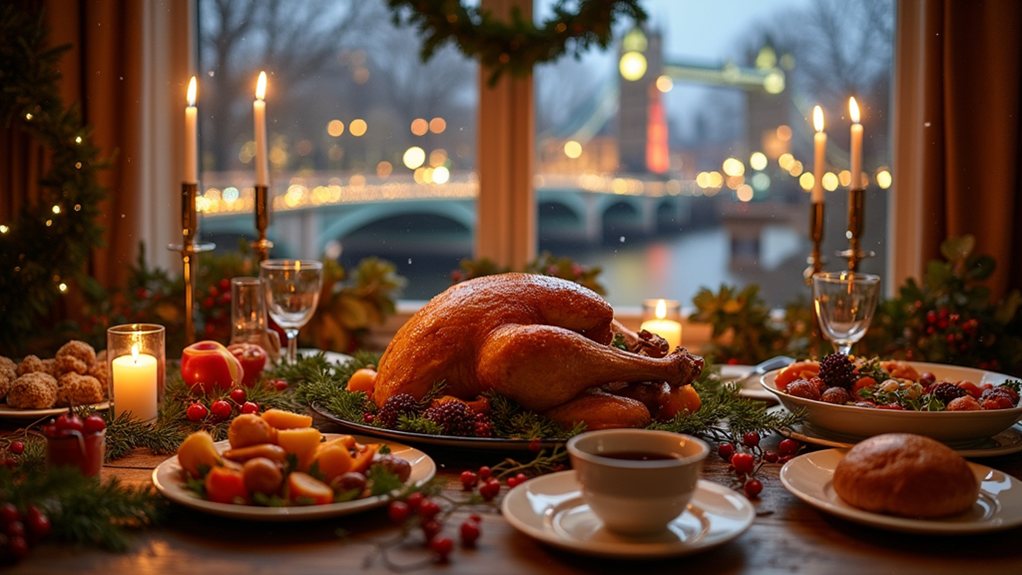
Today’s London Christmas tables still feature many traditions dating back centuries. Turkey remains the centerpiece, accompanied by medieval-inspired bread sauce that has survived since the 1400s. Eggnog, first enjoyed by the wealthy aristocracy in Norfolk, became a popular Christmas toast to prosperity. Victorian mince pies and Christmas pudding recipes continue relatively unchanged, while families maintain customs like collectively stirring the pudding with its symbolic 13 ingredients representing Christ and his apostles.
From Richard II’s extravagant feasts to modern family dinners, London’s Christmas culinary traditions reflect centuries of evolution while preserving their historical essence.