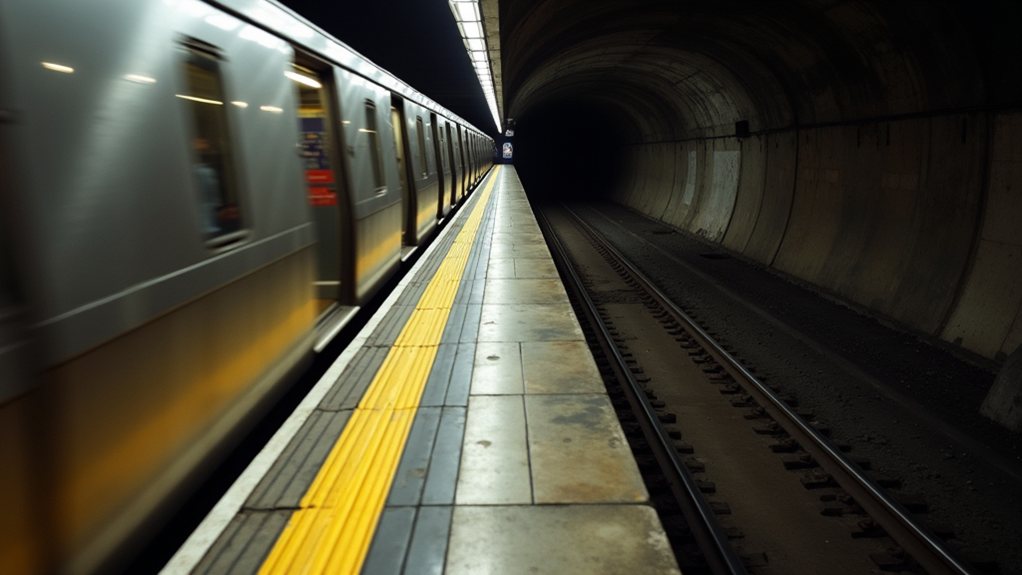

The gaping chasms between platforms and trains at London Underground stations pose serious safety risks to millions of daily commuters, with over 500 people injured from falls in 2024 alone.
These platform gaps, which can measure up to 37 centimeters at certain stations, have caused life-altering accidents, including the tragic case of Sarah de Lagarde who lost her right arm and leg after falling onto tracks at High Barnet station in 2022.
The dangerous reality of London’s platform gaps has forever altered lives like Sarah de Lagarde’s, who paid an unimaginable physical toll for a momentary misstep.
Bank station features some of the most treacherous gaps in the entire network, with its Central line eastbound platform measuring approximately 37 centimeters at the western end.
Similarly hazardous conditions exist at Piccadilly Circus, where the Bakerloo line southbound platform gap reaches 35 centimeters at the northern end.
Even stations with moderate-sized gaps present significant dangers, such as Mansion House’s District line eastbound platform with a 25-centimeter gap that primarily affects passengers boarding D stock trains.
Transport for London employs several safety measures to alert passengers to these dangers.
The familiar “MIND THE GAP” written signage appears on platform edges throughout the Underground network, complemented by verbal announcements that serve as the primary safety mechanism.
These multiple notification layers aim to reduce the frequency of accidental falls, though statistics suggest these measures remain insufficient.
For the approximately 1.4 million disabled people in London, these platform gaps represent particularly formidable obstacles.
Lord Blunkett recently described tube platforms as a “death trap” following an injury in 2024, highlighting the heightened risks faced by visually impaired passengers.
In response to these ongoing concerns, TfL published an accessibility plan in 2024 that includes installation of mini ramps at multiple stations.
Underground staff receive specialized training through Equality, Diversity and Inclusion programs, with specific protocols for assisting vulnerable passengers through the Turn Up and Go assistance program.
Despite these efforts, the Bridge The Gap campaign continues to advocate for greater accessibility improvements across the network, emphasizing that many stations remain hazardous for disabled passengers maneuvering London’s transportation system.
The campaign’s accessibility map starkly illustrates that only 28% of stations are fully accessible, leaving disabled sports fans particularly disadvantaged when attending matches and events.