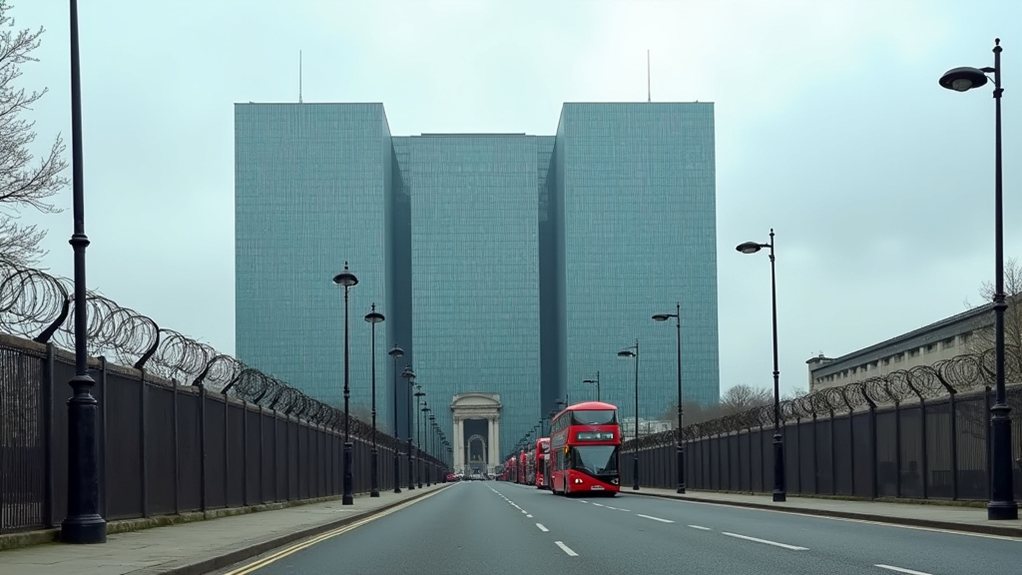
While diplomatic buildings typically attract little public attention, China’s planned embassy in London has sparked intense debate among security experts, politicians, and local residents. The massive complex in East Smithfield, facing the Tower of London and near Tower Bridge, was purchased by China in 2018 for £255 million from real estate groups after being approved for diplomatic use by Boris Johnson.
The site, formerly home to the Royal Mint until the late 1960s, spans approximately 20,000 square meters and would become the largest Chinese diplomatic outpost in Europe if approved. Its strategic location between the City of London and Canary Wharf financial districts has raised alarm bells regarding national security.
Security concerns center on the embassy’s proximity to critical fiber-optic cables linking the City to Canary Wharf. Plans include demolishing a basement wall adjacent to these cables, potentially enabling espionage on sensitive state and financial data. MI5 has issued warnings about spying risks targeting officials and staff. The proposal involves extensive renovations and developments on the historically significant Royal Mint Court site.
The embassy’s position near vital data infrastructure creates an espionage vulnerability that intelligence agencies cannot ignore.
The planning process has faced significant obstacles. Tower Hamlets council unanimously rejected the proposal in 2022, despite planning officials’ recommendations for approval. Following the Labour government‘s election in 2024, China resubmitted the application, with decisions now delayed until January 2026. Sir Keir Starmer is expected to finally approve the project with a formal announcement anticipated on December 10, 2025. The plans include a secret chamber beneath the embassy, one of 208 underground rooms in the complex.
Political opposition has been vocal, with Conservative politicians urging rejection of the project. Alicia Kearns warned it could become a launchpad at critical infrastructure, while Iain Duncan Smith cited concerns about espionage infrastructure. Ben Maguire raised alarms about increased surveillance of Hong Kong activists in the UK.
Chinese officials have responded forcefully, calling the opposition a “despicable move” by anti-China forces. They insist all planning protocols have been followed and view the project as an expression of UK-China relations.
The controversy highlights the tension between diplomatic relations and national security concerns as the UK navigates its post-Brexit relationship with China amid growing global geopolitical tensions.