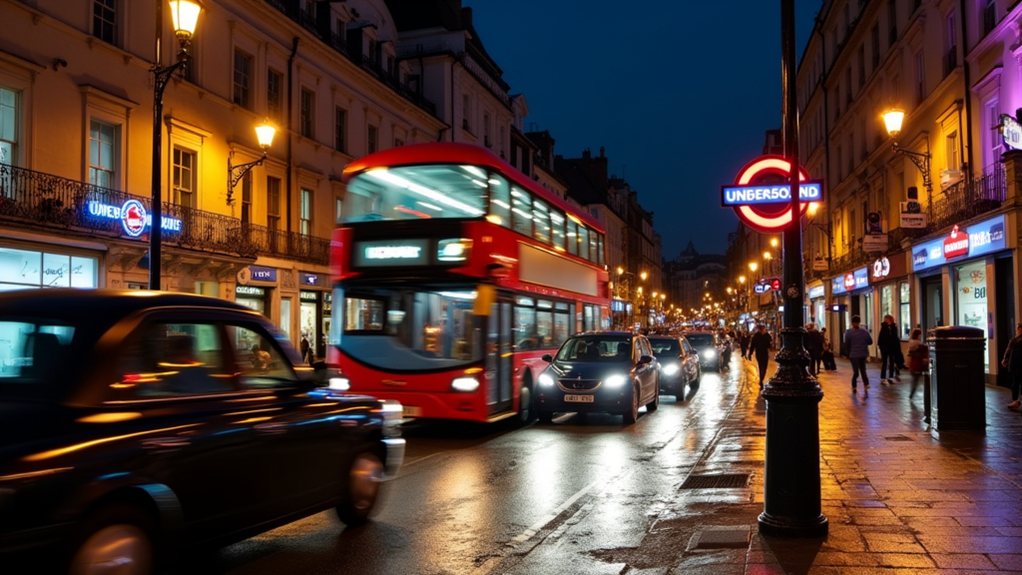
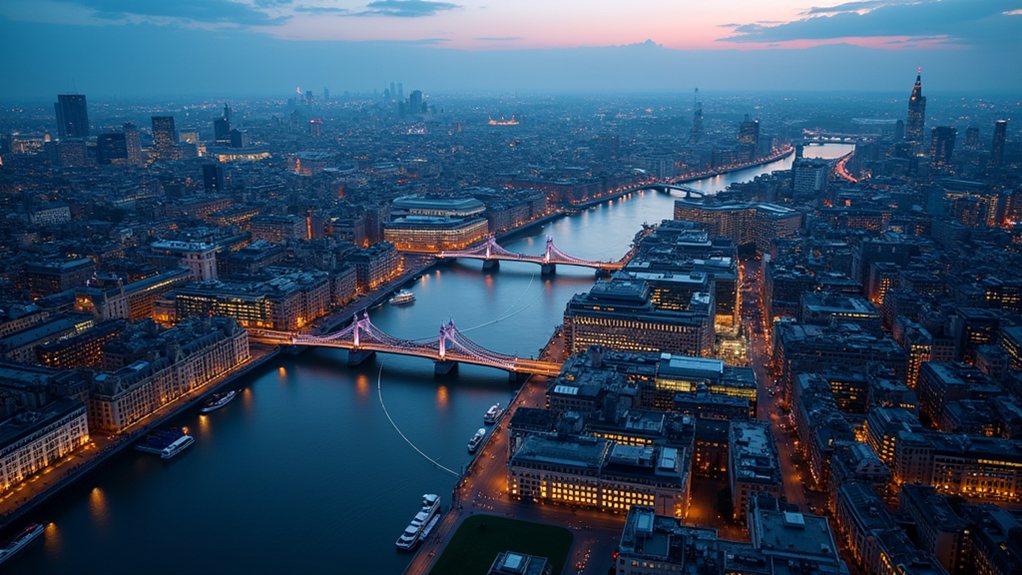
London’s night transport includes the Night Tube, operating Fridays and Saturdays from 12:30 AM to 5:00 AM on central lines; 24-hour night buses cover the entire city, reaching outer boroughs. Taxis and private hires like Uber provide door-to-door service, especially in less accessible areas. Safety measures include CCTV, well-lit waiting areas, and licensed vehicles. Passengers should stay in groups and use regulated services for secure travel. Additional details offer guidance on maneuvering night transit effectively.
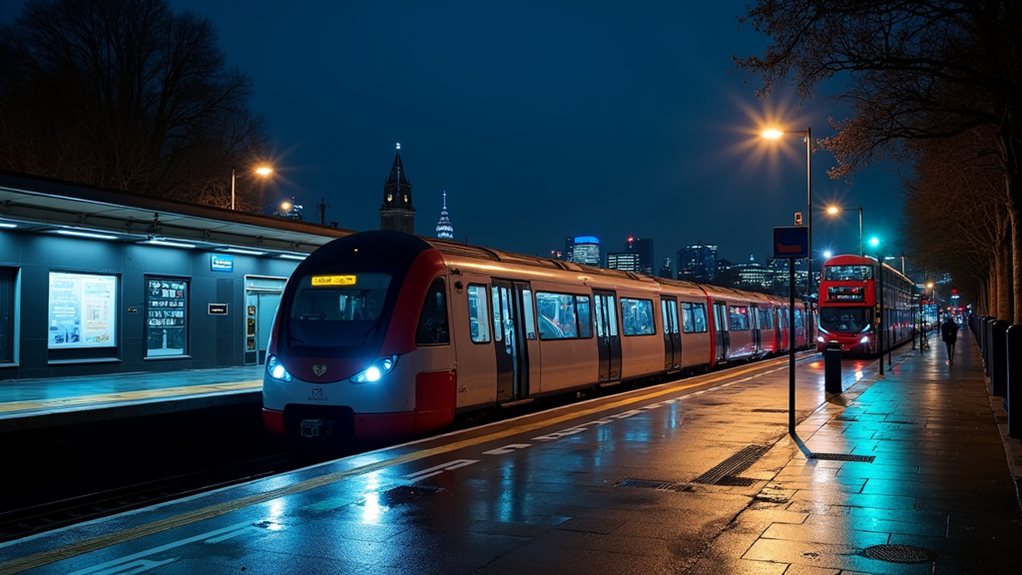
Although London’s public transport slows down at night, several options remain available for travelers seeking to navigate the city after dark. The Night Tube service operates from about 12:30 AM to 5:00 AM on Fridays and Saturdays, covering several central London Underground lines. This service paused during the pandemic between March 2020 and July 2021 but returned gradually as ridership improved in 2022. Early morning passenger numbers reached roughly 11,700, which is lower than the pre-pandemic figure of over 15,000. Despite these lower numbers, the Night Tube remains a vital component of London’s night-time economy. Additionally, the Night Tube provides a convenient transportation option for late-night travelers, ensuring they can easily access various nightlife hotspots.
London’s Night Tube runs Fridays and Saturdays from 12:30 AM to 5 AM, with ridership recovering post-pandemic.
Night Tube demand tends to peak around major events and weekends, playing a crucial role in supporting the city’s night-time economy. It provides a helpful alternative to night buses and taxis for traveling in central areas late at night.
Night buses operate 24 hours across London, offering wide coverage including outer boroughs that the Night Tube does not serve. Before the pandemic, dedicated night bus services accounted for around 37.4 million passenger journeys annually. Although demand is lower than during the day, these buses are essential for shift workers and people accessing night venues.
Unlike some other UK cities where night bus services have declined, London maintains a strong network. This network works alongside late evening and 24-hour public transport options to provide a thorough night-time travel system. However, the overall average daily trips per Londoner have decreased significantly over recent years, reflecting a more static city lifestyle and impacting transport demand.
Taxi and private hire services, including Uber and black cabs, run 24/7 across London, offering door-to-door convenience. Availability is generally good in central London but less so in outer boroughs. Private hire services offer an important option for travelers seeking direct and safe journeys.
Safety measures such as driver licensing, regulated fares, and app-based tracking help provide passenger assurance. These services complement public transport, especially when Night Tube and buses are less frequent or unavailable.
Safety measures include enhanced security and CCTV on Night Tube trains and stations, as well as monitoring on night buses and taxis. Passengers are advised to travel in groups, wait in well-lit areas, and use licensed vehicles.
TfL and police efforts aim to reduce anti-social behavior and improve confidence in night travel. Despite these efforts, the risk of crime remains higher at night, particularly in less busy or poorly lit locations. Night transport coverage is strongest in central London but is limited in suburban and outer areas, where taxis or private hires may be necessary.
Frequently Asked Questions
Are Night Transport Services Accessible for Disabled Passengers?
Night transport in London offers some accessibility for disabled passengers, but it is limited.
Only a few Night Tube stations provide step-free access, and many require assistance for boarding due to platform gaps.
Buses are fully accessible with ramps and priority seating.
Wheelchair users can use certain taxis and some private hire vehicles with step-free access.
Passengers are advised to plan journeys using accessible route maps and to seek staff help when needed.
What Are the Fares for Night Buses Versus the Night Tube?
Night bus fares are a flat £1.75 per journey, regardless of zones, making them cheaper than Night Tube trips, which start at about £2.80 for Zone 1 using Oyster or contactless payment.
Night Tube fares are charged at standard off-peak rates and count toward a daily cap up to £16.30, while night bus fares contribute to a separate bus and tram cap of £5.25.
Both offer cost savings with Oyster or contactless cards.
Can I Use Contactless Payment on All Night Transport Options?
Contactless payment is accepted on all major night transport options in London, including the Night Tube, night buses, Uber, and other ride-hailing services.
Users must tap in and out on the Tube and tap once on buses, while ride apps require linked cards or wallets.
Daily fare caps apply for TfL services but not for ride-hailing or black cabs.
Cards must feature the contactless symbol and be issued by recognized providers like Visa or Mastercard.
Are There Any Discounts or Passes for Frequent Night Travelers?
Frequent night travelers in London can use the Visitor Oyster Card, which caps daily fares and works on Night Tube, buses, and other transport modes, providing up to 50% savings.
No exclusive night-only passes exist, but multi-modal cards and contactless payments reduce costs efficiently.
Additional savings include 2FOR1 night tour offers, hotel discounts from chains like Hoxton, and membership benefits through programs such as American Express, all helping to lower expenses for regular nighttime travel.
How Reliable Are Ride-Sharing Services Compared to Public Transport at Night?
Ride-sharing services in London at night generally offer more reliability than public transport due to their door-to-door convenience and flexible availability.
They reduce wait times and avoid indirect routes common with night buses and the limited Night Tube schedule. However, ride-sharing costs can surge during peak times, and availability may vary.
Public transport remains more affordable and subsidized but often faces slower journeys and less frequent service, especially in outer areas.