
The Kew Gardens commemorative 50p coin is a real gem for collectors, thanks to its detailed Chinese Pagoda design and a rare seven-sided shape. With only 210,000 coins minted, its rarity drives up its value, especially in Brilliant Uncirculated or proof conditions. Circulated versions still fetch good prices, but gold and silver proofs are the crown jewels for investors. Think of it as the crown of UK coins—a treasure that’s hard to find but rewarding to own. Discover what else makes it so special.
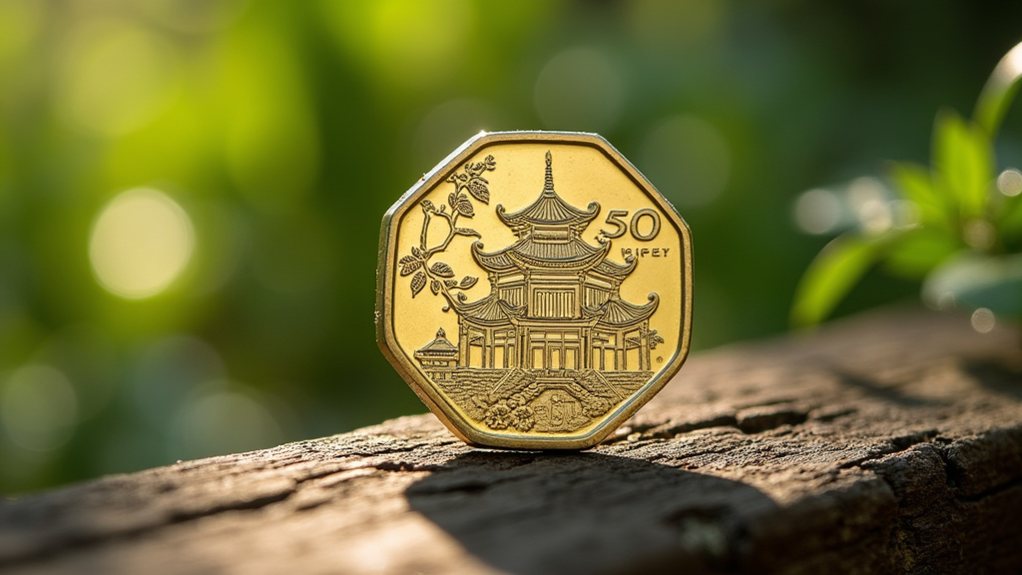
Although many commemorative coins celebrate famous people or events, the 2009 Kew Gardens 50p stands out for its unique blend of history, art, and rarity. Issued by The Royal Mint to mark the 250th anniversary of the Royal Botanic Gardens, Kew, this coin features a beautifully detailed reverse design by Christopher Le Brun RA, showcasing the iconic Chinese Pagoda entwined with leafy climbers. The coin’s uniquely shaped seven-sided design follows the tradition of the original 50p introduced in 1969 as the world’s first equilateral-curve heptagon, ensuring its distinctiveness and compatibility with coin-handling machinery (unique shape). It is also notable that the coin’s weight is approximately 8 grams, consistent with standard 50p coins, which aids in its authenticity verification (coin weight). Kew Gardens is renowned for its diverse plant collections, making this coin a fitting tribute to such a significant botanical site.
On the obverse, Queen Elizabeth II’s fourth portrait by Ian Rank-Broadley appears, surrounded by the inscription “FIFTY PENCE.” The coin’s seven-sided shape, standard for 50p pieces, measures about 27.4 millimeters across and weighs 8 grams, made from cupronickel as usual.
What truly sets the 2009 Kew Gardens 50p apart is its incredibly low mintage of just 210,000 pieces for circulation—one of the smallest runs for any modern UK 50p coin. This scarcity has made it highly sought after by collectors and dealers alike.
Beyond the circulating coins, The Royal Mint produced a handful of special versions: 629 Gold Proofs, 2,967 Silver Piedfort Proofs, 7,575 Silver Proofs, and 128,364 Brilliant Uncirculated coins in presentation folders. Although these numbers might seem larger, they are still modest compared to other commemoratives, adding to the coin’s overall rarity.
Collectors value the coin differently depending on its condition and version. Circulated examples often command strong premiums above face value, especially when well preserved. Brilliant Uncirculated coins, sold in official folders, fetch higher prices due to their pristine condition and packaging appeal.
Silver and Gold Proof versions attract attention not only for their low mintage but also for their precious metal content, with the Gold Proof being the rarest and most valuable of all.
A 2019 reissue of the Kew Gardens design, celebrating 50 years of the 50p coin, introduced a new effigy of the Queen and a fresh date, but it doesn’t lessen the allure of the original 2009 coin.
In fact, the 2019 version’s higher mintage only highlights the rarity and desirability of the first release, ensuring the original remains a prized piece among collectors.
Frequently Asked Questions
Where Can I Buy a Kew Gardens Commemorative Coin?
Kew Gardens commemorative coins can be found on popular sites like eBay, where auctions and fixed-price listings offer various conditions and years.
Specialist dealers, such as The London Coin Company, provide graded proofs and uncirculated versions with detailed descriptions.
Numismatic retailers like Britannia Coin Company also sell original circulated coins, often with free shipping.
For a quirky twist, Etsy hosts souvenir copies, but buyers should check carefully to avoid surprises.
Happy hunting!
What Is the History Behind the Kew Gardens Coin Design?
The Kew Gardens coin design celebrates the 250th anniversary of the Royal Botanic Gardens, founded in 1759.
Artist Christopher Le Brun showcased the iconic Great Pagoda, a towering 10-story marvel, surrounded by climbing vines symbolizing growth.
The coin cleverly omits the ground floor to highlight this botanical beauty, with “KEW” nestled on the lowest visible tier.
This design links history and nature, making it a delightful tribute that’s as educational as it is eye-catching.
Are Kew Gardens Coins Legal Tender?
Yes, Kew Gardens 50p coins are legal tender in the UK, meaning they can settle debts up to £10.
Despite their snazzy commemorative design, these coins are treated like regular 50p pieces in shops and banks—though businesses aren’t forced to accept them.
While they’re perfect for collectors, you could technically use one to buy a cuppa, but spending a collector’s treasure? That’s almost a crime!
How Do I Verify the Authenticity of a Kew Gardens Coin?
To verify a Kew Gardens coin’s authenticity, examine details like the pagoda tip’s smooth merge into the rim and the precise alignment of the Queen’s neck with the “P” in “PENCE.”
Check for tiny “IRB” initials and sharp facial features—fakes often blur these.
Weigh the coin near 7.8 grams, inspect the even milled edge, and confirm non-magnetic cupronickel metal.
Always seek Royal Mint packaging or trusted grading services—no mystery coins, please!
What Materials Are Used in Kew Gardens Commemorative Coins?
Kew Gardens commemorative coins showcase a dazzling mix of materials!
The circulating coins use a sturdy copper-nickel alloy—about 75% copper and 25% nickel—giving them that classic silvery look and long-lasting toughness.
For collectors craving sparkle, there are stunning versions in 22-carat gold and sterling silver (.925 purity).
These precious metals add shine and value, making each coin feel like a tiny treasure chest, perfect for enthusiasts and casual admirers alike!