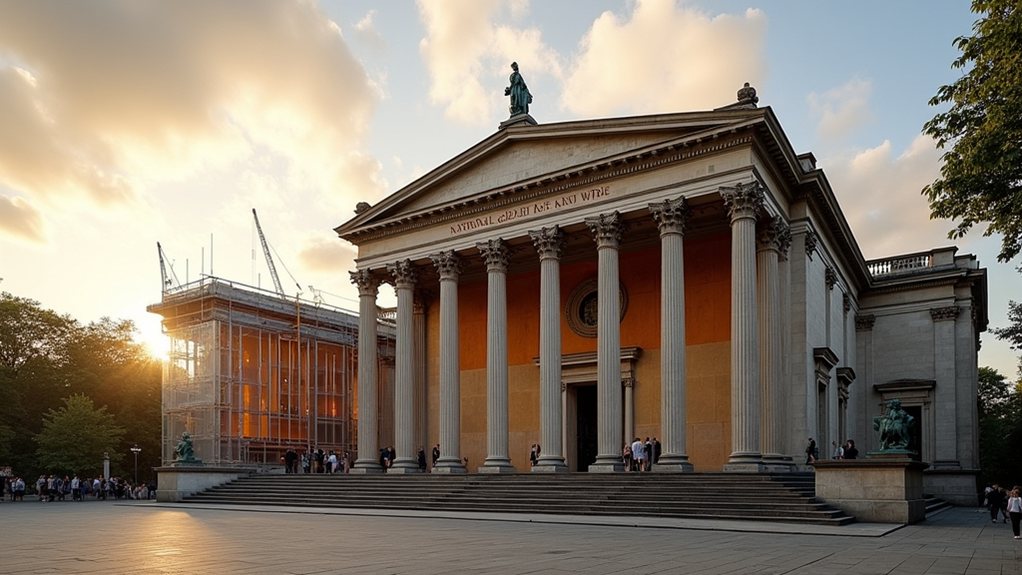
Kengo Kuma and Associates have been selected to design a new wing for the National Gallery in London, winning a competition that attracted 65 international proposals. This project is notable as it aims to greatly enhance the gallery’s space and visitor experience. The new wing will be built on the site of the demolished St Vincent House and is part of the larger £750 million Project Domani initiative. This marks the gallery’s most significant transformation in over two centuries.
Kengo Kuma and Associates will design a new wing for the National Gallery, enhancing space and visitor experience as part of Project Domani.
The design features a cladding of light-colored Portland stone, giving it a modern yet timeless appearance. A landscaped public roof garden will provide a unique green space for visitors, allowing them to relax and enjoy views of the surroundings. The architectural elements include vaulted arches on the main gallery floor, which will create a sense of openness and grandeur.
In contrast, the upper floor will have a more geometric style, offering a different experience as visitors move through the space. This expansion is set to increase the gallery’s permanent hanging space by 1,500 square meters, and it will also provide an additional 800 square meters for temporary exhibitions.
This nearly doubles the capacity of the existing Sainsbury Wing’s basement, allowing the National Gallery to host more artworks and exhibitions. The new wing is scheduled to open in the early 2030s, positioning it as a contemporary landmark in London’s rich cultural scene.
Kengo Kuma, known for his thoughtful designs that often draw inspiration from nature, aims to create an inviting atmosphere that resonates with the public. His approach is reminiscent of architectural styles found in places like Lake Como, where harmony with the environment is paramount.
The gallery’s transformation reflects a commitment to accessibility and engagement, ensuring that rights reserved for future generations of art lovers remain intact.