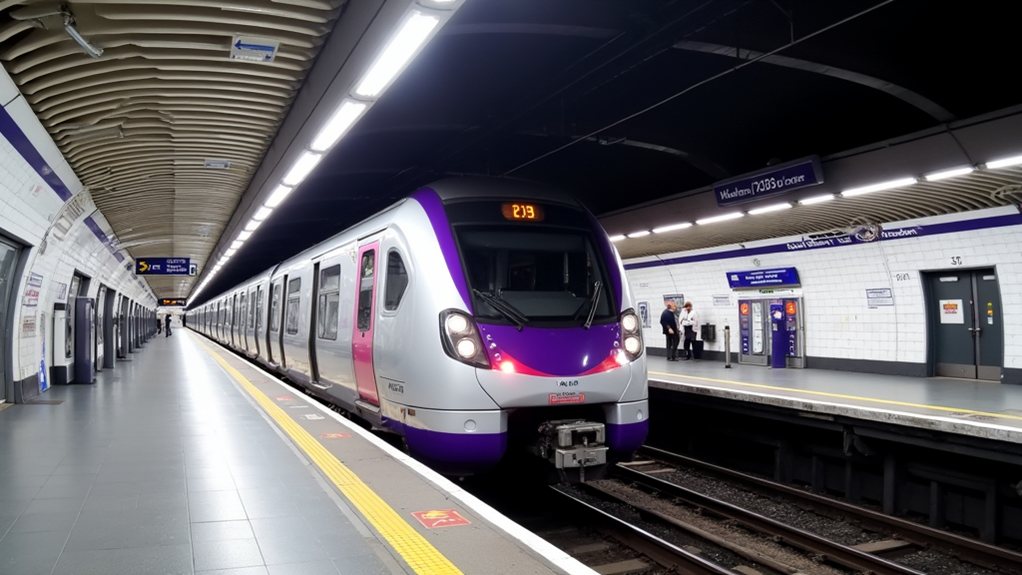
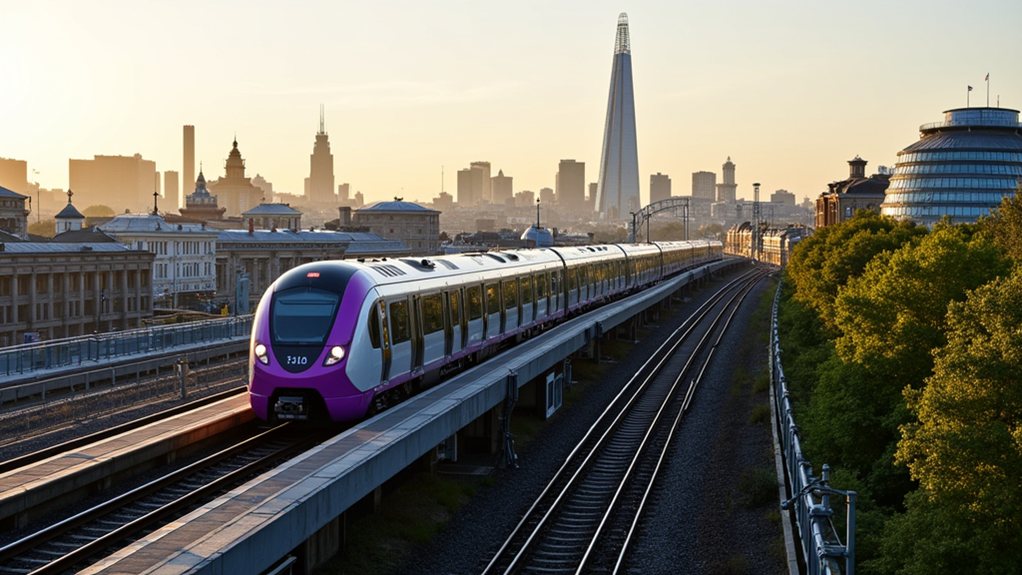
The Elizabeth Line runs east-west through London, linking Abbey Wood and Shenfield with Heathrow and Reading via 41 stations, including key stops like Paddington and Canary Wharf. Services operate frequently, with up to six trains per hour to Heathrow terminals, and ticketing accepts Oyster and contactless cards, though pay-as-you-go isn’t valid west of Zone 6. All stations have step-free access, with amenities like Wi-Fi. More detailed route info, travel times, and ticket options follow for planning your journey.
Although the Elizabeth Line is a relatively new addition to London’s transport network, it has quickly become an essential route connecting the city’s east and west areas through 41 stations. This high-capacity railway stretches from eastern termini at Abbey Wood and Shenfield to western termini including Heathrow Terminals 4 and 5, as well as Reading. Key central London stops along the route include Paddington, Bond Street, Tottenham Court Road, Farringdon, Liverpool Street, Whitechapel, Canary Wharf, and Stratford. The line integrates with several Underground lines, National Rail, and Docklands Light Railway (DLR) services, enhancing interchange opportunities for passengers. Additionally, the London Travel Zones are important to understand fare implications when using the Elizabeth Line.
Paddington station serves as a major interchange, connecting with the Bakerloo, Circle, District, and Hammersmith & City lines, along with National Rail and the Heathrow Express. Farringdon offers links to Thameslink services and Underground lines such as the Circle and Metropolitan. Liverpool Street connects to the Central, Circle, Hammersmith & City, and Metropolitan lines, plus National Rail routes to Southend and Stansted airports. Whitechapel allows transfers to District and Hammersmith & City lines and London Overground, while Canary Wharf links to the Jubilee line and DLR. Stratford and Bond Street provide connections with the Central and Jubilee lines. Heathrow Terminals 2, 3, 4, and 5 are served with links to the Piccadilly line. The Elizabeth line itself is operated by a consortium known as GTS Rail Operations.
The western section of the line passes through Reading, Maidenhead, Slough, West Ealing, Ealing Broadway, and the Heathrow terminals, terminating at Paddington or Bond Street. The eastern section moves through Romford, Ilford, Stratford, and Abbey Wood, connecting central London via Liverpool Street, Farringdon, and Tottenham Court Road. Typical travel times include 20 minutes from Paddington to Heathrow Terminal 5, 43 minutes from Paddington to Abbey Wood, and approximately 40 minutes from Paddington to Shenfield. Services run frequently, with up to six trains per hour serving Heathrow Terminals 2 and 3.
Ticketing on the Elizabeth Line spans multiple fare zones, with central London stations in Zone 1 and outer termini in Zones 3 to 6, which affects pricing. Oyster cards and contactless payments are accepted, similar to other Transport for London services. National Rail tickets are valid on parts of the line, especially in areas east and west of central London. Special ticket options combine rail and underground fares for Heathrow travel. Season tickets and Travelcards covering Zones 1 to 6 apply to journeys within the corresponding areas. However, Oyster pay as you go is not accepted on the western section to Reading.
All Elizabeth Line stations provide step-free access from street to train, featuring lifts and ramps to assist passengers with disabilities or heavy luggage. Many stations offer Wi-Fi, enhancing connectivity during travel. The new trains and stations are designed for high capacity and comfort, including air conditioning to improve passenger experience. Early morning and late-night services operate on reduced routes, typically running only to Paddington or Liverpool Street termini.
This information enables passengers to plan their journeys effectively on this crucial east-west London route.
Frequently Asked Questions
When Did the Elizabeth Line Officially Open to the Public?
The Elizabeth line officially opened to the public on Tuesday, 24 May 2022. This followed extensive safety checks and commissioning work.
Initially, it operated as three separate sections, connecting key locations such as Reading, Heathrow, and Shenfield through central tunnels.
Full route service was planned for May 2023.
The line’s launch improved travel times, capacity, and accessibility across London and the South East, marking a significant upgrade to the region’s transport infrastructure.
How Does the Elizabeth Line Integrate With Other London Transport Modes?
The Elizabeth line integrates with London transport by appearing on the Tube map and connecting with Underground and National Rail stations like Paddington and Liverpool Street.
It accepts integrated ticketing systems, including contactless payments and concession passes, though Oyster Pay As You Go is limited west of West Drayton.
Bus services near stations adjust to support feeder routes, enhancing last-mile access.
This integration reduces travel times and allows seamless transfers across London’s transit network.
What Accessibility Features Are Available on the Elizabeth Line?
The Elizabeth line offers step-free access at all stations, with ten providing level platform-to-train boarding.
Staff are available throughout service hours to assist, including deploying manual boarding ramps without pre-booking.
Dedicated wheelchair spaces and priority seating are marked on trains, and stations feature tactile paving and clear signage.
Hearing loops and audio-visual systems support passengers with sensory impairments.
Assistance dogs travel free, and the Travel Support Card helps passengers access needed services.
Are There Any Discounts for Seniors on the Elizabeth Line?
Seniors aged 60 and over can obtain a Senior Railcard, offering a one-third discount on Off-Peak Elizabeth line fares when linked to an Oyster card.
Activation requires in-person registration at select stations, including Ilford and Canary Wharf.
Discounts apply during specified off-peak hours, excluding morning peak times.
London residents aged 66+ may also use the TfL Freedom Pass for free off-peak travel, but non-residents must rely on the Senior Railcard for discounts.
What Is the Frequency of Trains During Peak Hours on the Elizabeth Line?
During peak hours, the Elizabeth line runs up to 24 trains per hour on the central section between Paddington and Whitechapel, equating to one train every 2.5 minutes.
Outer sections have lower frequencies, with about 10-minute intervals from Paddington to Reading and Liverpool Street to Shenfield.
Heathrow receives six trains per hour all day, including peak times.
These increased frequencies reduce wait times and improve connections across the network during busy periods.