Contactless cards work across all London Underground routes and other public transport like buses, trams, and trains. Travelers tap their card or device at the start and end of journeys to guarantee correct fare calculation and avoid maximum charges. Daily fare capping helps control costs, with peak and off-peak prices based on tap-in time. Only one payment method should be used per trip. Understanding these rules improves travel efficiency and cost savings, with additional tips available for smooth transit.
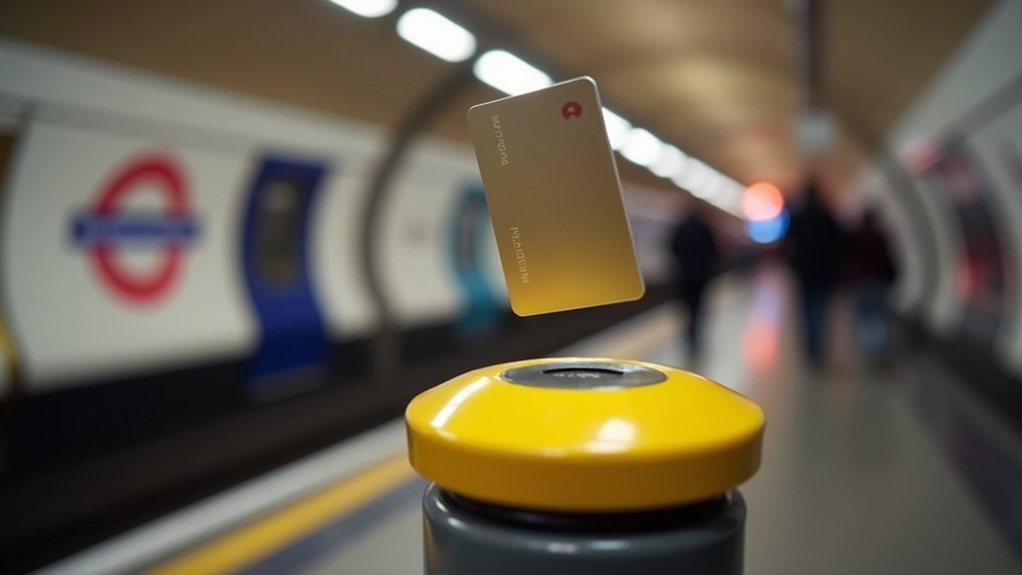
Although Oyster cards have long been the standard for London public transport, contactless payment methods have been accepted on the London Underground since 2014, providing a convenient alternative for passengers.
Contactless payments include debit and credit cards with the contactless symbol, as well as mobile payment options like Apple Pay and Google Pay, and other NFC-enabled devices such as key fobs or wristbands. These payment methods can be used across multiple transport services including the London Underground, buses, trams, Docklands Light Railway (DLR), London Overground, and National Rail services within London’s travel zones. In fact, 47 additional stations now accept pay as you go with contactless, expanding its accessibility throughout the network (expanded coverage). The widespread adoption of this technology is supported by the fact that approximately half of Londoners possess a contactless card (widely adopted). UK-issued Visa, MasterCard, Maestro, and American Express cards with contactless symbols are valid for travel, making it easier for locals and visitors alike to use the system (wide card acceptance). Additionally, the Oyster Card remains a popular option for smart travel despite the rise of contactless payments.
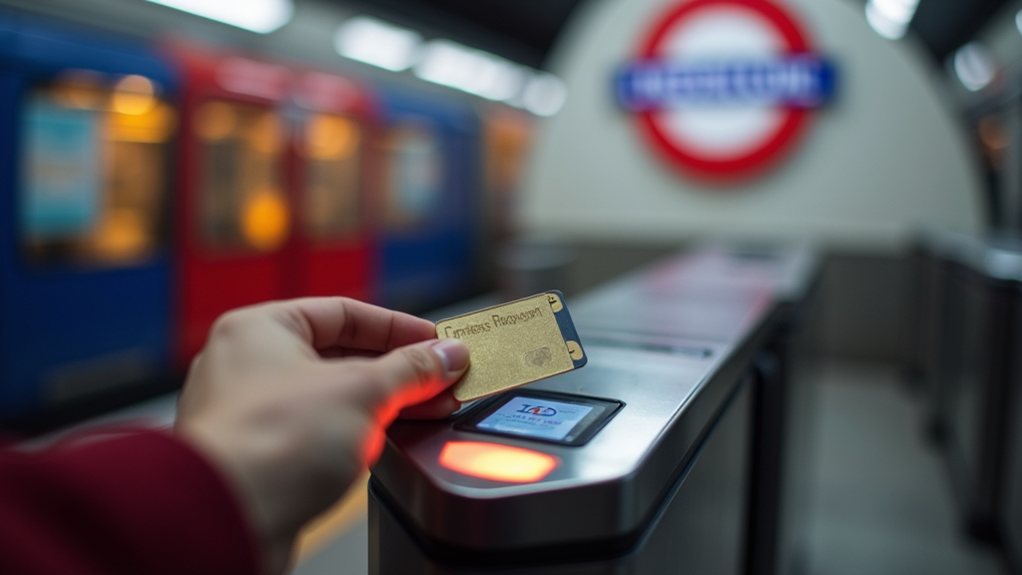
To use contactless payment, passengers must tap their card or device on the reader when starting their journey and again when finishing, except on buses and trams where only a tap-in at boarding is needed. Using the same card or device for both tap-in and tap-out guarantees the correct fare is charged.
Failure to tap out results in a maximum fare charge due to an incomplete journey. Only one contactless payment method should be tapped at a time, as tapping multiple cards simultaneously can cause errors or double charges. Journeys cannot be paused; exiting through a barrier completes the current fare calculation.
Fares depend on the zones traveled, time of day, and transport mode. Peak and off-peak times are determined by the time of tap-in. Contactless payments benefit from automatic daily and weekly fare capping, which limits how much a passenger pays each day or week, similar to Oyster cards.
Bus fares remain a flat rate regardless of distance or zones traveled. Certain routes, like high-speed trains, may have special fares that do not fall under standard caps.
Contactless payment data helps transport operators improve services while respecting privacy laws. Passengers can review their journey and payment history online for up to seven days.
Although the system is integrated throughout London, some stations, including airports, have delayed contactless rollout due to technical reasons. Overall, contactless payment offers a flexible and efficient way to travel across London and parts of southeast England.
Frequently Asked Questions
Can I Use Contactless Cards on London Buses?
Contactless cards are accepted on all London buses, allowing passengers to pay by tapping a contactless debit or credit card, mobile devices, or wearables on the yellow card reader when boarding.
Cash is not accepted. Users should tap once at journey start, avoid tapping multiple cards together to prevent errors, and use the same card throughout to guarantee correct fare charging.
Daily fare caps apply automatically, providing cost savings for frequent travelers.
Are There Daily or Weekly Fare Caps With Contactless Payment?
Yes, daily and weekly fare caps apply when using contactless payment on London transport.
Daily caps limit total charges within a 24-hour period, varying by travel zones and peak times, while weekly caps cover Monday to Sunday travel costs.
Passengers must consistently use the same card and touch in and out properly for caps to apply.
Bus and tram travel have separate, lower caps.
Using multiple cards may prevent capping benefits.
What Should I Do if My Contactless Card Is Declined?
If a contactless card is declined, the first step is to check with the card issuer for insufficient funds or account holds.
Next, review any unpaid fares in the TfL online account and pay them promptly, waiting about 30 minutes for reactivation.
Damaged or expired cards require replacement through the issuer.
After resolving issues, revalidate by tapping the card on a gate.
If problems persist, consider alternative payment methods or contact TfL support.
Can I Use Multiple Contactless Cards in One Journey?
Using multiple contactless cards in one journey is not allowed on London Underground.
Only one card or device should be used per person per journey.
Switching cards during travel causes incomplete journeys, resulting in maximum fare charges on each card.
To avoid overcharging and fare cap loss, travelers should consistently use the same card, keep cards separate when tapping, and guarantee each person uses their own contactless payment method throughout the journey.
Is Contactless Payment Accepted on Other London Transport Services?
Contactless payment is widely accepted across various London transport services beyond the Underground.
It works on London Buses, trams, Docklands Light Railway (DLR), London Overground, and most Elizabeth Line trains.
This system offers seamless tap-in and tap-out travel, fare capping, and integration with Transport for London’s fare structure.
However, some National Rail stations and airport services still face rollout delays, so users should check specific station acceptance before travel.