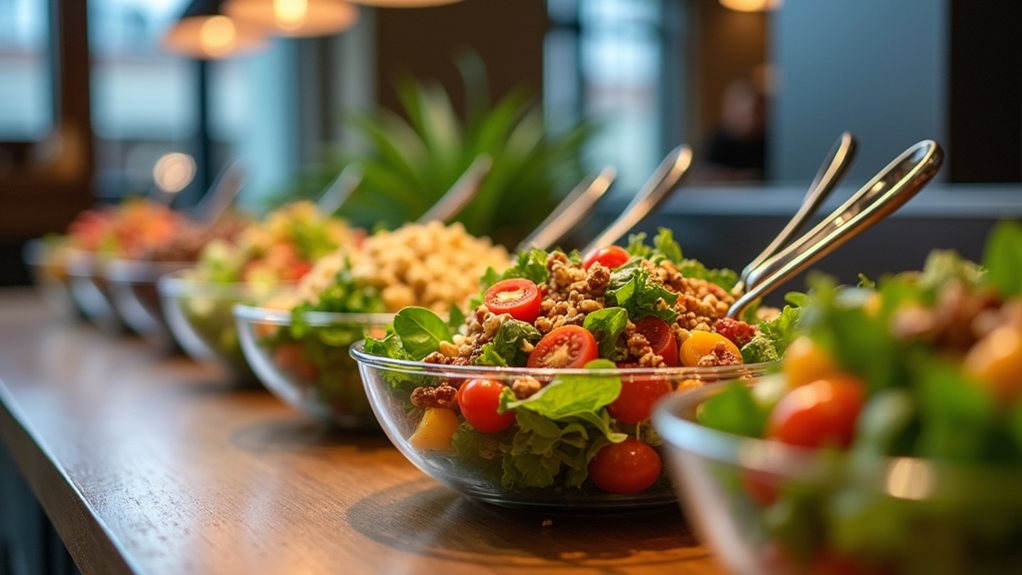
While consumers tighten their belts amid economic pressures, salad bars across grocery stores and restaurants are experiencing unexpected growth. Recent data shows hot buffet transactions increased by 37% and salad bar transactions rose 11% in September 2023 compared to the previous year. This surge occurs despite an overall decline in grocery sales, suggesting that self-serve food options are becoming a preferred choice for budget-conscious shoppers.
Despite economic challenges, salad bars flourish as consumers seek affordable dining alternatives, with transactions up 11% year-over-year.
The rise in salad bar popularity reflects a broader trade-down effect in consumer dining habits. As diners shift from full-service restaurants to more economical options, quick-service restaurant foot traffic has increased by 3% year-over-year.
Meanwhile, grocery spending per visit has decreased by 3%, and total grocery transactions have fallen by 5%. Self-serve stations effectively capitalize on customers seeking affordable meal solutions.
Franchise operations like Green Is Better Salad Bar demonstrate the viability of this market segment, serving over 40,000 customers daily across 90+ stores in 22 countries. Their focus on customizable salads with organic ingredients appeals to health-conscious consumers willing to spend on quality, fresh food options.
Consumer preferences continue to evolve toward convenience, with the value-added salad category stabilizing in 2024. Both retail and foodservice sectors note increased demand for ready-to-eat options and salad kits that offer ease without sacrificing nutritional value. Modern salad bars are increasingly incorporating diverse plant ingredients to support consumers aiming to consume 30 different plants weekly for optimal health benefits.
Flavor innovation remains essential for salad bar evolution. Current trends show movement toward authentic foods over processed alternatives, with regional flavors gaining popularity. Southeast Asian influences and fermented ingredients like chili paste are emerging as significant flavor drivers. Many salad bars are now featuring mini martini glasses for dressings and sauces, adding a theatrical element that elevates the dining experience.
Looking ahead, salad bars offer high-margin growth potential for grocers. With their high profit margins of up to 70% compared to regular grocery items’ 10-40%, salad bars represent a significant opportunity for increasing store profitability. The rise of “candy salads” – featuring customizable, playful mixes – shows an 18% year-over-year increase in online discussions. This trend represents how salad bars can evolve by embracing personalization while maintaining healthy eating foundations.
As economic pressures continue, salad bars that balance affordability, convenience, and flavor innovation appear positioned for continued growth in both retail and foodservice environments.