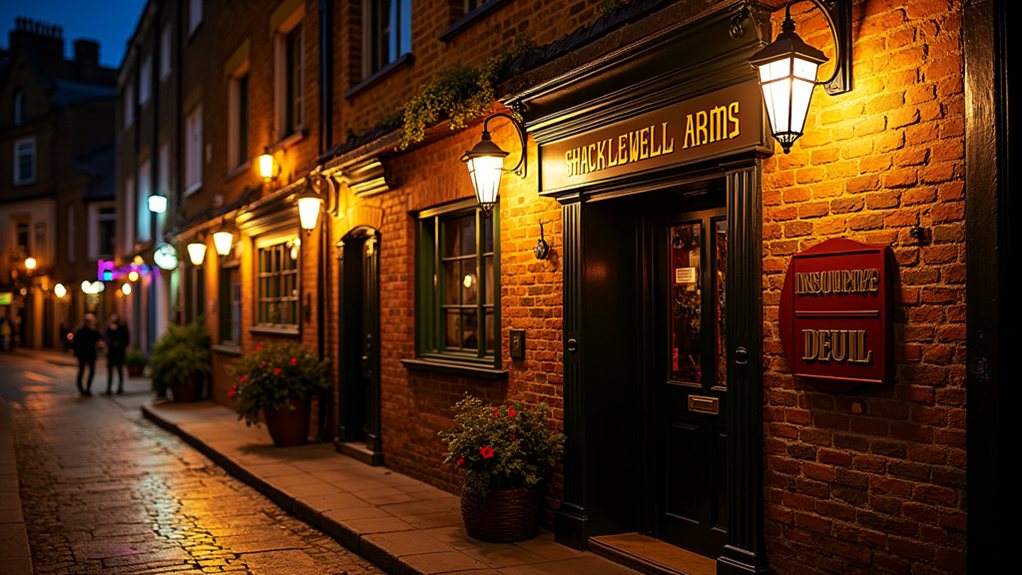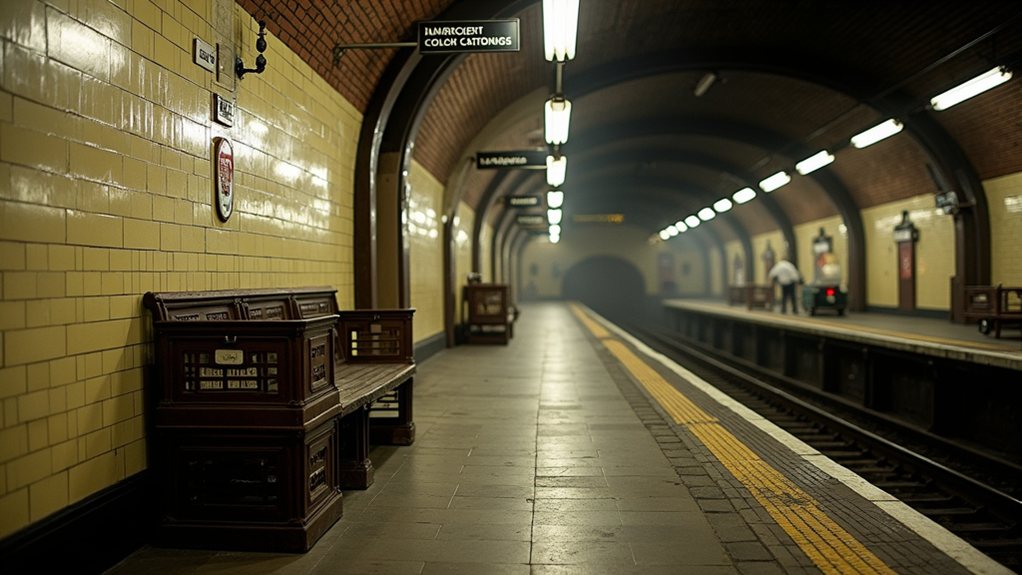

Beneath the busy streets of London lies a fascinating slice of underground railway history, where the former Dover Street station entrance became an unlikely milk café after the station’s closure. The station initially opened in 1906 near what is now Green Park, but it quickly proved inadequate for the large crowds it attracted.
London’s underground never ceases to amaze, where abandoned railway stations find new life as unexpected urban cafés.
In 1933, the replacement Green Park station opened, rendering the original Dover Street facilities obsolete. Rather than abandoning the entrance completely, London Transport made an interesting decision to lease the street-level building to the Milk Marketing Board. This organization converted the former station entrance into one of their cafés, creating a unique repurposing of redundant transportation infrastructure. The area around King’s Cross has also benefited from urban regeneration, enhancing its appeal.
The timing of this lease, shortly after Green Park’s opening, may have later caused regret when wartime disruptions affected London. The underground portions of the old Dover Street station found new purposes during World War II.
In the early stages of the war, the disused tunnels connecting to the old lift shafts were used to store valuable artwork from London museums. However, this arrangement changed dramatically in 1940 when a bomb struck London Transport’s headquarters, prompting officials to relocate underground.
London Transport quickly evicted the stored artwork and converted the old corridors into wartime offices. These spaces included a luxuriously appointed bedroom for Lord Ashford. This transformation was similar to how many Underground stations served as air raid shelters during both World Wars. Unfortunately, accessing historical information about this transformation is difficult as the website security prevents retrieval of additional details. Recently discovered documents have revealed detailed room layouts and occupant information from this period.
After the war, further modifications occurred, with one lift shaft transformed into a meeting room featuring a massive ventilation fan. The eviction of the café from the old station during the war cost London Transport a substantial £2,000 compensation payment. The hidden history of Dover Street station connects to a broader story of milk transport in London’s underground system.
From 1896 to 1936, Metropolitan Railway milk van No. 3 carried milk churns from farms in Hertfordshire and Buckinghamshire into London. This wooden van featured special suspension to prevent the milk from churning into butter during transit.
Today, visitors can explore these hidden tunnels through popular tours, which consistently sell out due to public interest in London’s secret underground history.