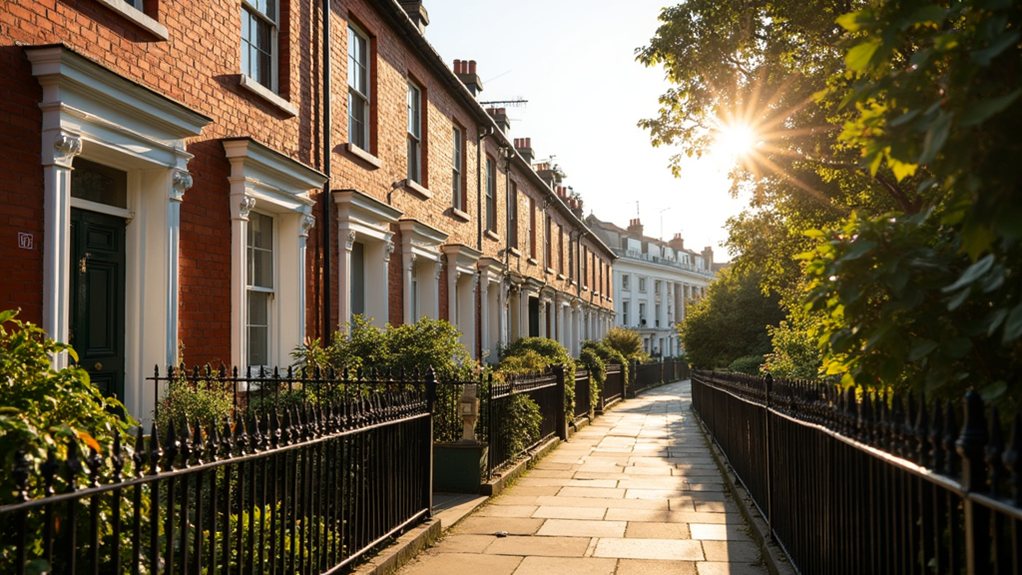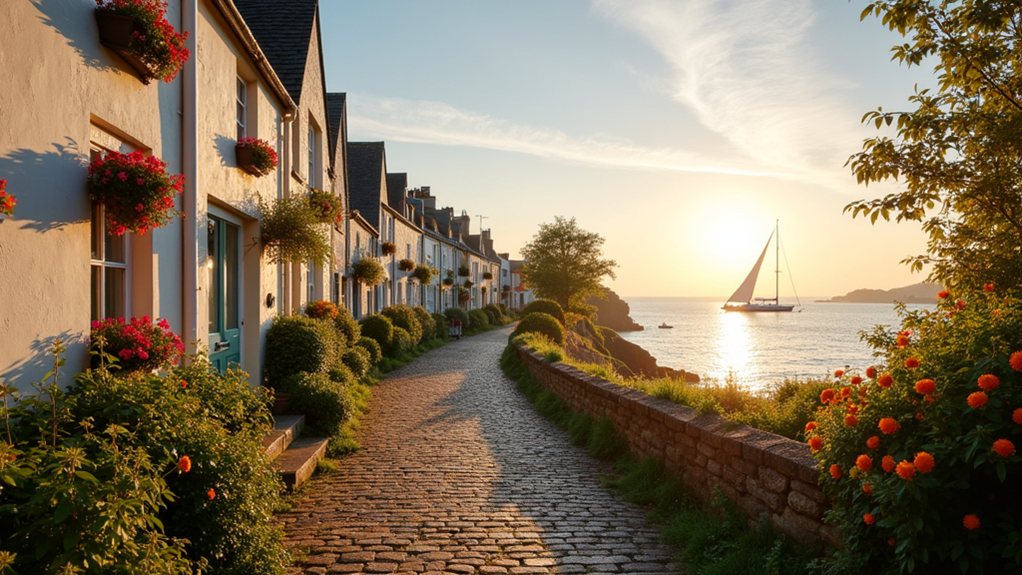

As London’s sprawl continues to push homebuyers farther from the capital, Kent’s coastal and rural towns have emerged as havens of tranquility for those seeking a quieter lifestyle without sacrificing connectivity. With a total population of approximately 1,610,300 residents spread across the county, many areas maintain the lower population densities that appeal to city-dwellers looking for respite from urban congestion.
Kent’s coastal towns offer urban escapees tranquility and connection, with population densities that welcome those fleeing London’s congestion.
The county’s extensive transport network has transformed once-distant coastal towns into viable options for London commuters. Fast rail services connect Thanet, Folkestone, and Dover to London terminals, while road links via the M2, M20, and A2 provide direct driving routes to Greater London. This infrastructure enables residents to maintain city careers while enjoying coastal living, a pattern already established in northwest Kent areas like Dartford and Gravesend.
Housing affordability remains a significant driver of migration from London to Kent. Median house prices in many Kent coastal towns are noticeably lower than comparable London boroughs, creating financial incentives for relocation. Many seaside locations offer character properties from older housing stock, particularly appealing to those seeking distinctive homes with historical charm. Kent’s nickname as the Garden of England further enhances its appeal with abundant fruit orchards and agricultural landscapes that offer a refreshing contrast to urban environments.
The demographic profile of Kent shows a slightly higher average age of 41.3 years compared to national figures, with larger proportions of under-16 and over-65 residents. This suggests a mix of families and retirees choosing the area for its quality of life benefits. Maidstone Borough stands out as the most populated district with 184,200 residents, yet still offers more space than many London boroughs. Detailed population density maps reveal significant variations across regions, with coastal areas typically maintaining more space per resident than inland towns closer to London. Coastal towns provide access to beaches, promenades, and surrounding countryside, offering outdoor recreation opportunities unavailable in urban settings.
However, this migration trend creates challenges. Increasing demand in popular coastal towns has led to rising property prices, competitiveness in local markets, and growth in second-home ownership. Some areas face supply constraints as demand outpaces available housing stock.
Despite these pressures, Kent’s seaside towns continue to attract Londoners seeking the perfect balance of coastal charm, reasonable commutes, and improved quality of life away from the capital’s intensity.