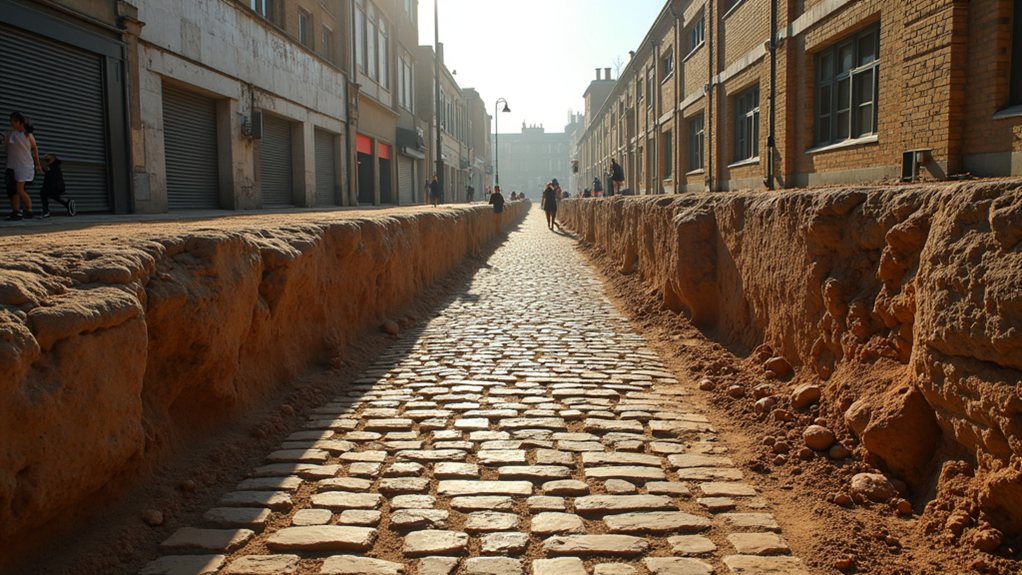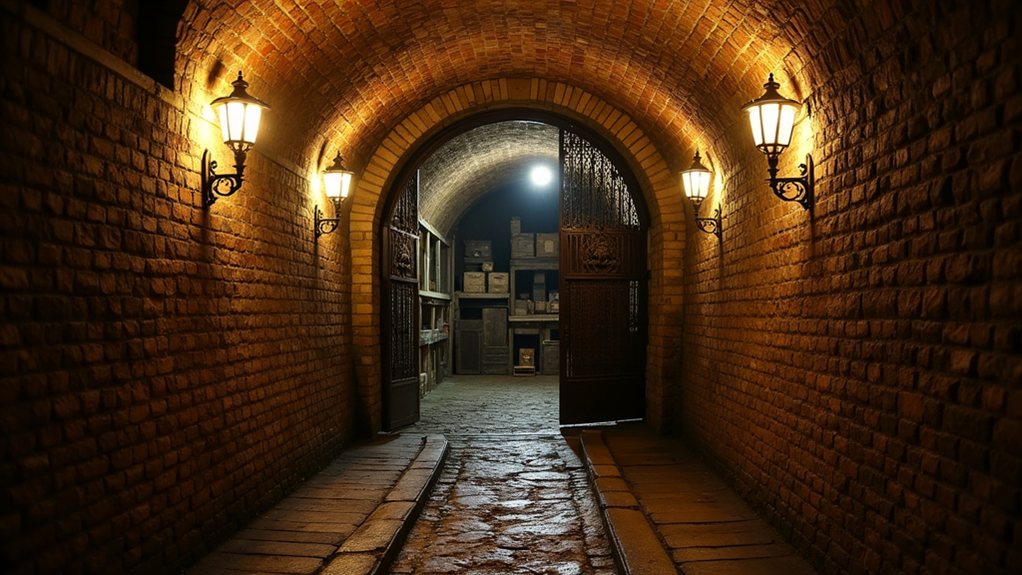

Beneath the bustling streets of modern London lies a hidden world of Victorian-era tunnels, forgotten passages, and abandoned underground networks. These subterranean corridors, first developed from Roman origins around 43 AD, formed the foundation for London’s complex tunnel systems. Ancient aqueducts and channels constructed during the Roman period provided clean water and removed waste, with some routes still existing behind iron gates throughout the city.
By 1837, London’s antiquated sewers were crumbling under pressure from the growing population, lacking capacity for urban waste. Victorian engineers undertook massive construction projects to address this crisis, creating an extensive network of underground sewers. Sir Joseph Bazalgette’s revolutionary 2,000 km network of sewage tunnels effectively eliminated cholera outbreaks that had previously devastated the city. These tunnels became notorious for giant rats that reportedly attacked workers, as documented in Henry Mayhew’s accounts of urban life. Additionally, these transport links played a crucial role in supporting London’s expanding population and infrastructure.
The Great Stink of 1858 finally forced Parliament’s hand—London’s sewers would be rebuilt, despite the lurking dangers below.
Despite these dangers, scavengers known as “toshers” ventured into these sewers daily, collecting metal, coins, and recyclables while risking tunnel collapses and vermin encounters. Medieval monks at Westminster Abbey once used secret passages for discreet movement between buildings, establishing an early precedent for London’s hidden underground pathways.
The Victorian era also saw the burial of entire streets beneath new construction. Little Compton Street, demolished in 1886 to make way for Charing Cross Road, remains visible through an iron grille at the Charing Cross Road junction. This hidden street exists as part of a utility subway, with wall signs still guiding workmen through the Cambridge Circus tunnels. The Metropolitan Board of Works transformed what was once a notorious slum area into the modern thoroughfare we see today.
Transportation needs drove further tunnel development, including the Kingsway Tram Subway built in 1906 under Holborn. The subway, abandoned decades ago, still contains rusted tracks from its operational years. Similarly, the Mail Rail operated from 1927 to 2003, transporting letters and parcels beneath the city streets. The Blackwall Tunnel, first opened in 1897, initially accommodated horse-drawn vehicles crossing under the Thames.
After serving various purposes during World Wars and the Cold War period, these Victorian tunnels are being reimagined as museum spaces. Starting in 2026, visitors will explore these historical subterranean passages, walking through chambers that once housed wartime operations, postal services, and urban infrastructure essential to London’s development.