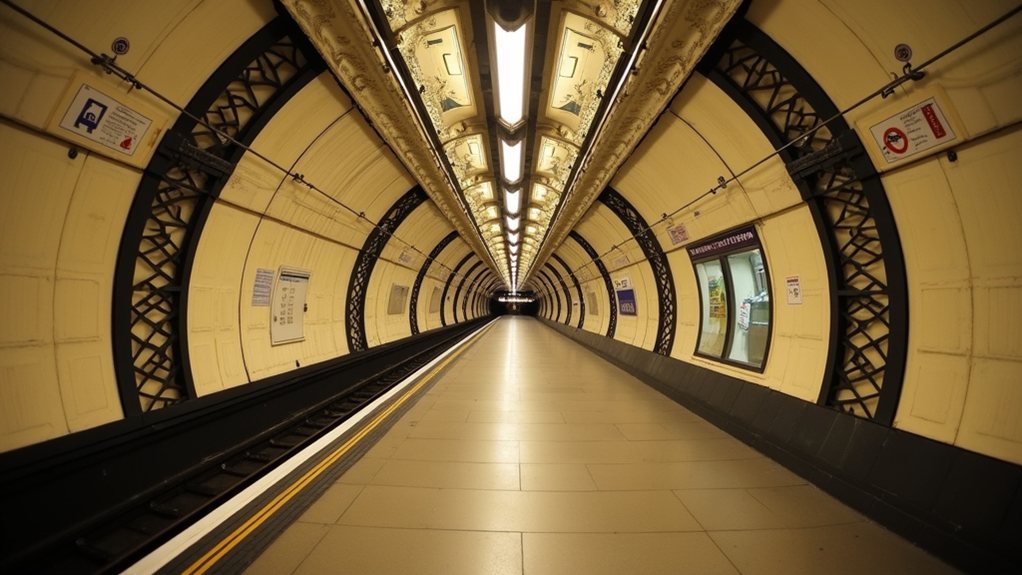

The London Tube, an important part of the city’s transportation system, features a rich variety of architectural styles across its more than 270 stations. Each Underground station tells a unique story, showcasing designs that reflect the history and culture of London.
Significantly, Charles Holden, a major figure in the Tube’s architectural development, designed many stations, including Cockfosters, which exhibit striking architectural features such as exposed concrete and cantilevered canopies. These stations not only serve functional purposes but also stand as Grade II listed buildings, preserving their historical significance.
The Tube’s evolution began with the Metropolitan Railway, opened in 1863, which marked the start of underground urban transport in London. This pioneering railway changed the way people navigated the city, allowing for the rapid expansion of central London. Today, the network continues to be a crucial component of daily commutes for millions.
The Metropolitan Railway, launched in 1863, revolutionized urban transport in London, paving the way for central city’s growth.
Many stations boast a blend of styles, including the elegant Art Deco design seen at Arnos Grove. This artistic approach reflects the period’s cultural aspirations and continues to influence modern architecture.
In contrast, stations like Canary Wharf showcase contemporary design by Norman Foster, highlighting the evolution of London’s Underground architecture.
Other significant stations, such as Waterloo and Paddington, display their own unique histories. Waterloo, one of the UK’s largest railway stations, opened in 1898, while Paddington is famed for its innovative historical ventilation design.
These stations not only facilitate transit but also serve as cultural landmarks, with artistic contributions enriching the experience for commuters.
As commuters travel through London’s Underground, they often overlook the intricate details and artistic elements that define each station. Recognizing these undervalued architectural marvels can enhance one’s appreciation for the city’s rich history and the innovative spirit that continues to shape its urban landscape.