
The rich, dark dessert known as Christmas pudding has a long and storied history in London’s culinary traditions. Its origins can be traced to medieval times when it began as frumenty, a thickened broth with breadcrumbs served at the beginning of meals. This early version contained dried fruits, commonly called “plums,” along with meat, stock, grains, and spices, often packed into intestines for serving.
By 1595, this dish had transformed considerably, thickened with eggs and breadcrumbs, sweetened with dried fruits, and enhanced with beer and spirits to become what was known as plum pudding. It became a Christmas tradition by the early to mid-1600s, establishing itself as a holiday staple. However, the pudding faced a dark period when Puritans banned it in the 1640s along with other Christmas celebrations they considered too indulgent.
The dessert underwent further evolution in the 18th century when sugar became more affordable due to Caribbean plantations. This availability turned the dish decidedly sweeter. By the early 19th century, the recipe had settled into a mixture of beef suet, dried fruits, candied peel, breadcrumbs, and eggs, boiled in cloth. The preparation often occurred on the last Sunday before Advent, known as Stir-Up Sunday, when family members would take turns stirring the mixture for good luck.
Many myths surround Christmas pudding, including claims about preparing it on the 25th Sunday after Trinity using thirteen ingredients to represent Christ and his apostles. Another legend suggests King George I requested it in 1714, earning him the nickname “Pudding King,” though this story likely originated in the 1930s rather than historical fact. The pudding’s distinctive dark color comes from the use of dark sugars and black treacle that have been central to most traditional recipes.
The Victorian era solidified the pudding’s modern form and popularity. Eliza Acton first called it “Christmas pudding” in her 1845 cookbook, and Charles Dickens further cemented its place in holiday traditions through “A Christmas Carol” in 1843. In Victorian households, elaborate puddings were often cooked in decorative molds resembling towers or castles, showcasing the family’s social status.
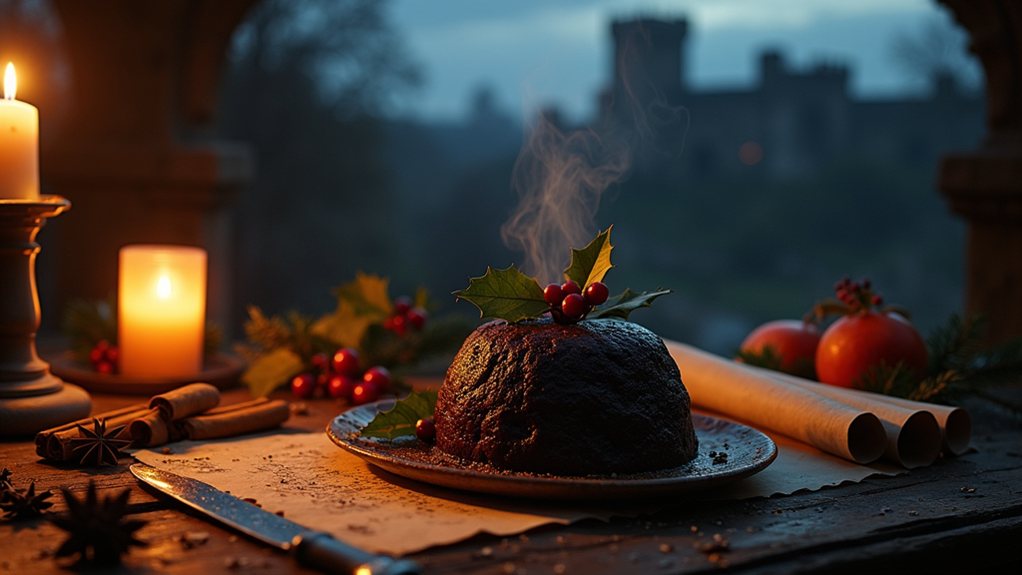
The custom of topping the pudding with holly, said to symbolize Jesus’s Crown of Thorns, and igniting it with brandy, representing divine love and power, became established practices during this period.