
While London’s major railway terminals like Waterloo and Victoria serve millions of passengers each year, some smaller stations have struggled to survive in the competitive transport landscape. Among these forgotten transport hubs, Heathrow Junction Station stands out as perhaps the most short-lived terminal in London’s railway history, operating for just 126 days in 1998.
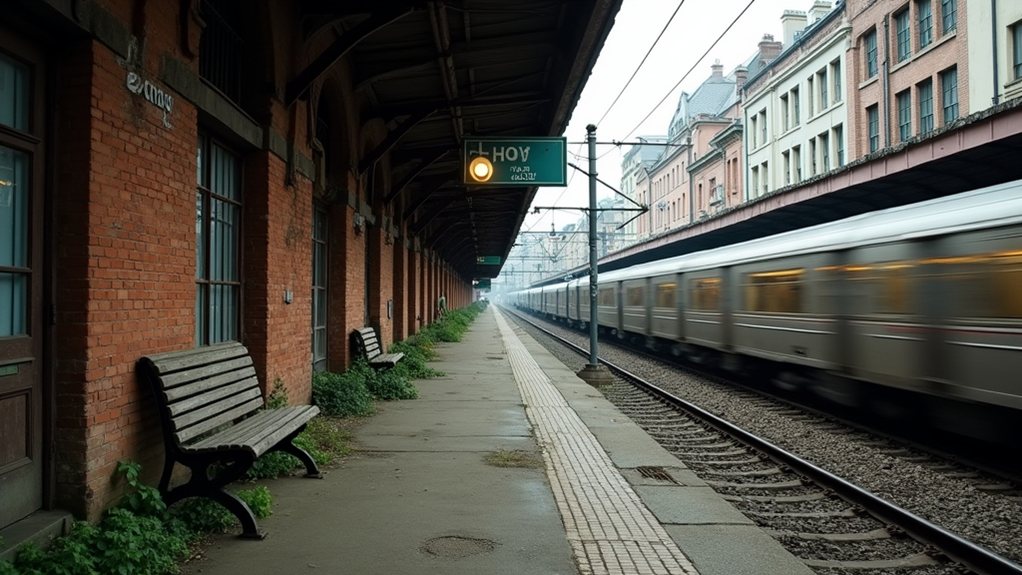
Heathrow Junction opened on January 19, 1998, as a temporary terminus for the Heathrow Express service. Located in Stockley Park near the Great Western Mainline, the station was created due to construction delays affecting the permanent terminal. The modest facility featured just a single platform and a bus terminal to transfer passengers to their final destinations.
Designed as a stopgap solution, Heathrow Junction’s lone platform briefly served express passengers while permanent facilities remained unfinished.
By June 22, 1998, Heathrow Junction had closed its doors forever, making it one of the briefest chapters in London’s transportation story. The station’s extremely short lifespan contrasts sharply with London’s oldest terminals, such as Fenchurch Street, which has operated since July 1841 when it was opened by the London and Blackwall Railway.
Fenchurch Street itself represents another example of a small but resilient London terminal. Despite having the fewest platforms among London terminals and lacking a direct London Underground interchange, it has survived for over 180 years. The station, originally designed by William Tite with just two platforms, has remained operational despite its limitations. Today, Fenchurch Street experiences significant passenger volume with an average annual footfall of 16 million travelers.
Other small stations have faced similar challenges throughout London’s railway history. Mint Street Station operated from 1858 until 1951 before closing, while Bricklayers Arms shifted from passenger services to freight operations following a derailment incident in 1852. Marylebone, which opened in 1899, managed to survive despite being one of London’s smallest terminals.
London’s railway landscape continues to evolve, with stations opening, closing, and adapting to changing transportation needs. While major terminals like Waterloo, which began as Waterloo Bridge Station in 1848, have expanded over time, smaller stations like Heathrow Junction remind us that size and permanence often determine a station’s fate in the capital’s transport network. The tunnel collapse in October 1994 played a significant role in Heathrow Junction’s creation as it delayed the original project by six months. Paddington station underwent a significant extension in 1854 to accommodate the increasing passenger traffic that smaller stations often struggled to manage.