Where tradition meets artistry, East London’s smokehouses preserve a century-old craft that transformed imported fish into Britain’s first gourmet food. The story begins in 1905 when Russian Jewish immigrant Harry Forman established what would become London’s oldest smokehouse in Stepney. Initially importing Baltic salmon in salt barrels, Forman soon shifted to Scottish salmon from Billingsgate market, creating a legacy that continues today under his great-grandson Lance Forman.
The century-old art of London salmon smoking marries heritage with culinary excellence in every silky, aromatic slice.
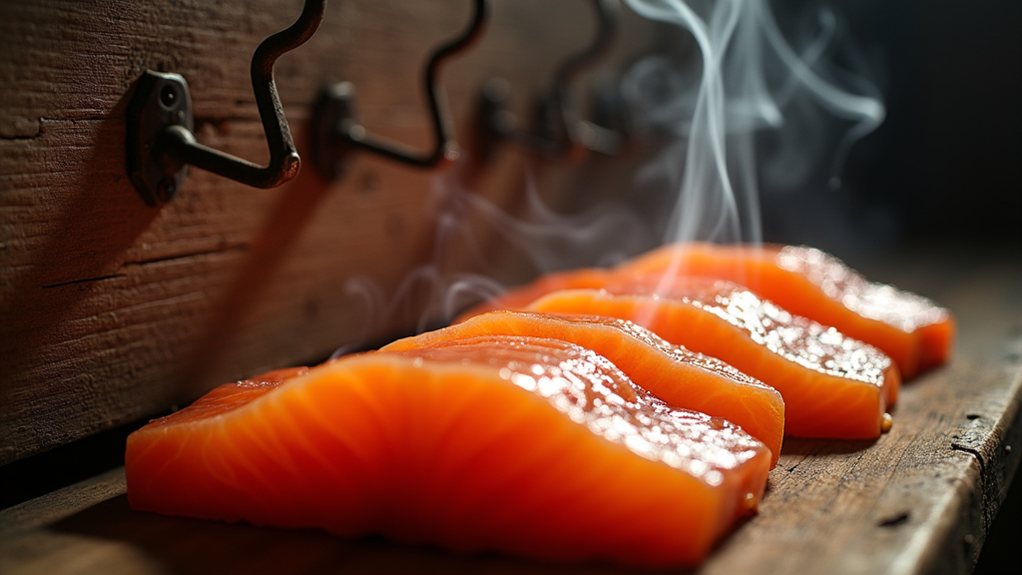
The smoking process remains largely unchanged since its inception, highlighting the commitment to tradition. Salmon fillets are sprinkled with salt and rested for 24 hours, drawing out moisture for preservation. After air drying with warm fans until a tacky surface forms, the fish undergoes cold smoking with oak sawdust to create an outer seal. The London Cure uses only sea salt and oak smoke, distinguishing it from other methods that incorporate sugar.
East London once housed over 60 smokehouses in the E1 postcode alone, making it a hotbed for what was originally a working-class staple. Jewish immigrants fleeing pogroms in Eastern Europe brought these smoking techniques to London’s East End. Today, few traditional smokehouses remain, with H. Forman’s at Fish Island and newer establishments like Secret Smokehouse in Hackney carrying the torch.
These artisans have overcome significant challenges. H. Forman’s survived a devastating fire in 1998, followed by a flood and compulsory purchase that threatened its existence. Secret Smokehouse, founded by Scotsman Max Bergius, started in a garden shed before expanding to railway arches and larger facilities as demand grew. The business persevered through legal battles with Olympic authorities to secure its future and eventually negotiated a deal for a new smokehouse. Their new facility features a distinctive design resembling a piece of salmon with its unique roof mimicking salmon skin. The company’s commitment to excellence has earned it prestigious clients including Fortnum & Mason and other high-end establishments.
The cultural impact of these smokehouses extends beyond food production. In 2017, London Cure Scottish salmon received Protected Geographical Indication status, placing it alongside prestigious products like Stilton cheese and Parma ham. This recognition guarantees that only salmon smoked in Newham, Hackney, or Tower Hamlets boroughs using traditional methods can bear the London Cure name, preserving this century-old culinary heritage for future generations.