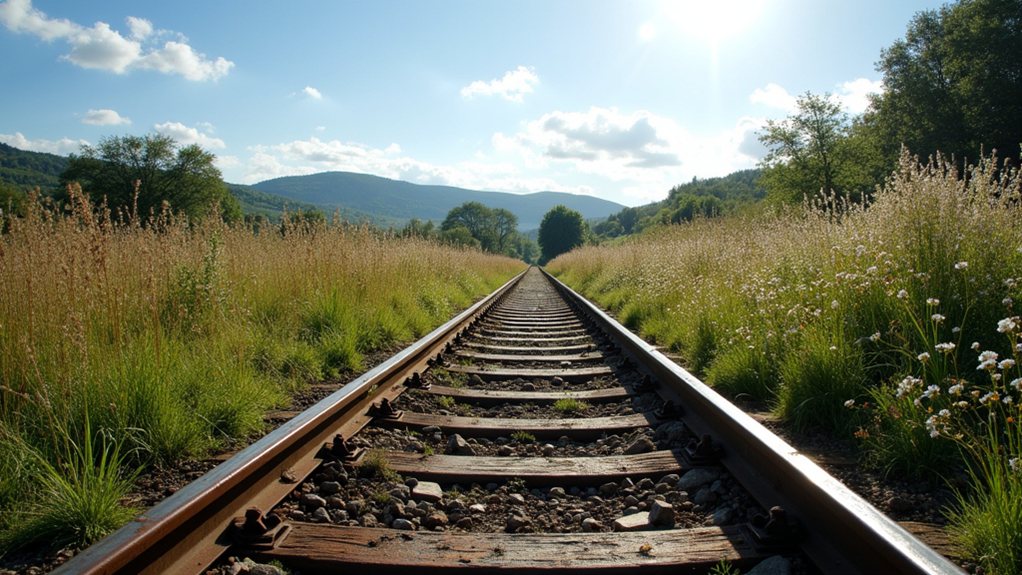

Time has carved new opportunities from the rusted rails of yesterday. The Stratford-Okahukura Line, stretching 142 kilometers through some of the country’s most challenging terrain, offers visitors a glimpse into railway history that few get to experience. Built from 1901 and formally abandoned in 2009, this historic corridor now hosts specialized tours that allow travelers to explore its 24 tunnels and more than 90 bridges.
Where time meets history on rusted tracks, forgotten engineering marvels await rediscovery.
Companies like Forgotten World Adventures have transformed sections of this abandoned line into unique tourist experiences, using rail carts and hand-powered trolleys to traverse these historic paths. The upcoming 2025/26 season presents a limited window for enthusiasts to book these journeys, with scheduled dates already filling quickly for next month’s excursions. Similar to this experience, the Hiwassee Loop offers travelers a chance to see the only railroad loop east of the Mississippi during a scenic 50-mile journey. The experience is reminiscent of Tehachapi’s over-and-under loop which attracts rail enthusiasts from around the world.
Visitors can choose from various experience durations, from shorter one-hour trolley rides to extensive five-hour gorge excursions. The available packages include the Tokirima Taster adventure for those seeking a half-day experience at $365 NZD. Many operators have enhanced the basic rail experience by adding complementary activities, including jet boating, helicopter flights, and guided storytelling that highlights both Māori and settler histories connected to the railway.
These abandoned railways represent more than just transportation corridors. They contain remnants of settlements, historic structures, and cultural sites that document regional development. The engineering complexity, including tunnels extending up to 1.5 kilometers and hand-built trestles, showcases the remarkable labor and historic methods used in their construction.
Safety remains a priority for all authorized operators, who secure proper permissions and maintain emergency procedures for these remote journeys. Visitors should prepare for limited cellphone coverage and bring appropriate supplies, especially when traveling through more isolated sections.
Beyond the adventure aspect, these railway experiences provide economic benefits to surrounding communities. Small towns along these corridors have seen increased tourism spending, creating jobs in maintenance, operation, and guiding services in regions that might otherwise face economic decline.
For those seeking a unique blend of history, engineering appreciation, and natural scenery, next month’s railway excursions offer a rare opportunity to travel paths nearly reclaimed by time.