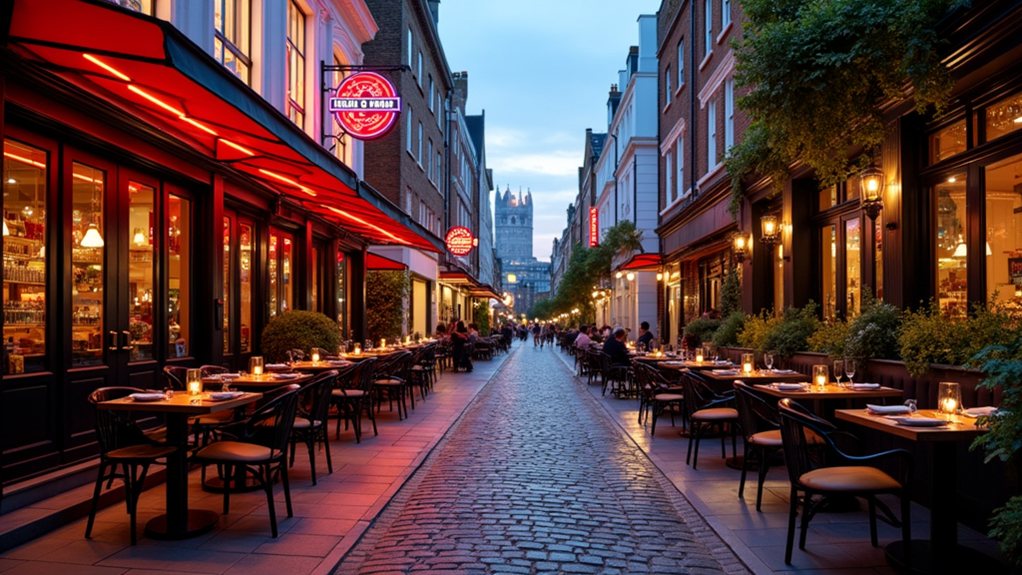

As experiential dining continues its dramatic 46% year-over-year surge, restaurants across America are adapting to meet evolving consumer preferences. Industry data reveals that establishments are offering 34% more pop-ups, collaborations, and chef’s tables to capture the attention of the 48% of Americans who now actively seek unique dining experiences. This shift reflects a fundamental change in how consumers view restaurants, with 37% expressing desires for even more experiential options by 2026.
Experiential dining isn’t just growing—it’s exploding, transforming how Americans choose where to eat and what they expect when they arrive.
The dining landscape shows Americans eating out more frequently, averaging 10 restaurant visits monthly, with millennials leading at 14 visits per month. This demographic particularly values Instagram and TikTok-worthy experiences, with 79% considering social media appeal when selecting dining destinations. Restaurant operators are responding by creating more visually striking presentations and environments. Consumers are increasingly willing to pay premium prices for distinctive dining atmospheres and creative menu offerings, with 54% ready to spend more for unique experiences.
Spontaneity has become a driving force in restaurant selection, with Notify Me alerts increasing by 84% compared to previous years. Diners demonstrate patience for experiences they value, willing to wait an average of 39 minutes as walk-ins for desirable restaurants. The growing trend of happy hour dining between 4:00-4:59 pm has increased by 13% year-over-year, showing how timing preferences are evolving. This behavior reinforces the appeal of limited-time offerings and ephemeral dining events. Restaurants are increasingly focusing on bold flavors and memorable taste experiences to differentiate themselves in a competitive market.
Menu trends show surprising developments, with spicy rigatoni experiencing a 56% increase in popularity, followed by Basque cheesecake at 44% and smashburgers at 37%. Looking ahead, industry experts anticipate “swavory” flavors like miso caramel and tahini soft serve to gain traction as the next frontier in flavor innovation.
Restaurant expansion strategies are evolving toward concentrated growth in existing markets rather than broad geographic expansion. Fast-casual growth is slowing after a decade of rapid expansion, while traditional casual dining chains like Applebee’s and Texas Roadhouse are experiencing unexpected resurgence.
Operators face significant challenges, including labor shortages intensified by policy changes and demographic shifts, while balancing the growing consumer demand for authenticity with necessary brand evolution. Meanwhile, restaurants are quietly incorporating AI for discovery while keeping the focus on human-centered experiences.