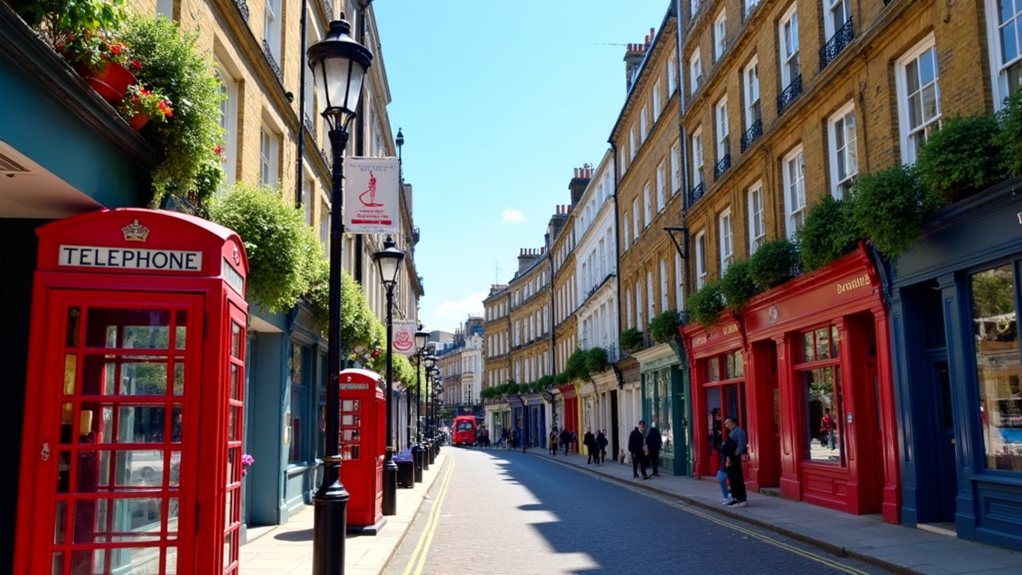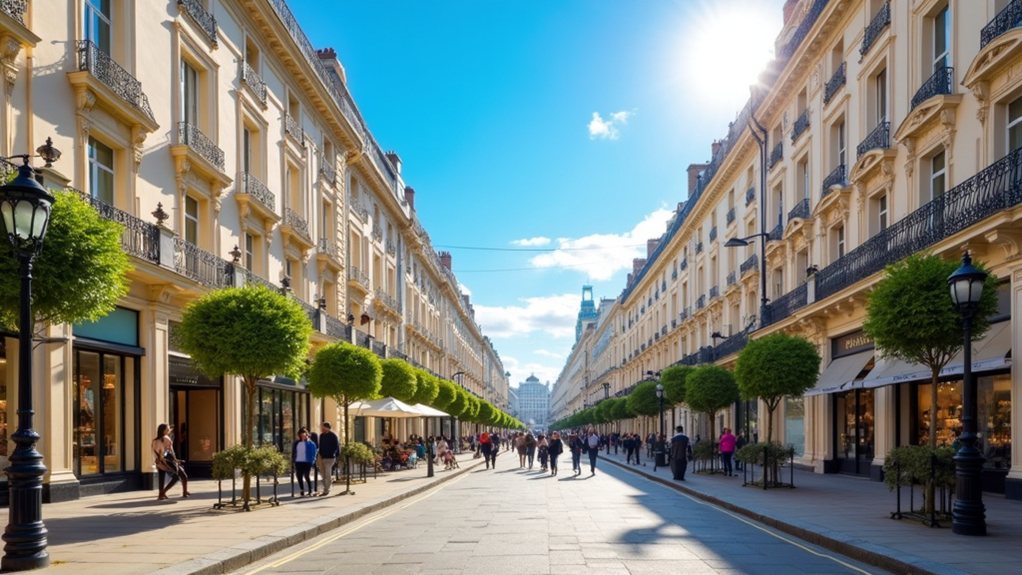

Regent Street, designed in the early 19th century, is a key shopping destination in London, famous for its curved section near Piccadilly Circus called the Quadrant. It features flagship stores and elegant architecture mostly from the 1920s in Neo-baroque style. Easily reached via Oxford Circus or Piccadilly Circus tube stations, it offers a mix of retail and historic charm. First-time visitors can expect a well-planned, pedestrian-friendly boulevard with a rich cultural background. More details outline its unique features and events.
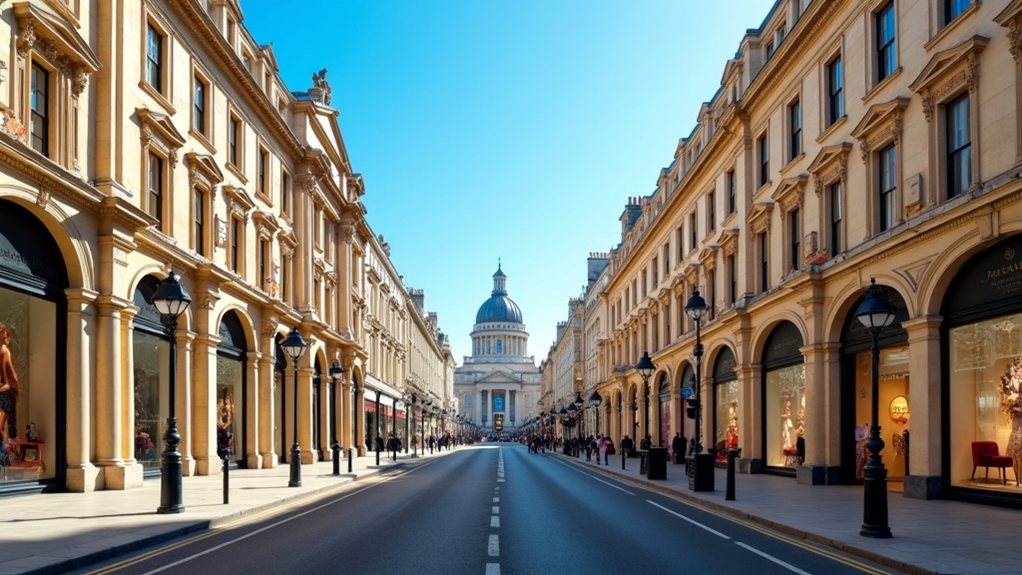
Regent Street in London is a historic and well-known commercial boulevard that runs from Lower Regent Street near Charles II Street and Waterloo Place, curving at Piccadilly Circus before continuing north toward Regent’s Park. The street was named after George, the Prince Regent, who later became King George IV. It was designed by architect John Nash between 1811 and 1825, with the purpose of connecting Carlton House and Regent’s Park. This project was part of a royal effort to improve urban conditions after problems with medieval streets were exposed by the Great Fire of London. The New Street Act of 1813 authorized the construction, with a budget of £600,000. Inspired by French city planning, Regent Street was created as a wide, architecturally distinguished boulevard adapted to existing land ownership constraints. The street is notable for having every building on it classified as Grade II listed, reflecting its historic significance.
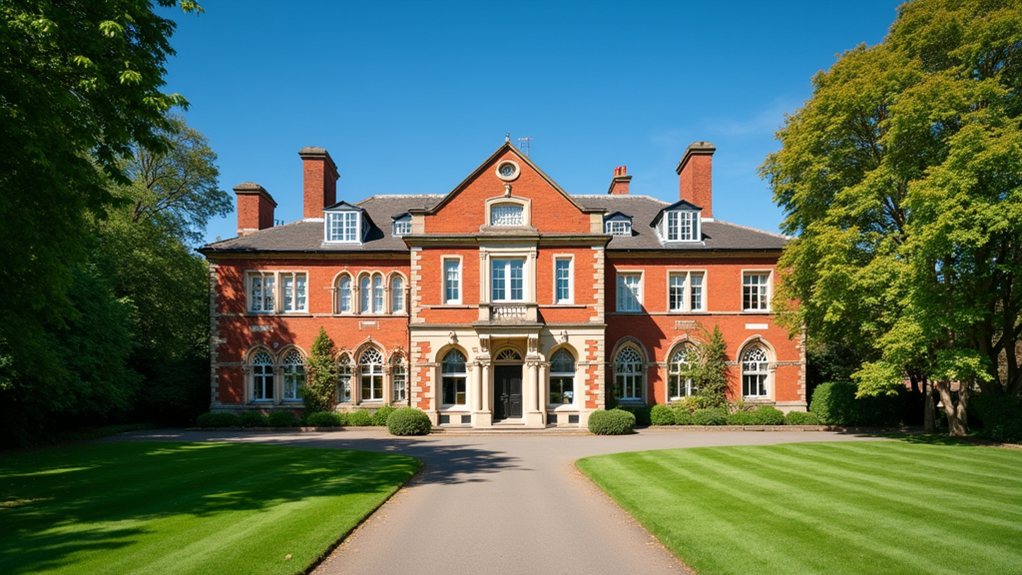
The street’s distinctive curve near Piccadilly Circus, called the Quadrant, was designed to avoid demolishing large mansions and to balance commercial interests. Regent Street also features a colonnade of cast-iron columns that originally provided weather protection for shoppers. All buildings on Regent Street are Grade II listed, which means they are protected for their historic and architectural importance. Originally, Nash designed buildings in the Regency style using Portland stone, but most were replaced in the 1920s with Neo-baroque style structures by Reginald Blomfield. The only remaining building by Nash is the All Souls Langham Place church. The development also reflected social stratification, with Regent Street serving as a boundary separating nobility from the working class, an idea central to Nash’s design (social division).
Regent Street was planned as a ceremonial route and a shopping destination, showing the elegance and uniformity typical of Regency architecture. Regent Street holds the distinction of being the world’s first street built specifically for shopping, which has contributed to its status as a global commercial hub. It has grown into a global commercial and cultural hub, hosting flagship stores and retail experiences. The street forms a boundary between the affluent Mayfair district and the historically less reputable Soho, influencing local social and commercial patterns.
While the Quadrant once had covered walkways called the Quadrant Colonnades, they were removed in 1848 due to social issues. The Crown Estate continues to be the primary landowner. Over time, buildings were replaced to meet modern needs, and the street celebrated its 200th anniversary in 2019. Events like Summer Streets and the Christmas light switch-on contribute to its continued appeal. The street is well served by nearby tube stations like Oxford Circus and Piccadilly Circus, making it easily accessible for visitors (transport connections).
Frequently Asked Questions
Are There Any Nearby Parking Facilities on Regent Street?
Yes, several parking facilities are available near Regent Street.
The Regent Street Car Park by Care Park offers over 200 spaces with 24-hour security and wheelchair access.
NCP provides spaces in the West End and Mayfair, while JustPark lists over 350 options nearby, including private driveways.
On-street parking is available around Regent’s Park with hourly rates, but availability is limited during peak times.
Pre-booking is recommended to guarantee a spot.
What Is the Best Time of Year to Visit Regent Street?
The best time to visit Regent Street is during the shoulder seasons of late spring (March to May) and early autumn (September to October), when the weather is mild and crowds are smaller.
Summer attracts many tourists, leading to congestion, while winter is colder and less crowded except during Christmas.
Weekday mornings throughout the year offer a quieter experience.
Avoid peak school holidays to reduce crowding and enhance the visit.
Is Regent Street Accessible for Wheelchair Users?
Regent Street is accessible for wheelchair users, featuring step-free access throughout and even pavements made of flagstone and resin-bound gravel.
Major crossings have dropped kerbs and tactile paving, with central islands for resting. Nearby underground stations like Bond Street and Green Park offer step-free access.
Buses and black cabs accommodate wheelchairs. Many shops provide lifts and accessible toilets, while seating is available frequently along the street for rest.
Are There Any Public Restrooms Available on Regent Street?
Yes, there are public restrooms available near Regent Street.
Accessible toilets can be found on Balderton Street near Selfridges and on Princes Street by Oxford Circus Station, the latter requiring a RADAR key for access.
Inside Regent Street, restrooms are located in Hamleys toy store and the Apple Store, both free to use.
Additional facilities are available in nearby shopping centers like Selfridges on Oxford Street.
Can I Find Free Wi-Fi on Regent Street?
Free Wi-Fi is available on and near Regent Street through various sources.
London Underground stations nearby offer free Wi-Fi on platforms and ticket halls, requiring registration.
Major retailers like Apple and H&M provide in-store Wi-Fi, usually needing email or terms acceptance.
Cafés such as Arket and Ziggy Green offer Wi-Fi with a purchase.
Public networks, including O2 Wi-Fi in nearby areas, require one-time login but may not cover Regent Street directly.