
Notting Hill offers visitors a range of activities, including exploring the famous Portobello Road Market, which features antiques, vintage goods, and diverse street food, especially lively on Saturdays. Shoppers can visit boutique stores along Westbourne Grove or independent shops on Golborne Road. Architectural highlights include pastel-colored houses and Victorian churches. Cultural venues like The Gate Theatre and the Museum of Brands provide additional experiences. Guided tours and food tastings further enrich visits, with more details available for a fuller itinerary.
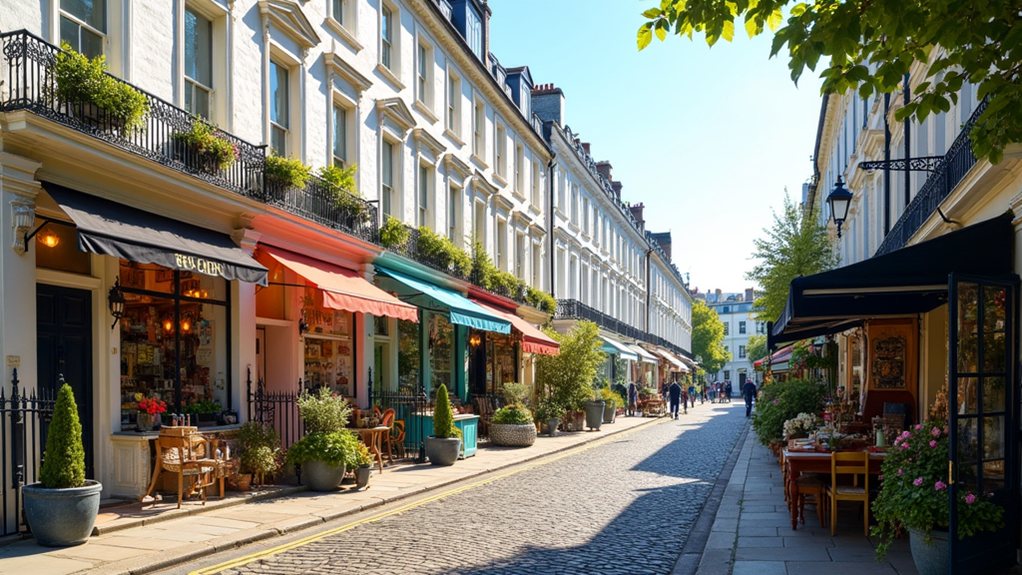
Notting Hill is a notable area in London, known for its distinctive markets, colorful architecture, and cultural venues. Among its most famous attractions is the Portobello Road Market, which is considered the largest antiques market in the world. This market features over 1,000 dealers offering a wide variety of vintage goods, food, and unique souvenirs, making Saturdays the best day to visit. The market’s vibrant atmosphere is reminiscent of Oxford Street’s lively shopping scene.
Explore Notting Hill’s vibrant markets and colorful streets, with Portobello Road Market as a must-visit on Saturdays.
In addition to the market, the area is home to numerous vintage and antique shops that contribute to its vibrant shopping scene. Westbourne Grove is another popular destination in Notting Hill, known for its boutique shops and high-end retail options. Golborne Road also offers distinctive shopping experiences, including culinary treats and independent stores. The Notting Hill Bookshop is notable for its literary connections and unique book collections, attracting book lovers. The area boasts numerous excellent bookshops within a two-block radius, including highlights like Books for Cooks and Daunt.
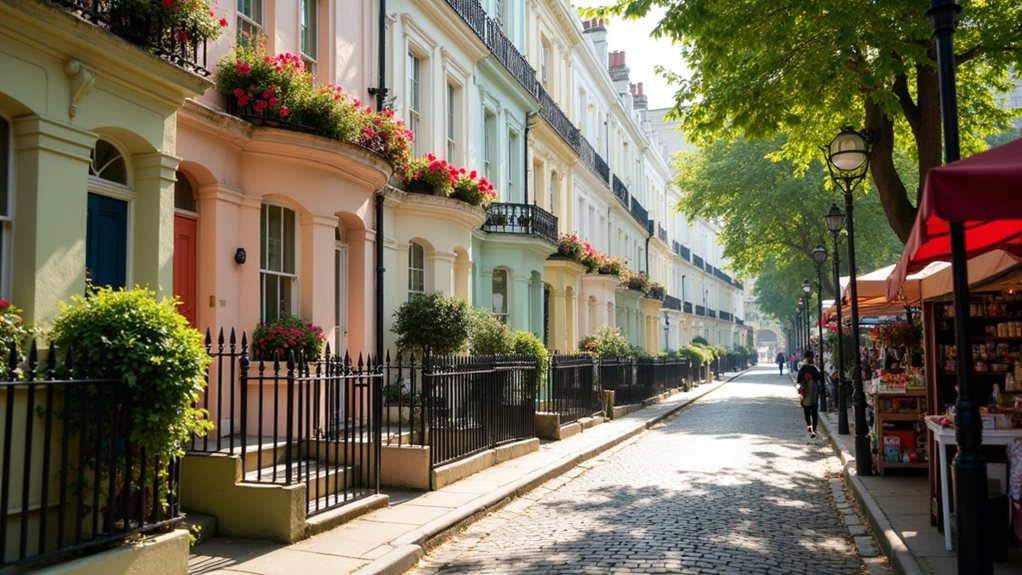
The architectural charm of Notting Hill is evident in its pastel-painted houses found on streets such as St. Luke’s Mews, Hillgate Place, Pottery Lane, and Lancaster Road. These colorful homes provide popular photo opportunities. Many narrow lanes, like St. Luke’s Mews and Pencombe Mews, feature converted horse stables known as mews streets, which are appreciated for their picturesque aesthetics and appearances in films. Self-guided walks are available to explore some of London’s best mews streets in the area.
Visitors are advised to respect private property in these residential areas to maintain community privacy. The historical St. Peter’s Church, completed in 1857, showcases Victorian classical-style architecture. Additionally, the Museum of Brands offers educational visits with over 12,000 original items displaying the evolution of consumer culture. Nearby, street art galleries such as the Graffik Gallery add to the cultural experience.
Notting Hill’s cultural venues include The Gate Theatre, which supports new theatrical talent with diverse performances. The Coronet Theatre, a Victorian-era venue, hosts various shows including dance and concerts. The Tabernacle is a mixed-use arts venue offering comedy, music, literary events, and dining options.
Film fans can visit locations linked to movies like *Notting Hill* and *Love Actually*. Visitors interested in exploring the area may choose from guided walking tours that cover key sites such as the Portobello Market and celebrity homes, or themed tours combining culture, history, and local cuisine. Self-guided food tours allow sampling of street food at market stalls, while photography tours highlight the colorful streets and landmarks.
Some combined London tours include Notting Hill with major attractions like Covent Garden and Trafalgar Square. Portobello Road Market also offers diverse street food options that cater to various tastes, enhancing the culinary experience in Notting Hill. The neighborhood is also walkable from Hyde Park, making it easy to combine a visit with nearby green spaces.
Frequently Asked Questions
What Is the Best Time of Year to Visit Notting Hill?
The best time to visit Notting Hill is during the shoulder seasons of May, early June, September, and early October.
These months offer mild weather, fewer crowds, and full access to attractions.
Spring provides blooming flowers and pleasant park visits, while autumn allows for relaxed sightseeing with mild temperatures.
Summer is lively but crowded due to festivals and markets, whereas winter is quieter but colder, with some attractions having reduced hours.
Weekday mornings are preferable for market visits.
How Do I Get to Notting Hill by Public Transport?
To reach Notting Hill by public transport, take the Central, District, or Circle lines to Notting Hill Gate station, the main Tube stop.
Alternatively, use Westbourne Park or Ladbroke Grove stations on the Hammersmith & City and Circle lines.
Multiple bus routes, including 27, 28, and 31, serve the area.
From central London, travel times are short, and fares range from £2 to £3.
Using an Oyster card or contactless payment is recommended for cost efficiency.
Are There Any Famous Movies Filmed in Notting Hill?
Yes, the film Notting Hill (1999) was famously shot in the Notting Hill area, featuring locations like Portobello Road and the blue door at 280 Westbourne Park Road.
Interior scenes were filmed at Shepperton Studios.
Additionally, Love Actually (2003) includes scenes in Notting Hill, such as St Lukes Mews.
These movies highlight the neighborhood’s charm and have contributed to its popularity as a film location.
What Are the Best Hotels Near Notting Hill?
The best hotels near Notting Hill include The Laslett, a luxury boutique hotel with Victorian townhouses and high accessibility.
The Phoenix Hotel is known for its value and proximity to Hyde Park and underground lines.
Ruby Zoe Hotel London offers Caribbean-inspired decor near Nottinghill Gate station.
For budget options, Vincent House London Residence provides serviced apartments close to the tube.
All these hotels have strong guest ratings and easy access to local attractions.
Is Notting Hill Safe for Tourists at Night?
Notting Hill has a medium crime rating, with 182 crimes per 1,000 residents, indicating moderate risk.
Tourists should exercise caution at night, avoiding poorly lit or isolated areas. The annual carnival experiences significant safety challenges, but normal nights are generally safer.
Visitors are advised to stay in well-populated areas, use reliable transportation, and remain aware of surroundings. Following these precautions helps reduce the risk of encountering crime during nighttime visits.