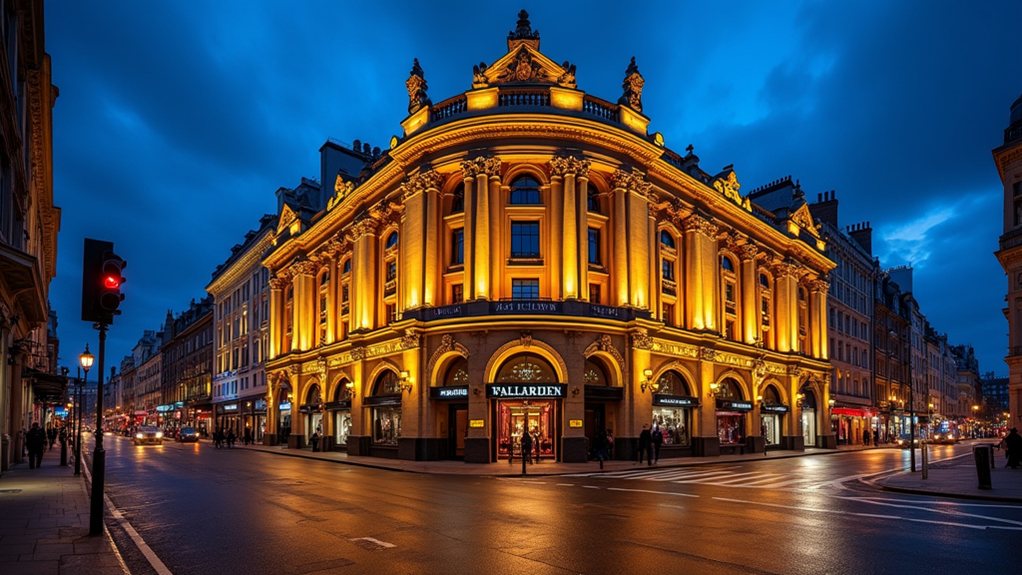
A 5-day London itinerary covers iconic landmarks like Buckingham Palace, the Tower of London, and Big Ben, alongside cultural sites such as the British Museum and Tate Modern. Visitors should allocate time for parks like Hyde Park and Regent’s Park, and entertainment zones including the West End and South Bank. Unique experiences like Thames Riverboat Cruises and Little Venice add variety. Utilizing fast-track tickets, particularly for the London Eye, helps avoid delays. Following this plan reveals how to balance popular sights and hidden gems efficiently.

Although London offers an extensive range of attractions, a well-planned 5-day itinerary allows visitors to experience the city’s key landmarks, cultural institutions, outdoor spaces, and entertainment districts efficiently. A visit to Buckingham Palace, available for tours on select dates, provides insight into the Royal Family’s residence and its historic state rooms.
A carefully planned 5-day London itinerary unveils top landmarks, culture, green spaces, and vibrant entertainment districts.
The Tower of London, a medieval fortress, features Beefeater tours and displays the Crown Jewels, attracting millions yearly. St Paul’s Cathedral, known for its impressive dome and royal ceremonies, offers striking views from the nearby Millennium Bridge. The London Eye on the South Bank grants panoramic views of the city, and purchasing London Eye tickets can enhance your experience while avoiding long queues at the entrance. Big Ben and the Houses of Parliament stand as iconic symbols beside Westminster Abbey. Booking fast-track tickets for the London Eye can help visitors avoid long queues.
Cultural institutions contribute considerably to London’s appeal. The British Museum, with free entry, showcases thousands of artifacts, including the Rosetta Stone and Parthenon Sculptures. Tate Modern, located along the Thames, presents modern and contemporary art through dynamic exhibitions. Scheduled to open in 2025, the Museum of Shakespeare will present immersive displays on Elizabethan London and Shakespeare’s works, offering visitors a unique cultural experience with immersive exhibitions.
The Natural History Museum offers interactive experiences focused on Earth’s life story, featuring extensive fossil and animal collections. Somerset House, a historic riverside venue, hosts outdoor cinema, art exhibitions, and cultural events. Scheduled to open in 2025, the Museum of Shakespeare will present immersive displays on Elizabethan London and Shakespeare’s works.
London’s parks and outdoor spaces provide areas for relaxation and recreation. Hyde Park, the largest Royal Park with 350 acres, includes the Serpentine lake and year-round swimming spots. Adjacent Kensington Gardens contain Kensington Palace and the Diana Princess of Wales statue. Regent’s Park is another popular green space featuring boating lakes and flower gardens, perfect for a peaceful day out.
Green Park and St James’s Park offer tranquil green areas near Buckingham Palace. The South Bank promenade, stretching from Westminster to Tower Bridge, features street performers, eateries, and seasonal markets. Jubilee Gardens and Ernie’s Beach provide riverside leisure with public Thames access.
Entertainment districts include the West End, known for theater performances, and Soho, which offers nightlife and dining options. Covent Garden features boutique shops, street acts, and historic markets.
The South Bank Centre houses the National Theatre, Hayward Gallery, and British Film Institute, offering frequent live events. The Royal Albert Hall hosts concerts ranging from classical to rock. For unique experiences, the Elvis Evolution exhibition will open in 2025 at Royal Victoria Dock, while Little Venice offers a peaceful canal neighborhood.
Thames riverboat cruises provide scenic views and transport alternatives along the river. This itinerary balances iconic sites with cultural and leisure activities, ensuring a thorough London visit.
Frequently Asked Questions
What’s the Best Time of Year to Visit London?
The best time to visit London depends on preferences.
Late spring (March to May) and early summer (June to August) offer pleasant weather, long daylight hours, and full access to attractions, ideal for sightseeing and outdoor activities.
For fewer crowds and lower prices, shoulder seasons like spring and autumn are suitable.
Winter months provide discounted rates but colder, wetter conditions.
Visitors should plan based on weather, crowd levels, and event schedules for best experience.
How Do I Get a London Oyster Card?
A London Oyster card can be obtained upon arrival at stations, airports like Heathrow, Gatwick, Stansted, or TfL Visitor Centres.
The Standard Oyster Card is available there and can be topped up at machines or ticket desks.
Visitor Oyster Cards must be ordered online before arrival, through official websites, as they are not sold on-site.
Online top-ups are possible, with some cards offering auto top-up features.
Registration protects Standard cards but not Visitor cards.
Are London Attractions Wheelchair Accessible?
London attractions generally offer good wheelchair accessibility, with many sites providing step-free entrances, lifts, and adapted facilities.
Popular locations like Buckingham Palace, the London Eye, and Kew Gardens have dedicated wheelchair access and offer manual wheelchair or scooter hire if booked in advance.
Some venues limit wheelchair users for safety, so early reservation is advisable.
Additionally, public transport and taxis in London are wheelchair accessible, supporting convenient travel for visitors with mobility needs.
What’s the Tipping Etiquette in London Restaurants?
In London restaurants, tipping etiquette involves checking if a 12.5% service charge is included on the bill. If present, no additional tip is necessary unless service was exceptional.
Without a service charge, a tip of 10-15% is customary for satisfactory service. Tips can be added to card payments or given in cash, and customers may request to remove the service charge if service is poor.
Tipping remains discretionary and reflects appreciation.
Is It Safe to Walk Around London at Night?
Walking around London at night is generally safe in well-lit, busy areas with active public transport and police presence.
Visitors should avoid high-crime boroughs like Lambeth and Croydon late at night, stay on main streets, and use licensed taxis or public transit.
Petty crimes such as pickpocketing are the main risks.
Avoid parks after dark, travel with company if possible, and keep valuables secure to reduce potential dangers.