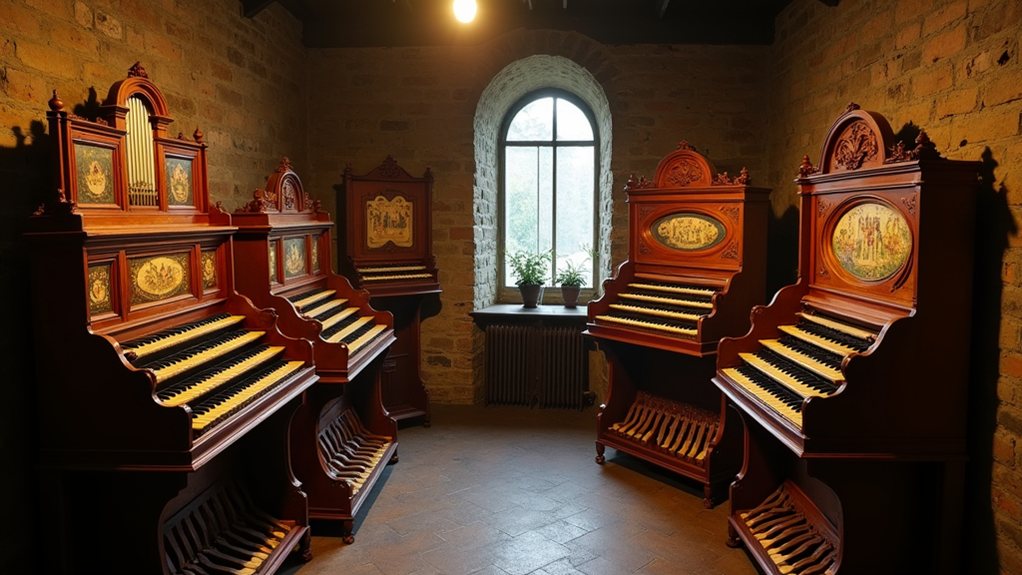
Tucked away in an unassuming warehouse on Plantation Road in Amersham, the Fair Organ Museum houses one of the UK’s most impressive collections of mechanical musical instruments. Founded by Albert Edward ‘Ted’ Reed in the 1960s as a private collection, it has grown to include over 30 restored fairground organs, steam engines, and fairground rides that date from 1870 to the present day.
The collection was officially established as the Amersham Fair Organ Museum Trust in 2004, becoming a registered charity dedicated to preserving British fairground heritage. Located approximately 30 miles northwest of London in Amersham-on-the-Hill, the museum features instruments from renowned manufacturers such as Gavioli, Marenghi, Hooghuys, and Wilhelm.
Visitors can experience this hidden gem during public open days, typically held on the first Sunday of each month from November to March, between 11:00 and 17:00. During these special days, the organs are played in 15-20 minute rotations, allowing guests to hear the diverse styles and sounds of these magnificent instruments.
Admission and parking are free, with tea available for £1 and cake for £1.50. The museum offers a unique opportunity to step back in time and experience the soundtrack of 19th and early 20th-century fairgrounds and carnivals. Visitors can walk among the instruments and appreciate the engineering marvels that provided entertainment in a bygone era.
A visit typically lasts 1-2 hours, providing ample time to explore the collection. Despite its cultural significance as one of the UK’s leading institutions for mechanical music preservation, the museum remains relatively unknown, even to locals. These historic organs once attracted fairground crowds through their impressive volume and distinctive melodies before becoming obsolete in the 1930s. It has been described as Amersham’s best-kept secret.
Those interested in visiting can find the full schedule on the museum’s website at afom.org.uk or on their Facebook page at facebook.com/fairorganmuseum. For additional information, the museum can be contacted at +44-1494433948. The trust continues to guarantee these fairground organs and traditional music are preserved for future generations. The museum also provides educational workshops for both children and adults who want to learn about the history and mechanics of these fascinating instruments. Many of the displayed organs feature painted automatons that move in synchronization with the music, adding a visual dimension to the auditory experience.