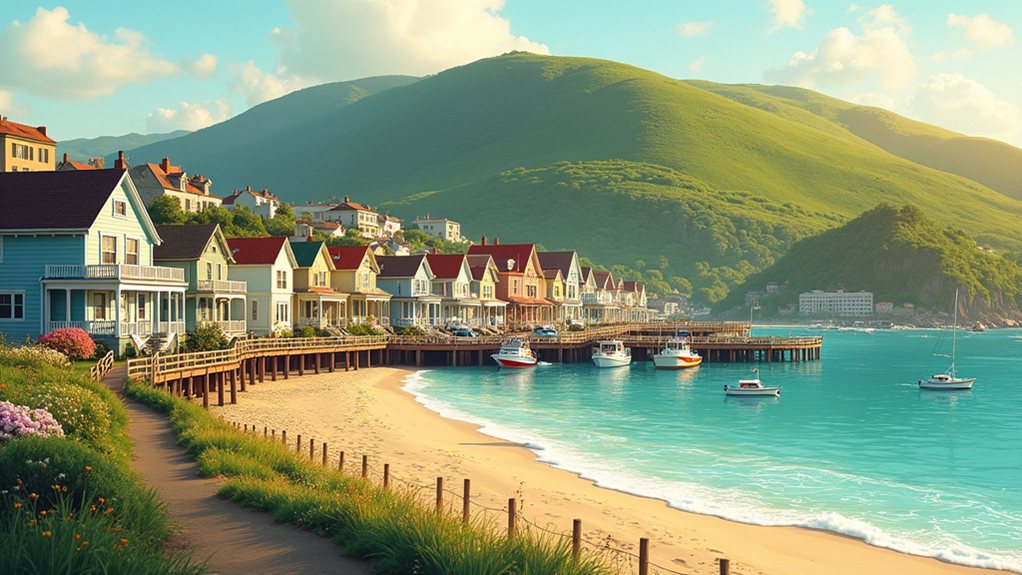

Five key elements are transforming struggling coastal communities into thriving destinations across the United Kingdom. These seaside towns, once facing economic decline, are experiencing remarkable revivals through strategic investments, community partnerships, and innovative approaches to tourism.
Strong community partnerships between private, public, and local business sectors serve as the foundation for coastal regeneration. The determination and pride of local residents create sustained momentum for improvement projects, while collaborative governance models address both environmental and economic challenges. This collective approach allows towns to overcome limited municipal resources through effective public-private partnerships.
Strong local partnerships build resilient coastal towns where pride and collaboration transform limited resources into sustainable growth.
Physical infrastructure improvements have proven vital to successful turnarounds. High-quality pedestrianized high streets, restored promenades, and reconstructed harbor areas enhance the visitor experience while providing functional spaces for community activities. The Seaside Turnaround in Oregon exemplifies how a central gathering plaza can become a vibrant hub for shopping, dining, and community events.
Beach nourishment projects, particularly successful in North Carolina coastal communities, have restored beachfront areas and protected property values from erosion damage. The Ocean Isle Beach project established local funding mechanisms since 1989, effectively addressing chronic erosion issues through terminal groin construction and sand replenishment.
The growth of domestic tourism through “staycation” trends has provided stable revenue streams for many coastal towns. Scarborough, for example, achieved a nine percent increase in visitor footfall over three years, compared to twelve percent declines observed in other UK town centers. The influx of middle-class second homeowners further supports local economic activity throughout the year.
Specialized retail and culinary establishments create distinct identities that draw visitors seeking authentic experiences. Restaurant-led regeneration, exemplified by Padstow’s transformation through high-profile culinary establishments, demonstrates how food tourism can redefine a location’s reputation. Boutiques offering locally-sourced products complement these experiences, creating diverse retail landscapes. The economic revitalization in Padstow specifically demonstrates how local investment’s impact can transform a town’s fortunes through focused entrepreneurship.
Educational and cultural investments round out the regeneration formula. Universities in coastal towns like Bournemouth and Brighton contribute to population retention and workforce development. Cultural institutions anchor town centers while community events generate consistent foot traffic.
These combined strategies have enabled formerly struggling seaside communities to reverse decline and establish new identities as vibrant, resilient destinations worth visiting year-round.