Nestled between the bustling commercial hub of Oxford Street and the academic institutions of Bloomsbury lies Fitzrovia, a neighborhood that frequently rewards visitors with an extraordinary mix of architectural styles, public art, and literary history.
The area’s Georgian terraces, concentrated around Fitzroy Square and Percy Street, display elegant 19th-century proportions and stucco facades, with many Grade II listed buildings maintaining their original townhouse layouts.
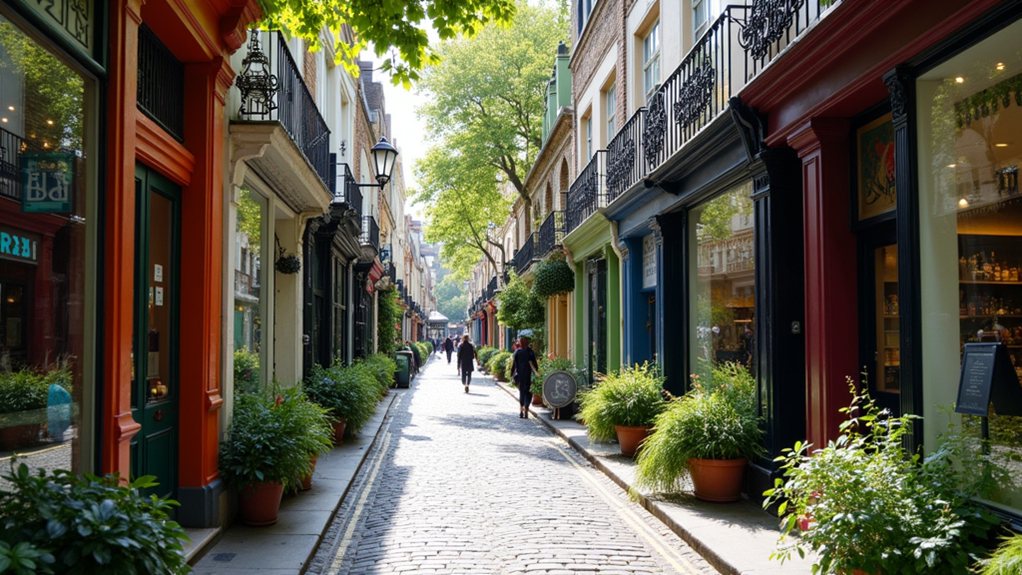
Walking north from Mortimer Street, visitors encounter Victorian and Edwardian commercial blocks along Charlotte Street, characterized by red brick, ornate cornices, and sash windows from the 19th-century expansion period.
Charlotte Street showcases London’s Victorian heritage in every brick, cornice and elegant sash window.
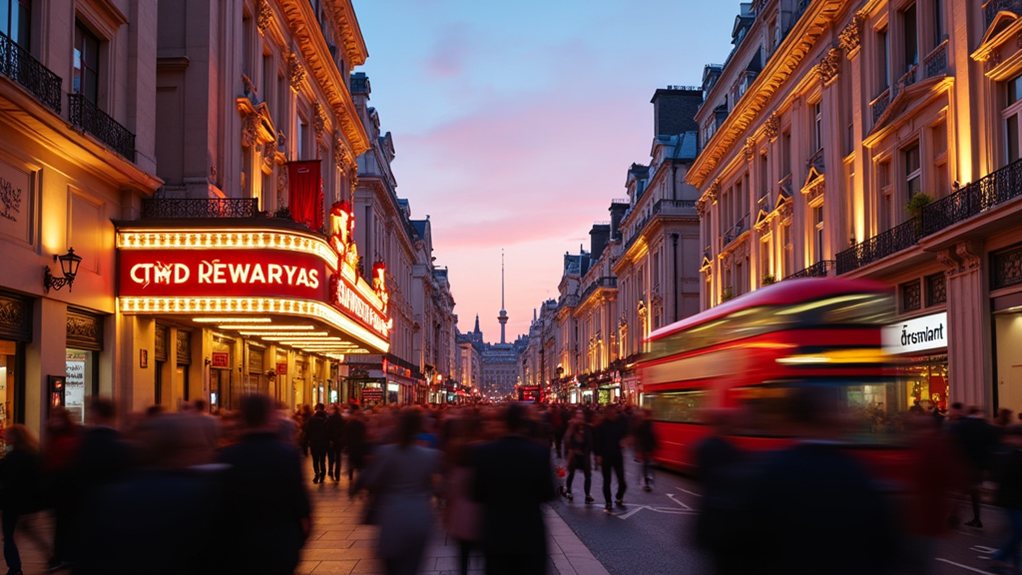
The skyline is dramatically punctuated by the BT Tower, a Grade II listed structure completed in 1964 that stands nearly 200 meters tall and represents post-war modernist engineering at its finest.
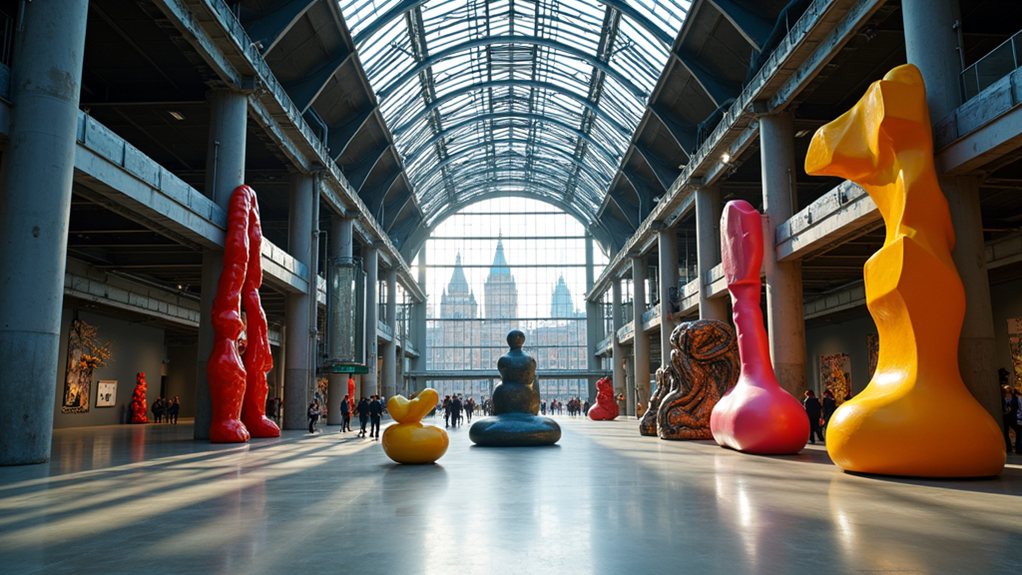
The neighborhood’s visual appeal extends beyond architecture to include numerous public art installations.
The large-scale mural at 63-65 Mortimer Street, created by artist Oliwia Bober for the London Festival of Architecture 2025, serves as a colorful landmark visible from main walking routes.
This artwork forms part of the Fitzrovia Quarter walking guide, which highlights outdoor sculptures and installations that transform the area into an open-air gallery.
Literary enthusiasts can follow blue plaques and commemorative markers around Cleveland Street and Fitzroy Square, indicating former residences of Virginia Woolf, Charles Dickens, and other notable writers.
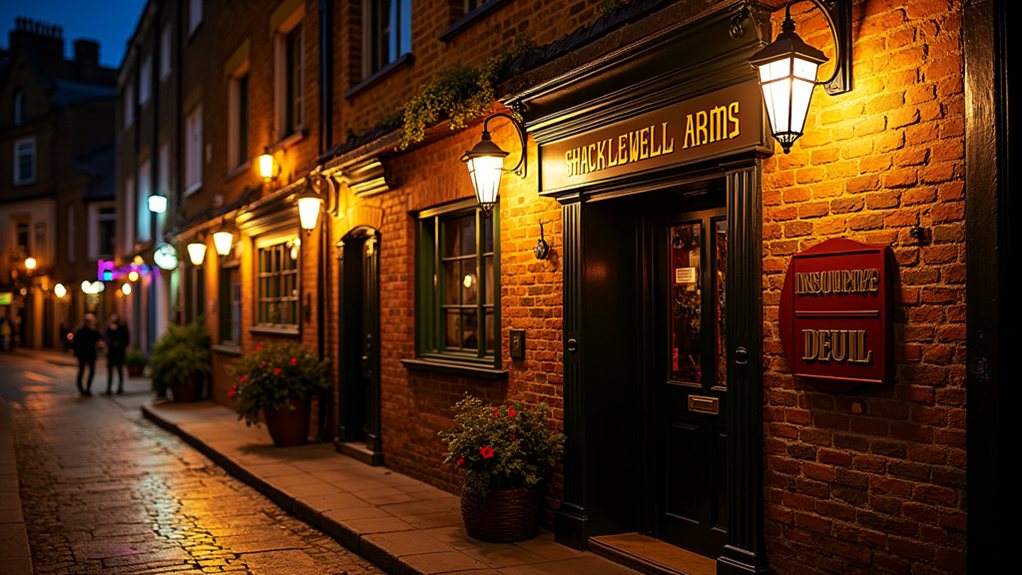
Historic pubs like the Fitzroy Tavern and King & Queen, once meeting places for George Orwell and Dylan Thomas, offer tangible connections to the area’s bohemian past. The impressive George Orwell Statue outside Broadcasting House pays homage to the renowned writer who frequented this creative district.
The area is also home to the starting point of the self-guided tour that focuses on pioneering and inspirational women in British history, beginning at Warren Street Station.
Recent redevelopment projects, including Fitzroy Place, have introduced contemporary elements of glass and steel alongside adaptive reuse of former artists’ studios and workshops.
These transformations create visual contrast while preserving historical facades and internal features, establishing new pedestrian routes through the historic street pattern and ensuring Fitzrovia remains a fascinating visual journey where layers of London’s creative history converge.