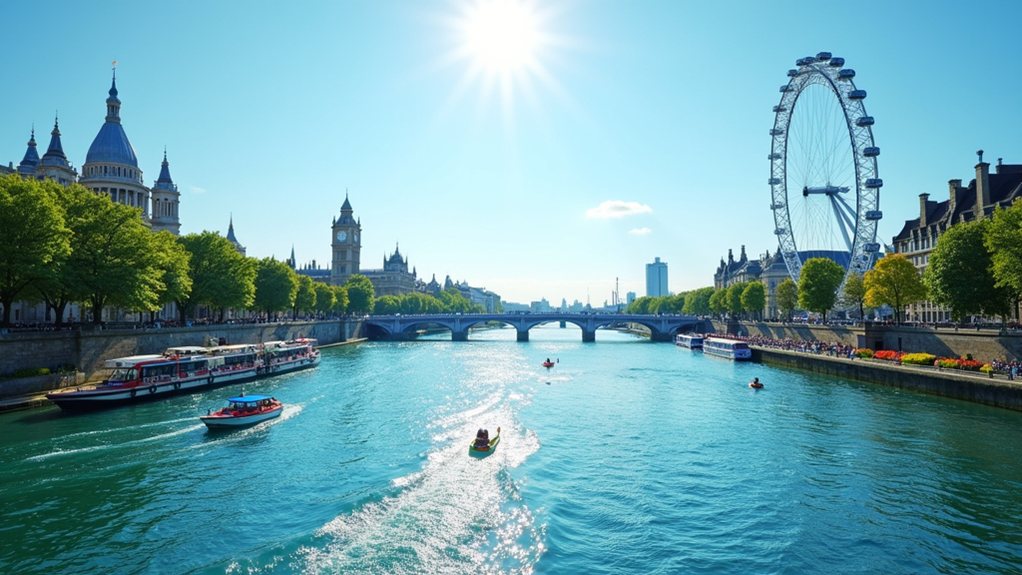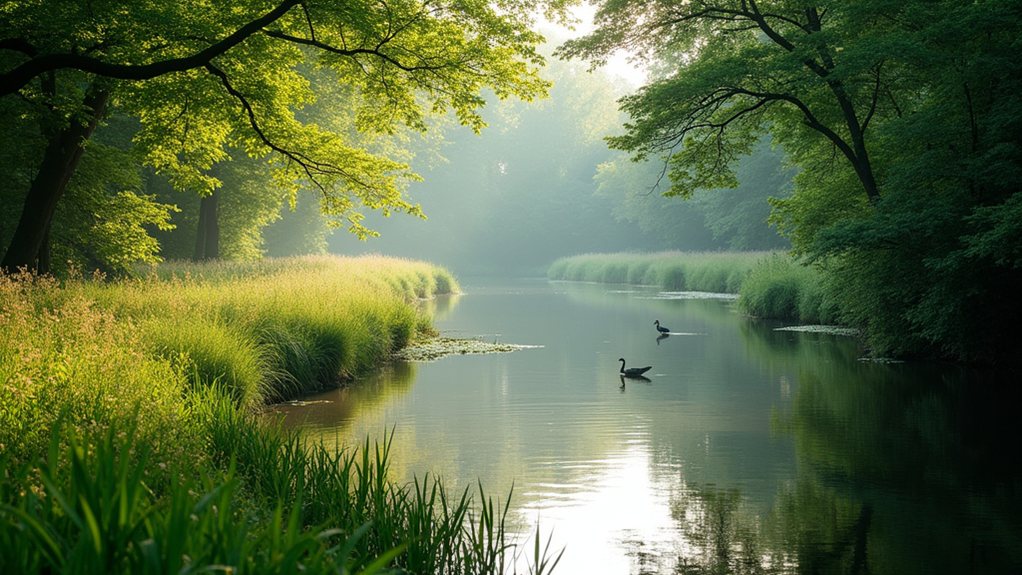

The Upper Thames region, stretching from the Cotswolds to the iconic Thames Barrier, represents one of England’s most diverse ecological corridors. This 184-mile riparian pathway creates a continuous natural haven through both rural landscapes and urban environments, supporting a remarkable mosaic of habitats. The river and its surroundings host freshwater channels, floodplain meadows, reedbeds, and marshes that collectively sustain varied flora and fauna communities throughout the seasons.
Wildlife enthusiasts regularly observe mute swans, gray herons, and the electric-blue flash of kingfishers along the water’s edge. The river’s connectivity enables important fish migration patterns, supporting pike, roach, and other coarse fish that form the backbone of riverine food webs. Seasonal dynamics bring breeding activity to floodplain meadows in spring, while autumn and winter months see influxes of migrant waterfowl seeking refuge in the Thames valley wetlands. The seasonal changes create a spectacular transformation of the landscape, with spring blossoms and autumn foliage providing unique views throughout the year. In addition, the diverse habitats within the river corridor are enhanced by mature trees that provide essential shade and shelter for various species.
Several significant wetland reserves punctuate the Thames corridor. The London Wetland Centre and Rainham Marshes provide critical urban refuges with carefully managed reedbeds and freshwater habitats that attract bitterns, waders, and various passerine species. The trail offers perfect opportunities for birdwatchers seeking to spot diverse species in their natural habitat. Further upstream, sites like Chimney Meadows National Nature Reserve maintain traditional grazing marsh and alder-willow carr for biodiversity conservation.
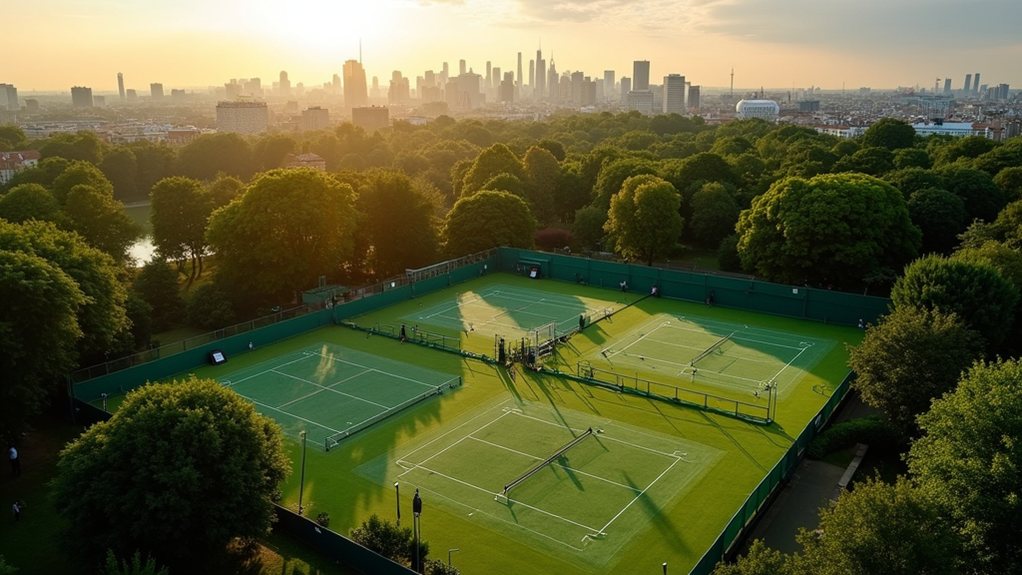
The Thames path also connects ancient woodlands and historic parklands. Richmond Park and Bushy Park represent extensive green spaces with veteran oak trees and significant deer populations. These parks, along with Syon Park and woodland fragments in the Upper Thames, provide essential habitat for songbirds, bats, and specialized invertebrates that depend on deadwood and diverse forest structures. The riverside borough of Kingston upon Thames complements these natural areas with a mix of green spaces and historic parks that border Richmond Park.
The internationally renowned Royal Botanic Gardens at Kew stands as a centerpiece of the Thames natural landscape. This scientific institute maintains living collections, seed banks, and conservation programs while its historic glasshouses safeguard tropical and temperate plant species.
Together with Hampton Court Palace gardens and Savill Garden, these formal landscapes complement the wild spaces, creating a blend of natural and cultural heritage that makes the Upper Thames an exceptional ecological treasure.