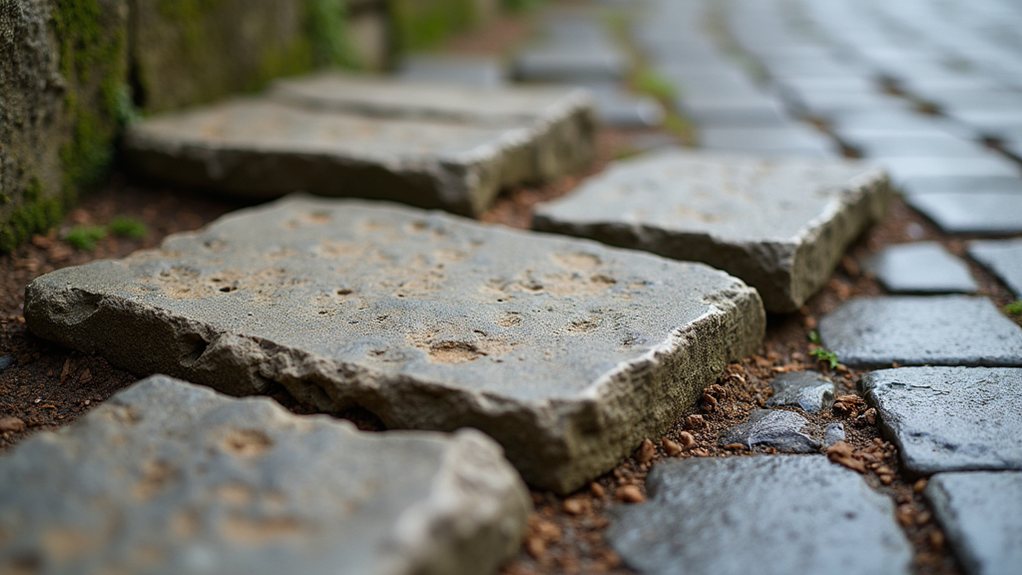

The ancient Roman Wall in London, which once defined the boundaries of a significant Roman settlement, still holds fragments of its original structure near the Guildhall. This wall, built in the 2nd century, served as a protective barrier for Londinium, the Roman name for London. Although many sections have been lost over the years due to urban development, ongoing archaeological studies aim to uncover and confirm the locations of these missing pieces, particularly around the Guildhall area.
Efforts to preserve the Roman Wall are essential for maintaining London’s cultural heritage. By keeping these historical fragments intact, future generations can learn about the city’s past and its transformation over centuries. The wall is not just an ancient structure; it represents a pivotal part of London’s identity.
Preserving the Roman Wall is vital for honoring London’s heritage and connecting future generations to its rich history.
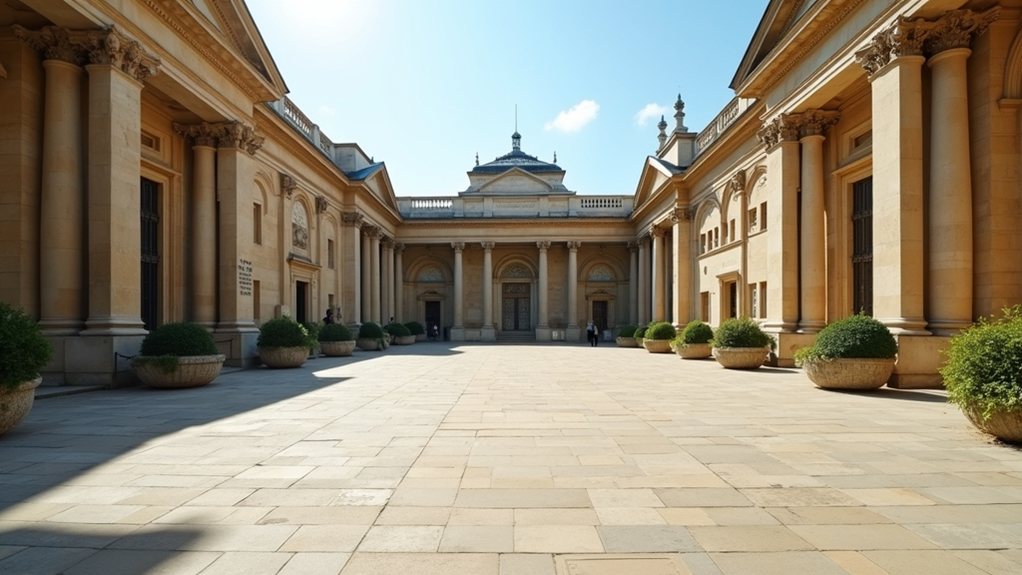
To enhance public engagement, there are plans to create designs that highlight the remnants of the wall. These designs may include aesthetically pleasing pavement patterns that reflect the wall’s historical significance, making the area more educational and visually appealing.
Archaeological teams are actively working to locate the exact remnants of the lost sections of the Roman Wall. Their work involves careful excavation and research, which helps to piece together the history of the structure and its role in London’s development. As new discoveries are made, they provide insight into what life was like in Roman times and how the wall shaped the city’s layout.
Ultimately, the preservation and promotion of the Roman Wall fragments play an important role in cultural education. By rediscovering these ancient structures, London can celebrate its rich history while inviting locals and tourists alike to explore the stories hidden within its streets. Every fragment unearthed serves as a connection to the past, reminding everyone of the city’s enduring legacy.