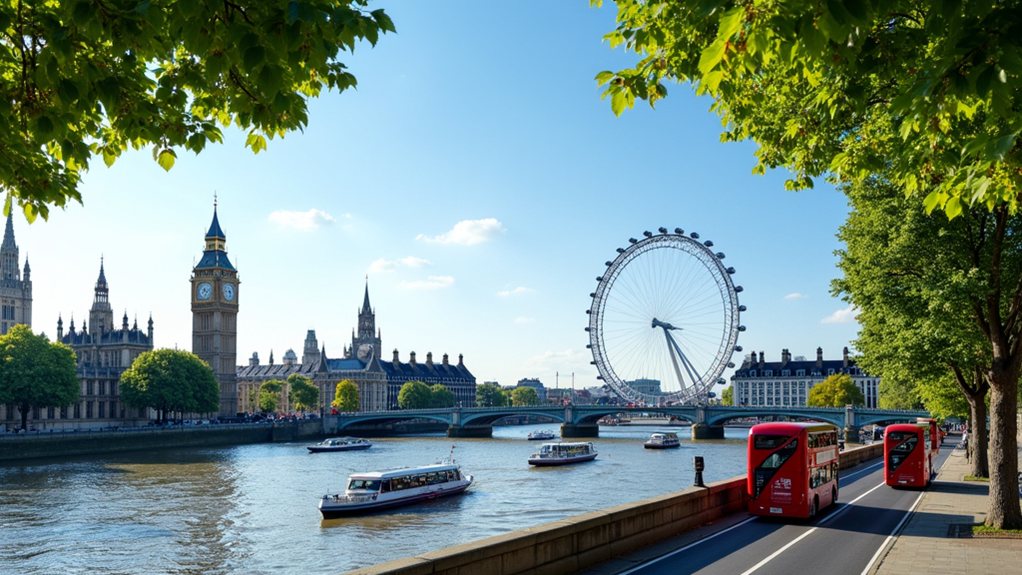
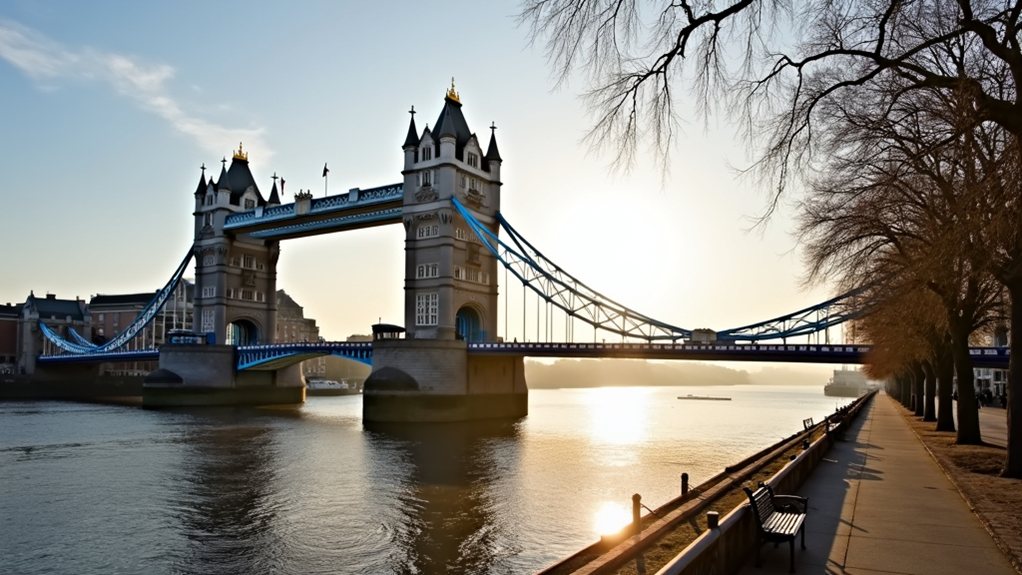
First-time visitors should start at the Tower of London to see historic sites and the Crown Jewels, then walk to Tower Bridge for views and a museum visit. Head along the Queen’s Walk to Borough Market for lunch. In the afternoon, visit Shakespeare’s Globe and Tate Modern, then ride the London Eye for panoramic city views. End the day exploring Westminster Abbey, Trafalgar Square, and Buckingham Palace, taking time to relax in nearby St. James’s Park for a full experience. Additional details follow.
1-Day London Itinerary
Although a single day offers limited time, it is possible to experience many of London’s key landmarks and cultural sites by following a well-planned itinerary. The day can begin at the Tower of London, a historic fortress that houses the Crown Jewels. Visitors may join guided Beefeater tours for a deeper understanding of the site’s history. Admission costs approximately £35.80.
After exploring the Tower, a short walk leads to Tower Bridge, an iconic bascule and suspension bridge. The bridge features a museum with engine rooms and glass floors, accessible for £16 per adult. From there, walking along The Queen’s Walk provides a scenic riverside path connecting Tower Bridge to London Bridge, about three-quarters of a mile. Near London Bridge, Borough Market offers a variety of food options, ideal for lunch.
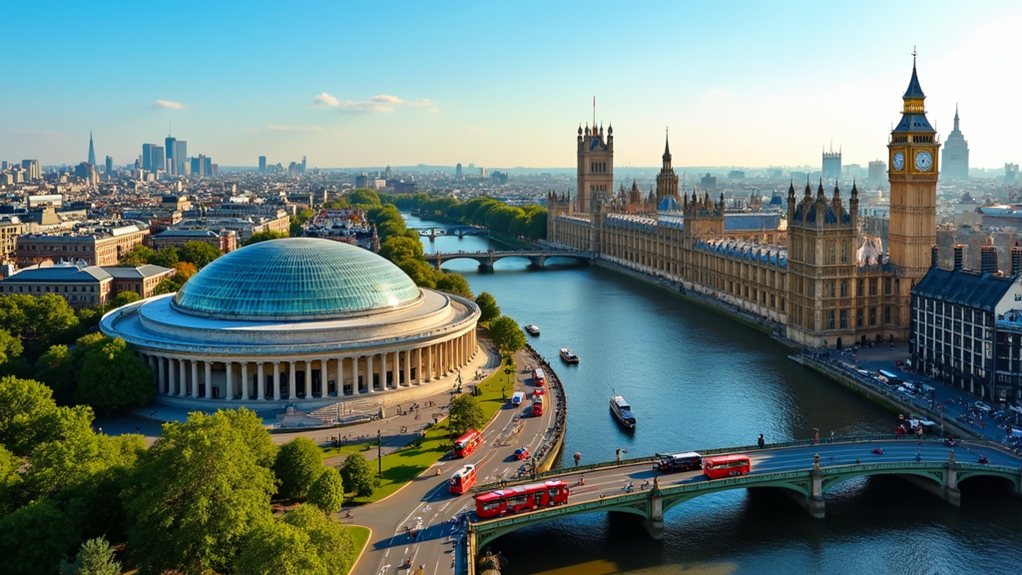
Continuing along the riverside from London Bridge, visitors can see Shakespeare’s Globe, the Millennium Bridge, and the Tate Modern art gallery. Across the river, St. Paul’s Cathedral comes into view. To gain a broader perspective of the city, one may take an Uber boat or walk to the London Eye, where panoramic views are available, making it a cultural landmark that enhances any visitor’s trip. Tickets should be booked in advance, and visiting during the golden hour is recommended for the best experience. For a relaxing mid-afternoon break, some visitors enjoy a boat cruise from Tower Pier to Westminster Pier, which offers a unique view of the city along the Thames. South Bank offers a lively atmosphere with year-round events and outdoor activities.
Next, the classic photo spots of Big Ben and the Houses of Parliament are visible from Westminster Bridge. Nearby, Westminster Abbey, a Gothic masterpiece, offers guided tours and occasional evensong services.
Trafalgar Square, featuring Nelson’s Column, provides access to the National Gallery, which has free entry and world-class art collections. From there, Leicester Square is nearby, known for theatres, cinemas, shops, and the entrance to China Town.
For those interested in royal sites, Buckingham Palace and the Changing of the Guard ceremony can be observed, usually on Mondays, Wednesdays, and Fridays at 11:00. St. James’s Park and Kensington Gardens offer green spaces for walking and relaxation.
Using public transport such as buses, the Tube, or Uber boats helps move efficiently between sites. Advance booking for major attractions avoids long queues. Comfortable walking shoes and a route that minimizes backtracking improve the experience. Starting early, around 8 or 9 am, allows visitors to cover key locations before crowds gather and some sites close in the evening.
Frequently Asked Questions
What Is the Best Time of Year to Visit London?
The best time to visit London is during the shoulder seasons of spring (March to May) and autumn (September to October).
These months offer mild temperatures between 11°C and 18°C, fewer crowds, and lower hotel rates compared to summer.
Visitors can enjoy pleasant weather for sightseeing, blooming parks in spring, and fall colors in autumn, along with seasonal events like the London Marathon and Film Festival.
Booking in advance remains advisable.
How Safe Is London for Solo Travelers?
London is generally safe for solo travelers, with low violent crime rates and a strong police presence.
The main risks involve pickpocketing in crowded areas and on public transport. Travelers should avoid poorly lit places at night, keep belongings secure, and use contactless payment methods.
Solo females are advised to practice common-sense safety, such as staying on well-lit streets and sharing their itinerary.
What Currency Should I Use in London?
Visitors to London should use the British pound sterling (£) for all transactions, as it is the official currency. Euros are rarely accepted.
Banknotes come in £5, £10, £20, and £50, while coins range from 1p to £2. Currency exchange services are available at airports, banks, and train stations.
Contactless and mobile payments are common, but carrying some cash is advisable for small purchases or markets. Comparing exchange rates helps secure better value.
Are Credit Cards Widely Accepted in London?
Credit cards are widely accepted throughout London in retail stores, restaurants, hotels, and tourist attractions.
Contactless payments, including those made with credit cards, are common and supported by most venues. Many small businesses also accept card payments via smartphones or tablets.
Visitors should note that Visa and Mastercard are generally accepted, while American Express is less common.
Foreign cards may incur currency exchange or transaction fees, so checking card terms beforehand is advisable.
What’s the Best Way to Get From the Airport to Central London?
The best way to reach central London from Heathrow depends on priorities.
The Heathrow Express is fastest at 15 minutes to Paddington but costs about £20.
The Elizabeth Line offers a balance with a 30-minute journey, multiple central stops, and fares around £14.
For cost savings, the Piccadilly Line takes 50 minutes and is cheapest.
Coaches suit large luggage or late arrivals.
Taxis provide door-to-door service but are costly and slower in traffic.