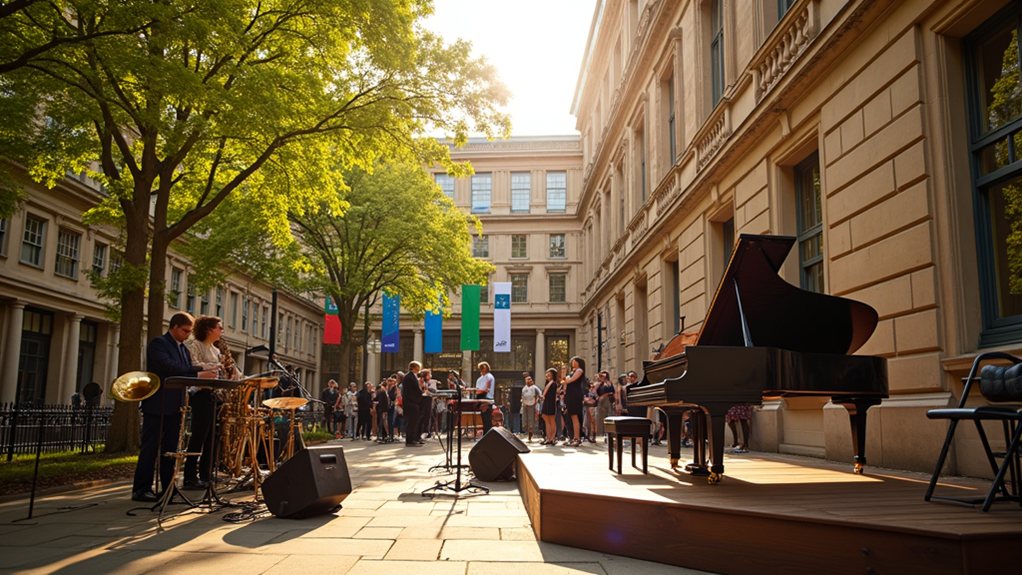
London’s hidden gems include the Hill Garden and Pergola in Hampstead Heath, featuring scenic wisteria-covered walkways and a reflecting pool, and Golders Hill Park, which offers a free mini zoo and deer sightings. Little Venice provides canal views with narrowboats and waterside cafés near Warwick Avenue Station. For secluded nature, Isabella Plantation’s azaleas and Oxleas Wood’s walking trails are ideal. Urban escapes like Fenton House’s sunken gardens and Queen Elizabeth Hall Roof Garden showcase unique city views. Further details offer additional options.
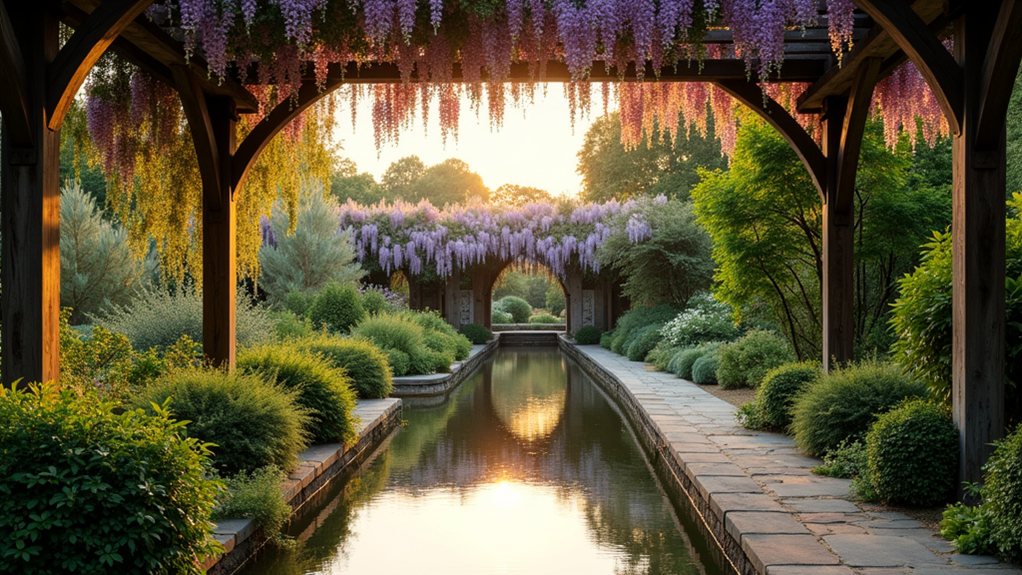
The Hill Garden and Pergola in the Hampstead Heath area offers a serene retreat. This raised pergola walkway, covered in wisteria, surrounds a large reflecting pool that provides scenic views, especially striking in late spring and summer. The atmosphere remains quiet and magical, making it a lesser-known spot away from typical tourist crowds. Nearby, the Pergola is a perfect example of historic garden architecture blending natural beauty with thoughtful design. It is often described as an oasis in London, renowned for its beautiful soundscapes and ideal for quiet walks. The gardens are reminiscent of the Royal Botanic Gardens Kew, showcasing a commitment to plant conservation and beauty.
Nearby, Golders Hill Park features a free mini zoo with deer and birds, suitable for casual visits with children. Visitors can access the area via Hampstead Overground Station, with weekdays late afternoon recommended for fewer crowds and the best natural light.
Another tranquil area is Little Venice and Regent’s Canal, where the Grand Union Canal meets Regent’s Canal. This location is lined with narrowboats and tree-lined paths, providing an escape from the hustle of central London.
Floating cafés such as the Waterside Café, set on converted boats, enhance the peaceful experience. The nearby Warwick Avenue Station serves as a good starting point for exploring these quieter waterways. Rembrandt Gardens, close by, offers a calm green space, ideal for contemplation and relaxation.
London also features several secret gardens and green spaces. The Isabella Plantation in Richmond is known for its azaleas and rhododendrons, which bloom in late April and May.
St John’s Lodge Garden in Regent’s Park is hidden behind vine-covered walkways and includes sculptures and hedges. Oxleas Wood near Eltham offers miles of walking trails with secluded garden spots and rope swings.
Hampstead’s Fenton House has manicured sunken gardens, orchards, and panoramic roof terrace views. The Queen Elizabeth Hall Roof Garden, mostly open in summer from Waterloo, showcases urban wildflowers and views of the Thames.
These locations provide first-time visitors with opportunities to experience London beyond its well-known attractions, offering quiet, natural settings and unique urban escapes.
Frequently Asked Questions
What Is the Best Time of Year to Visit London?
The best time to visit London is during spring (April and May) and early autumn (September and October).
These periods offer mild temperatures around 11°C to 15°C, fewer crowds than summer, and longer daylight for sightseeing.
Visitors should prepare for occasional rain showers by carrying umbrellas and wearing layered clothing.
Booking accommodations in advance is advised during these shoulder seasons to secure better rates and availability.
Peak summer months bring warm weather but also large crowds and higher prices.
How Do I Get Around London Using Public Transport?
London’s public transport includes the Underground, buses, and trams.
The Tube covers central and outer areas with frequent service and contactless payment options.
Buses run extensively, using zero-emission vehicles, with fares below £2 per ride and daily caps.
Trams operate mainly in South London.
Oyster cards, contactless cards, and smartphones pay fares easily.
Zones affect prices, and daily fare caps limit spending.
Accessibility features support all travelers efficiently.
Are There Any Local Customs I Should Be Aware Of?
Visitors should stand on the right side of escalators to allow others to pass on the left and queue patiently without skipping lines.
In pubs, ordering drinks at the bar first and buying rounds in groups is customary.
Politeness is important, so using “please” and “thank you” is expected.
When meeting someone new, a firm handshake and smile are standard.
Avoid rush hour on the tube, especially the Northern line, for a more comfortable journey.
What Currency Is Used in London and Can I Use Cards Everywhere?
London uses the British pound sterling (£), divided into 100 pence. Coins range from 1p to £2, while banknotes include £5, £10, £20, and £50.
Card payments, especially Visa and MasterCard, are widely accepted in most shops, restaurants, and transport. Contactless and mobile payments are common.
However, some small or independent businesses may prefer cash. Visitors should check for foreign transaction fees and carry some cash for places not accepting cards.
Is London Safe for Solo Travelers, Especially at Night?
London is generally safe for solo travelers, including at night, especially in central and well-lit areas with active police presence.
Public transport operates 24 hours, aiding safe movement. However, caution is advised to avoid poorly lit or deserted places like parks after dark.
Travelers should remain alert, secure belongings against pickpocketing, and use regulated transport.
Following these precautions helps maintain safety throughout the city during nighttime hours.